Delaware LLC for Riyadh founders (2026): from-Riyadh formation, banking, taxes
Local guide for Riyadh-based founders forming a Delaware LLC: banking flow from Riyadh, Saudi Arabia tax-treaty status, formation timeline, and what changes if you live in Riyadh specifically.

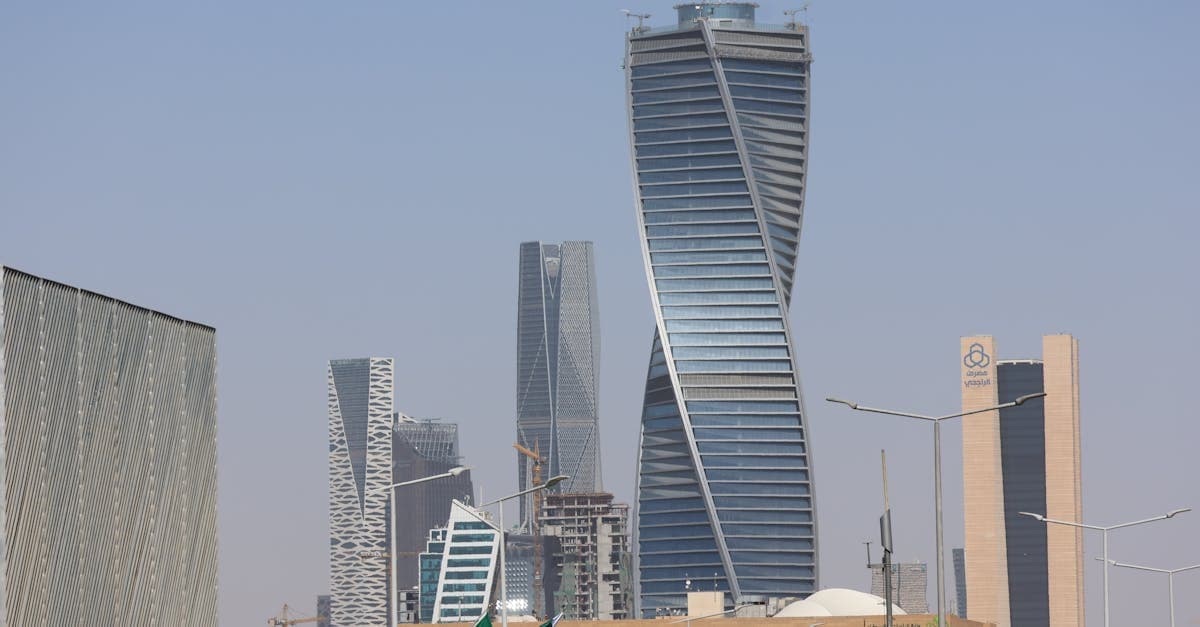
Riyadh at a glance for Delaware LLC founders
- Country: Saudi Arabia
- Region: Middle East
- Population: ~8 million metro
Saudi Arabia's capital. Vision 2030-driven economic transformation; major sovereign capital flows.
Who in Riyadh forms Delaware LLCs
Riyadh founders include fintech entrepreneurs, consultants, and emerging tech startup founders aligned with Vision 2030.
What is specific to Riyadh
Saudi-US bilateral structures common for Saudi-citizen founders. Currency-control framework different from UAE.
Top industries among Riyadh-based Delaware LLC founders
Formation timeline from Riyadh
The 8-10 day Delaware LLC formation timeline applies uniformly: Day 1 we file the Certificate of Formation with Delaware; Days 2-3 Delaware confirms and we email you the stamped certificate; Days 4-7 we apply for EIN with the IRS; Days 8-10 EIN approval arrives and you receive the full post-formation packet. From Riyadh, your involvement is entirely WhatsApp and email: no need to visit the US, no notarization in Saudi Arabia required.
Banking flow from Riyadh
After EIN approval, Riyadh founders typically open one of three US business bank accounts: Mercury (most common for tech and ecommerce founders), Relay Financial (for ecommerce with more refined sub-account features), or Wise Business (for multi-currency operations). All three accept Riyadhresidents as foreign-owner LLC operators after EIN issuance. Detailed banking flow for Saudi Arabia including alternatives when primary applications are rejected: Saudi Arabia banking deep dive.
Tax treaty status: Saudi Arabia-US
For tax-treaty-rate withholding on US-source FDAP income (royalties, certain affiliate income, AdSense), Saudi Arabiaresidents filing W-8BEN or W-8BEN-E with US payers can capture the treaty rate where a Saudi Arabia-US tax treaty applies. Full detail: Saudi Arabia tax treaty deep dive.
5472 + pro forma 1120 obligation
Every Riyadh-based founder owning a single-member Delaware LLC is a "foreign-owned disregarded entity" for US tax purposes. Form 5472 plus pro forma Form 1120 must be filed annually by April 15 (or October 15 with extension). Penalty for non-filing: $25,000 per occurrence. CPA fees: $500-1,200 typical. See the Form 5472 pillar for complete walkthrough.
Distribution and repatriation from US LLC to Riyadh
Once US LLC distributions are made to your US bank account, moving funds to Riyadh happens via Wise (typically lowest cost), Mercury international transfer, or direct SWIFT. Specific Saudi Arabia considerations for repatriation: Saudi Arabia repatriation guide.
BOI report from Riyadh
Under FinCEN's Interim Final Rule of March 26, 2025, LLCs formed in the United States, including a Delaware LLC, are exempt from Beneficial Ownership Information reporting. A Riyadh-based owner of a Delaware LLC has no BOI report to file; the obligations that remain are the $300 Delaware franchise tax and the annual Form 5472. See the BOI report glossary for how the rule changed.
Why Riyadh-specific guidance helps
Most generic Delaware LLC content is written for US-resident founders, then minimally adapted for non-residents. Riyadhfounders face a different operational stack: bank-account applications from Saudi Arabia IPs, Stripe approval timelines from Saudi Arabia, tax-treaty article numbers specific to Saudi Arabia, and remittance patterns specific to Saudi Arabiabanking infrastructure. Pages tailored to your city skip the generic adaptation step.
Why do founders in Riyadh choose a Delaware LLC?
Riyadh sits at the center of Saudi Arabia's Vision 2030 transformation, and the founders here tend to be fintech builders, consultants, and early-stage technology entrepreneurs who already think in terms of cross-border revenue. For these founders, a Delaware LLC solves a specific problem: it gives a Saudi-based business a recognizable US legal wrapper that American customers, payment processors, and app stores accept without hesitation. A Riyadh consultant invoicing a client in New York, or a SaaS founder collecting subscriptions through Stripe, often finds that a US entity removes the friction that a Saudi-only structure introduces when dealing with American counterparties.
The appeal is also about predictability of cost. A Delaware LLC carries a $110 Certificate of Formation fee and a flat $300 franchise tax due each June 1, with no income tax at the state level on income earned outside Delaware. For a Riyadh founder weighing the overhead of a US presence, that fixed annual figure is easy to budget against in Saudi riyal terms. The structure does not replace any Saudi obligation a founder may have at home, but it does give a clean, separate vehicle for US-facing income. Many Saudi-citizen founders pair this with bilateral Saudi-US arrangements they already understand, treating the LLC as the customer- facing layer while keeping local operations local.
Which US banks realistically approve applicants from Riyadh?
The honest answer for a Riyadh founder is that the traditional branch-based US banks are difficult to open from Saudi Arabia without a US visit, so the practical path runs through fintech platforms built for non-resident founders. The names that consistently work for applicants based in Riyadh include:
- Mercury, which serves technology and startup founders and is comfortable with non-US owners holding a US LLC and EIN.
- Wise, useful for a Saudi founder who needs to hold and convert between US dollars and Saudi riyal and receive payments in several currencies.
- Relay, which suits founders who want multiple sub-accounts to separate client retainers from operating cash.
- Lili, oriented toward solo consultants and freelancers, a common Riyadh founder profile.
- Payoneer, widely used across the Middle East for receiving marketplace and platform payouts into a US-linked account.
For all of these, a Riyadh applicant generally needs the LLC formation documents, the EIN confirmation, and a passport. The review can take longer for applicants in the Gulf because compliance teams ask follow-up questions about the nature of the business and the source of funds, so a Riyadh founder should expect to answer a short questionnaire rather than assume instant approval. Describing the business clearly, naming real US customers or platforms, and keeping the LLC's purpose consistent across the application all reduce back-and-forth.
How do Riyadh's top industries map onto a US LLC?
The record for Riyadh lists SaaS and consulting as the leading founder industries, and both map cleanly onto a Delaware LLC. SaaS founders benefit because nearly every payment processor, cloud vendor, and app marketplace is built around US entities first. A Riyadh SaaS team that wants to bill in US dollars, integrate Stripe, or list on a US-centric marketplace finds that the LLC is the key that unlocks those rails. The pass-through tax treatment also means the business is not taxed twice at the entity level before profits reach the owner.
Consulting maps just as naturally. A Riyadh consultant advising American or multinational clients often needs to issue invoices from a US entity so the client's accounts payable process can pay without treating the payment as an awkward foreign remittance. The LLC gives that consultant a clean US bank account and a US tax identification number to put on a W-9 or engagement letter. Vision 2030 has pulled many Riyadh consultants into advisory work spanning technology, energy transition, and financial services, and a US wrapper makes it simpler to contract with the international firms involved. The structure works for both a single-member consulting practice and a small SaaS founding team without changing the formation steps.
What does the time-zone gap between Riyadh and Delaware mean for the timeline?
Riyadh runs on Arabia Standard Time, which is eight hours ahead of US Eastern time where Delaware sits. That gap shapes how the roughly 8 to 10 business day formation timeline actually feels in practice. When a Riyadh founder submits documents in the morning, the Delaware and IRS side is still asleep, so responses tend to land overnight Riyadh time. The calendar does not get shorter because of the time zone, but the rhythm of the work shifts: questions raised by a US processor late in the American afternoon arrive in the Riyadh founder's inbox before sunrise the next day.
The practical effect is that a Riyadh founder should batch their replies. Instead of trying to chat in real time with a US compliance team, it works better to answer everything in one message during the overlap window, which in Riyadh falls in the late afternoon and evening when US business hours begin. The Saudi working week, which centers on Sunday through Thursday, adds another wrinkle, because the Friday and Saturday weekend in Riyadh partly overlaps with the US working week and the US weekend partly overlaps with the Riyadh working week. Planning around that mismatch keeps the EIN request and bank onboarding moving without a founder feeling stalled.
What currency and remittance friction should a Riyadh founder expect?
The Saudi riyal is pegged to the US dollar at a stable rate, which is a genuine advantage for a Riyadh founder compared with founders in countries with floating or volatile currencies. A US dollar invoice does not introduce the same exchange-rate guessing game it would elsewhere, and converting between riyal and dollar carries less surprise. That said, the friction is not zero. Moving money between a Saudi bank account and a US fintech account still involves compliance steps, and Saudi banks may ask for documentation about the purpose of an outbound or inbound transfer.
Riyadh's currency-control framework differs from the lighter-touch environment in the UAE, so a founder used to hearing about Dubai should not assume the same ease. The local context for Riyadh involves a more structured approach to cross-border flows. To reduce friction, founders here tend to:
- Keep US-earned revenue in the US fintech account and convert only what they need to move into riyal.
- Use Wise or Payoneer to receive funds in dollars first, then settle locally when the rate and timing suit them.
- Document each transfer's purpose so a Saudi bank's review does not delay an incoming payment.
- Avoid mixing personal Saudi accounts with the LLC's US account, which keeps records clean for both sides.
What documents does a founder in Riyadh actually need?
The document set for a Riyadh founder is shorter than most people expect, because a Delaware LLC does not require a US address proof or a US Social Security number to form. The core items are a valid passport, the Certificate of Formation from Delaware once filed, and the EIN confirmation from the IRS. The EIN is obtained free of charge by filing Form SS-4, and for a non-US founder without a Social Security number that filing typically resolves in around 8 to 10 business days rather than instantly.
Beyond formation, a Riyadh founder opening a bank account should have a clear written description of the business, the address they will use for correspondence, and details of the ownership structure ready to share. Saudi-citizen founders who hold the LLC personally usually present their passport as the identity document, while those operating through a Saudi company structure may need to explain that relationship to a US bank's compliance team. It also helps to have a simple operating agreement on hand even for a single-member LLC, because some banks and processors ask to see who controls the entity. None of these documents need to be notarized in Saudi Arabia for the formation itself, which keeps the paperwork burden in Riyadh manageable.
How does the home-country tax angle work for a Saudi founder?
A Delaware LLC owned by a non-US person is usually treated as a pass-through, meaning the LLC itself generally does not pay US federal income tax on income that is not effectively connected to a US trade or business. For a Riyadh founder serving customers remotely, this often means the US tax exposure is limited, though the precise treatment depends on the facts of where work is performed and where customers sit. This is the area where a Riyadh founder should get advice from someone who understands both US rules and the Saudi side rather than rely on a generic checklist.
Saudi Arabia does not impose personal income tax on the salaries of Saudi citizens in the way many countries do, which changes the home-country calculation compared with founders in high-tax jurisdictions. A Saudi-citizen founder is in a different position from a foreign resident in Riyadh, since the latter may have obligations in their own country of citizenship. The bilateral Saudi-US context that is common for Saudi founders can inform how the two systems interact. The single firm rule to remember is that forming a US LLC does not erase any local reporting a founder owes in Saudi Arabia, and the two should be reconciled deliberately rather than assumed away.
What US filing obligations follow a Riyadh-owned LLC?
The filing most Riyadh founders overlook is Form 5472, paired with a pro forma Form 1120, which a foreign-owned single-member LLC must file with the IRS each year to report transactions between the owner and the company. This is an information return rather than a tax bill, but the penalty for missing it starts at $25,000, so a Riyadh founder who treats the LLC as a quiet side vehicle and forgets the filing can face a serious charge. The deadline falls in the spring, which lands during a Riyadh founder's normal working calendar, so it is worth setting a reminder well ahead.
Alongside the federal filing, the annual $300 Delaware franchise tax is due every June 1 and keeps the entity in good standing. A founder in Riyadh should pair these two dates in a single annual routine so neither slips. On the lighter side, since the FinCEN Interim Final Rule of March 26, 2025, US-formed LLCs are exempt from the Beneficial Ownership Information report, which removed a filing that previously worried many non-US owners. That exemption means a Riyadh founder does not need to submit BOI data for a Delaware LLC, leaving the franchise tax and the Form 5472 filing as the obligations to track each year.
What mistakes do Riyadh founders make most often?
The recurring mistakes for Riyadh founders cluster around assuming the Gulf region behaves as one block. A founder who heard a Dubai-based friend describe effortless transfers may be surprised by the more structured currency-control framework that applies from Riyadh, and that surprise can stall a first international payment. Another frequent error is treating the EIN as instant: the free SS-4 route for a non-US founder takes roughly 8 to 10 business days, and a founder who scheduled a bank application for the same afternoon ends up waiting.
Beyond timing, the costly mistakes are usually about compliance. The most common ones include:
- Forgetting the Form 5472 information return and exposing the LLC to the $25,000 penalty.
- Missing the June 1 franchise tax deadline because it falls during a busy Riyadh quarter.
- Mixing personal Saudi banking with the LLC's US account, which muddies records for both authorities.
- Describing the business vaguely on a bank application, which triggers extra compliance questions from Gulf-based applicants.
- Assuming the US LLC cancels any Saudi reporting obligation, when the two systems must be reconciled separately.
How does the $297 pricing fit a Riyadh founder's plan?
Delewarellc forms the Delaware LLC for a one-time $297 fee, which covers the formation work a Riyadh founder would otherwise have to coordinate across the Delaware filing office and the IRS from eight time zones away. For a founder in Riyadh, the value is less about the headline figure and more about not having to manage the SS-4 submission, the registered agent arrangement, and the Certificate of Formation while juggling the time-zone gap with the US. The state's own $110 Certificate of Formation fee and the annual $300 franchise tax sit separately on top of formation, and being clear about which charge is one-time and which recurs helps a Riyadh founder budget in riyal without confusion.
The one-time nature of the $297 fee matters for a Vision 2030-aligned founder who is testing whether a US-facing product or consulting practice has traction. There is no recurring service charge baked into the formation, so the predictable ongoing cost is the annual franchise tax and whatever a founder spends on the bank platform they choose. That clarity lets a Riyadh founder model the true cost of carrying a US entity over a few years and decide whether the access to US payment rails and customers justifies it. For most fintech, SaaS, and consulting founders in the city serving international clients, the fixed and modest annual overhead is the point in the LLC's favor.
How should a Riyadh founder sequence the whole process?
The cleanest sequence for a Riyadh founder starts with deciding the LLC name and confirming the business description, since that description will reappear on the bank application and should stay consistent. Formation comes next, producing the Certificate of Formation and the registered agent setup, followed by the SS-4 filing for the EIN. Because the EIN takes roughly 8 to 10 business days for a non-US founder, a Riyadh founder should treat that window as the gating step and avoid booking anything that depends on the EIN until it arrives.
Once the EIN confirmation is in hand, the founder can open a fintech account with Mercury, Wise, Relay, Lili, or Payoneer, answering the compliance questions in a single batched reply to suit the time-zone overlap. After the account is live, the founder sets two annual reminders: the June 1 franchise tax and the spring Form 5472 information return. With the FinCEN exemption removing the BOI report for US-formed LLCs since March 26, 2025, those two filings are the ongoing obligations. A Riyadh founder who follows this order, respects the 8 to 10 day EIN window, and keeps the Saudi and US sides of their finances cleanly separated ends up with a US entity that serves international customers without creating surprises at home.
Related guides for this city & country
- Delaware LLC from Saudi Arabia
- US business banking from Saudi Arabia
- Saudi Arabia, US tax treaty
- Sending profits home to Saudi Arabia
- Delaware LLC from Jeddah
- Content creator from Saudi Arabia forming a Delaware LLC
- Delaware LLC cost breakdown
- US business banking guide
- Dissolve a Delaware LLC (step by step)
- Delaware LLC from Doha
- Delaware LLC from Kuwait City
- Delaware LLC from Manama
- Delaware LLC from Muscat
- Delaware LLC from Istanbul
Frequently asked questions
Can a founder based in Riyadh form a Delaware LLC?
Yes. Riyadh (Saudi Arabia) founders form a Delaware LLC entirely online, with no US visit, SSN, or US address required. Formation works the same as the rest of Saudi Arabia: an 8-10 day timeline for the LLC, EIN, and bank applications, for $297 plus the $110 Delaware state fee.
What banking options work for Delaware LLC founders in Riyadh?
Saudi-US bilateral structures common for Saudi-citizen founders. Currency-control framework different from UAE.
Who typically forms a Delaware LLC in Riyadh?
Riyadh founders include fintech entrepreneurs, consultants, and emerging tech startup founders aligned with Vision 2030. The most common sectors are saas, consulting.
Does living in Riyadh change Delaware LLC taxes versus the rest of Saudi Arabia?
No. Delaware LLC formation and US tax treatment are identical across Saudi Arabia. What is specific to Riyadh is the local banking and remittance flow described above. See the Saudi Arabia tax-treaty guide for how US-source income is treated for Saudi Arabia residents.
What is IRS Form 5472 and who must file it?
Form 5472 is required annually from foreign-owned single-member US LLCs treated as disregarded entities. The penalty for not filing is $25,000 per occurrence. Form 5472 must be filed with pro forma Form 1120 by April 15 (extendable to October 15).
What does a Delaware LLC cost?
Delaware LLC year-one costs are $110 state filing fee plus registered agent fees ($50-$179/year depending on provider) plus optional service fees. Delewarellc charges $297 plus the state fee for full formation including registered agent for Year 1, EIN application, Operating Agreement, and bank account applications.
Related resources
Form your Delaware LLC today
$299 + Delaware state fee, one-time. 8-10 days. One-time pricing.