Delaware LLC for Doha founders (2026): from-Doha formation, banking, taxes
Local guide for Doha-based founders forming a Delaware LLC: banking flow from Doha, Qatar tax-treaty status, formation timeline, and what changes if you live in Doha specifically.

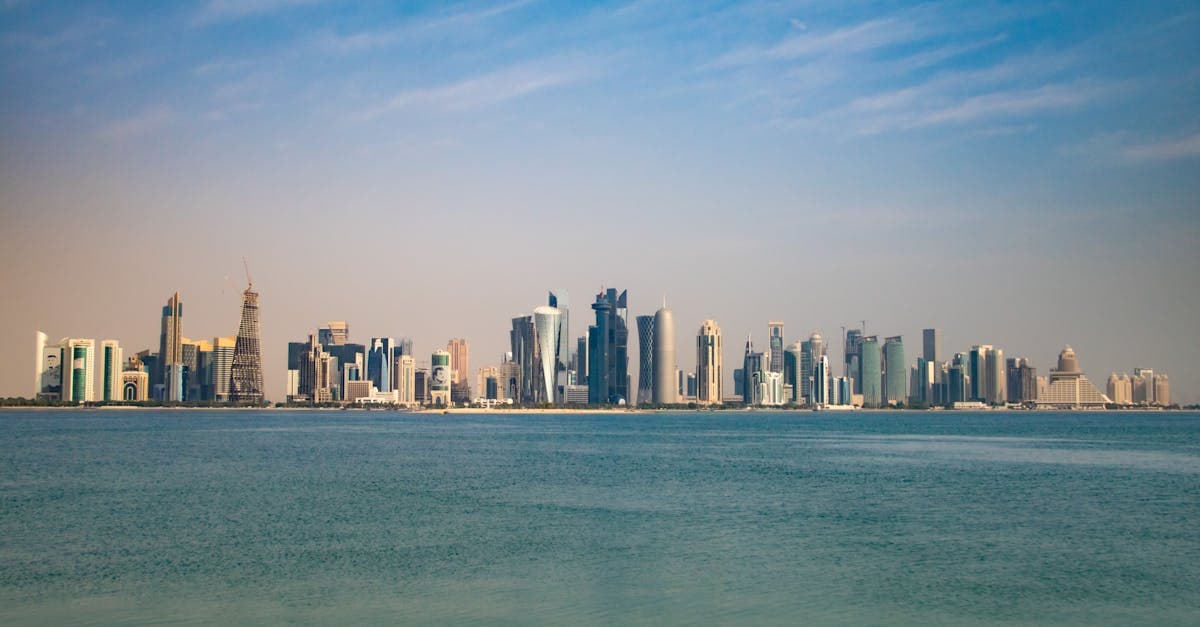
Doha at a glance for Delaware LLC founders
- Country: Qatar
- Region: Middle East
- Population: ~2.4 million metro
Qatar's capital. LNG-dependent economy; growing tech-startup ecosystem.
Who in Doha forms Delaware LLCs
Doha founders include consultants, fintech entrepreneurs, and remote workers serving global clients.
What is specific to Doha
Qatar's QFC framework parallel to other GCC free zones; Delaware LLC commonly paired for US-market access.
Top industries among Doha-based Delaware LLC founders
Formation timeline from Doha
The 8-10 day Delaware LLC formation timeline applies uniformly: Day 1 we file the Certificate of Formation with Delaware; Days 2-3 Delaware confirms and we email you the stamped certificate; Days 4-7 we apply for EIN with the IRS; Days 8-10 EIN approval arrives and you receive the full post-formation packet. From Doha, your involvement is entirely WhatsApp and email: no need to visit the US, no notarization in Qatar required.
Banking flow from Doha
After EIN approval, Doha founders typically open one of three US business bank accounts: Mercury (most common for tech and ecommerce founders), Relay Financial (for ecommerce with more refined sub-account features), or Wise Business (for multi-currency operations). All three accept Doharesidents as foreign-owner LLC operators after EIN issuance. Alternatives when primary applications are rejected are in the US business banking guide.
Tax treaty status: Qatar-US
For tax-treaty-rate withholding on US-source FDAP income (royalties, certain affiliate income, AdSense), Qatarresidents filing W-8BEN or W-8BEN-E with US payers can capture the treaty rate where a Qatar-US tax treaty applies. Where no treaty is in force, the default 30% rate applies; see the W-8BEN vs W-8BEN-E guide.
5472 + pro forma 1120 obligation
Every Doha-based founder owning a single-member Delaware LLC is a "foreign-owned disregarded entity" for US tax purposes. Form 5472 plus pro forma Form 1120 must be filed annually by April 15 (or October 15 with extension). Penalty for non-filing: $25,000 per occurrence. CPA fees: $500-1,200 typical. See the Form 5472 pillar for complete walkthrough.
Distribution and repatriation from US LLC to Doha
Once US LLC distributions are made to your US bank account, moving funds to Doha happens via Wise (typically lowest cost), Mercury international transfer, or direct SWIFT.
BOI report from Doha
Under FinCEN's Interim Final Rule of March 26, 2025, LLCs formed in the United States, including a Delaware LLC, are exempt from Beneficial Ownership Information reporting. A Doha-based owner of a Delaware LLC has no BOI report to file; the obligations that remain are the $300 Delaware franchise tax and the annual Form 5472. See the BOI report glossary for how the rule changed.
Why Doha-specific guidance helps
Most generic Delaware LLC content is written for US-resident founders, then minimally adapted for non-residents. Dohafounders face a different operational stack: bank-account applications from Qatar IPs, Stripe approval timelines from Qatar, tax-treaty article numbers specific to Qatar, and remittance patterns specific to Qatarbanking infrastructure. Pages tailored to your city skip the generic adaptation step.
Why do Doha founders form a Delaware LLC instead of a local entity?
Doha sits at the center of Qatar's LNG-driven economy, but the founders we hear from rarely sell gas. They are consultants, fintech builders, and remote operators who serve clients in the United States, Europe, and across the GCC. For that audience, a local entity inside the Qatar Financial Centre framework solves the question of operating in Qatar. It does not solve the question of looking credible to a customer in Austin or a payment processor in San Francisco. A Delaware LLC answers the second question. It gives a Doha consultant a US legal home that an American client recognizes, signs contracts against, and pays without a second thought.
The mechanics are also lighter than most Doha founders expect. Delaware charges $110 for the Certificate of Formation and a flat $300 franchise tax due every June 1, with no income tax on the LLC itself when the work and the owners sit outside the United States. Compare that to the capital, sponsorship, and renewal calculus a founder weighs when standing up a presence inside a Qatari free zone, and the Delaware route reads as a clean, low-overhead way to hold US-facing revenue. The QFC structure and the Delaware LLC are not rivals. Many Doha founders run both: the local entity for residency and regional work, the Delaware LLC as the contracting and banking layer that faces the dollar economy.
Which US banks realistically approve applicants from Doha?
A founder in Doha cannot walk into a US bank branch, so the realistic path runs through fintech platforms built for remote owners. Mercury, Wise, Relay, Lili, and Payoneer all open business accounts for non-resident Delaware LLC owners without requiring a trip to the United States. Mercury and Relay lean toward startups and agencies that want full US checking and wire capability. Wise and Payoneer are strong when a Doha founder needs to receive in dollars and convert to Qatari riyal, or hold several currencies at once for clients spread across the Gulf and the US. Lili tends to suit a single-owner consultant who wants something simple.
Approval from Doha hinges on documents more than location. Each platform wants to see the same core set, and the founders who get declined are usually the ones who submit a mismatched or incomplete package. Plan to provide the following:
- The stamped Delaware Certificate of Formation showing the LLC name and date.
- The EIN confirmation letter from the IRS tied to that exact entity.
- A clear scan of your Qatari ID or passport as proof of identity.
- Proof of your Doha address, such as a utility bill or tenancy contract.
- A short, honest description of what the business does and who pays it.
How do Doha's consulting and SaaS sectors map onto a US LLC?
The two industries that show up most among Doha founders, consulting and SaaS, are almost purpose-built for a Delaware LLC. Consulting revenue is invoiced, not inventoried. A Doha advisor billing a US energy firm or a regional bank for strategy work simply issues invoices from the Delaware entity, collects in dollars, and keeps the relationship clean from any US payroll or physical-presence question. There is no warehouse, no import duty, no local US storefront to worry about. The LLC exists to sign the engagement letter and receive the wire, which is exactly what a services business in Doha needs.
SaaS maps just as naturally. A Doha software founder selling subscriptions to US customers wants a US business identity that Stripe, app stores, and enterprise procurement teams accept without friction. A Delaware LLC gives the founder a recognizable counterparty for those platforms and a clean home for recurring revenue. Both sectors share a key trait that makes the structure work: the value is delivered remotely and the customer pays into a US account. That is the pattern the Delaware LLC handles with the least overhead, and it is why Doha's consultant-and-builder founder base gravitates toward it rather than toward heavier corporate forms.
Does the time zone in Doha change the 8 to 10 day formation timeline?
Doha runs on Arabia Standard Time, which is eight hours ahead of US Eastern and eleven ahead of US Pacific. That gap matters less to the filing than founders fear and more to the follow-up than they expect. The Delaware filing itself is electronic and does not care what hour it is in Qatar. The EIN, however, comes from the IRS and processes on US business days. A founder in Doha who submits the SS-4 on a Thursday evening should treat the clock as starting the next US business morning, which is already late afternoon back home. The free EIN via Form SS-4 typically lands in roughly 8 to 10 business days, and the time difference adds at most a partial day of lag to the start, not to the whole process.
Where the eight-hour offset helps is the back-and-forth. When a bank or the IRS needs a clarification, a Doha founder who replies during their own afternoon is sending answers into the start of the US workday, so questions and answers tend to leapfrog cleanly rather than stack up. The practical advice is simple: handle your filing and document uploads in the Doha morning, keep the evening open to catch anything that arrives from US-hours support, and do not assume a US Friday afternoon submission moves before the following Monday. Worked that way, the timeline a Doha founder experiences is essentially the same 8 to 10 day window any non-resident sees.
What currency and remittance friction do Doha founders hit?
The Qatari riyal is pegged to the US dollar, which removes one large worry that founders in floating-currency markets carry. A Doha founder does not have to fear that the value of US revenue swings wildly against home costs from week to week. What remains is the friction of moving money between a US fintech account and a Qatari bank, where conversion spreads, intermediary-bank fees, and documentation requests can quietly erode margins on every transfer. Multi-currency platforms like Wise and Payoneer exist partly to soften this, letting a Doha owner hold dollars and convert deliberately rather than at whatever rate a wire lands on.
To keep remittance from eating into earnings, Doha founders tend to do a few things well:
- Batch transfers home rather than moving small amounts repeatedly, since per-wire costs add up.
- Hold a dollar balance in the US account and only convert to riyal when needed for local spend.
- Keep invoices and the matching incoming payments documented, because Qatari banks may ask about source of funds on inbound dollar transfers.
- Compare the platform's mid-market conversion rate against the bank's before deciding where to convert.
Because the peg is stable, the discipline is less about timing the market and more about routing: choosing which account converts, when, and at what fee. Doha founders who treat the dollar leg as their working balance and the riyal leg as a withdrawal usually keep the most of what they bill.
What documents does a founder in Doha actually need?
The document burden for a Doha founder is lighter than for someone forming a local sponsored company, but each piece has to be correct because there is no branch counter to fix things in person. The foundation is identity and address. A valid passport or Qatari ID establishes who you are, and a recent utility bill, bank statement, or tenancy contract showing a Doha address establishes where you are. Those two threads run through the formation, the EIN, and every bank application, so it is worth having clean, recent scans before starting rather than scrambling mid-process.
Beyond identity, the paper trail is built as you go. The checklist below covers what a Doha founder assembles across the full setup:
- A passport or Qatari national ID for the owner.
- Proof of a Doha residential address, dated within the last few months.
- The chosen Delaware LLC name and a backup in case the first is taken.
- The signed Certificate of Formation returned by Delaware.
- The completed Form SS-4 used to request the EIN.
- The EIN confirmation letter once the IRS issues it.
- An operating agreement defining ownership, which banks and partners may request.
Keep digital copies organized and consistent. The single most common cause of a stalled bank application from Doha is a name or spelling that differs by one character between the formation document, the EIN letter, and the application form. Matching them exactly saves days.
How does a Delaware LLC interact with the home-country tax angle in Qatar?
Qatar is well known for not levying personal income tax on individuals, which shapes how a Doha founder thinks about a US LLC. The Delaware LLC, when owned by a non-resident and earning income that is not connected to a US trade or business with US presence, is generally not subject to US federal income tax at the entity level. That combination is part of why the structure appeals in Doha: the US side stays light, and the Qatari side does not tax individual earnings the way many other countries do. The result is a clean services or software business with a recognizable US face and a low tax-compliance drag.
That said, low tax is not the same as no filing, and this is where Doha founders need to be careful. A single-member foreign-owned Delaware LLC is treated as a disregarded entity and must file Form 5472 together with a pro forma Form 1120 each year, reporting transactions between the owner and the company. Missing that filing carries a $25,000 penalty, and the penalty does not care that the LLC owed no income tax. None of this is tax advice for your specific situation, and a Doha founder with meaningful revenue or any question about Qatari corporate or QFC treatment should confirm details with a qualified advisor. The takeaway is that the US filing is a formality you must not skip, even when the tax itself is zero.
What mistakes do Doha founders make most often?
The errors we see from Doha founders cluster around the gap between forming the company and actually operating it. People treat the Certificate of Formation as the finish line, then stall for weeks because they did not plan the EIN and bank steps that follow. Others underestimate how literally a US bank reads documents and submit an address or name that does not match across files. A few try to run US client revenue through a personal account or a local entity that the US customer does not recognize, which creates exactly the credibility gap the Delaware LLC was meant to close. Each of these is avoidable with a little sequencing.
The recurring missteps worth flagging for a Doha founder are these:
- Forgetting the $300 franchise tax due each June 1, then facing penalties on a dormant company.
- Skipping the Form 5472 and pro forma 1120 filing and exposing the business to a $25,000 penalty.
- Letting the LLC name differ by a character across formation, EIN, and bank documents.
- Assuming a US Friday submission processes before Monday, then misreading the timeline.
- Converting every incoming dollar to riyal immediately instead of holding a working balance.
- Believing the old BOI report still applies, when US-formed LLCs are exempt under the FinCEN Interim Final Rule of March 26 2025.
Most of these come down to mistaking formation for readiness. A Doha founder who sequences the filing, the EIN, the bank, and the annual obligations in order rarely hits any of them.
How long does the full setup take for someone working from Doha?
End to end, a Doha founder should plan for a few weeks rather than a few days, even though no single step is slow. The Delaware formation can clear in a short window, but the EIN is the pacing item at roughly 8 to 10 business days, and the bank application only begins once that EIN letter exists. Stacked in sequence and accounting for the eight-hour offset between Doha and the US, a realistic expectation is that a founder who starts cleanly on a Sunday in Doha has a formed entity, an EIN, and an open account within a few business weeks, assuming documents are ready and consistent from the start.
The variable that stretches the timeline is almost always document quality, not geography. Doha founders who prepare their passport, proof of address, and chosen company name before filing tend to move through each stage without re-submission. Those who improvise hit small delays at every handoff, and across three or four handoffs those delays compound. The single biggest lever a Doha founder controls is preparation: a complete, consistent document set turns a multi-week setup into a smooth sequence rather than a series of stalls.
How does $297 one-time pricing fit a Doha founder's budget?
For a Doha consultant or SaaS founder used to weighing free-zone capital requirements and annual renewals, the Delaware path reads as refreshingly bounded. The formation carries the $110 Delaware Certificate of Formation cost, the EIN is free when you file Form SS-4 yourself, and the recurring obligation is the flat $300 franchise tax each June 1. Delewarellc's one-time pricing of $297 covers the formation work so a Doha founder is not paying a recurring service subscription on top of the state's own fees. The numbers are small and predictable, which is exactly what a single-owner services business wants.
Predictability matters more than the absolute figures for a Doha founder budgeting in riyal. Since the riyal is pegged to the dollar, these US costs translate to a stable home-currency amount year over year, with no exchange surprise baked in. A founder can map the lifetime cost cleanly: a one-time setup, a fixed annual franchise tax, and a fintech account that typically charges little or nothing to hold. Set against the revenue a single US consulting engagement or a modest SaaS subscriber base brings in, the structure pays for itself quickly and stays cheap to keep. That clarity is part of why the Delaware LLC has become a default rather than a gamble for Doha's global-facing founders.
Related guides for this city & country
- Delaware LLC cost breakdown
- US business banking guide
- Dissolve a Delaware LLC (step by step)
- Delaware LLC from Kuwait City
- Delaware LLC from Manama
- Delaware LLC from Muscat
- Delaware LLC from Istanbul
- Delaware LLC from Ankara
- Delaware LLC from Amman
- Delaware LLC from Beirut
- Delaware LLC from Tel Aviv
- Delaware LLC from Jakarta
- Delaware LLC from Kuala Lumpur
- Delaware LLC from Bangkok
Frequently asked questions
Can a founder based in Doha form a Delaware LLC?
Yes. Doha (Qatar) founders form a Delaware LLC entirely online, with no US visit, SSN, or US address required. Formation works the same as the rest of Qatar: an 8-10 day timeline for the LLC, EIN, and bank applications, for $297 plus the $110 Delaware state fee.
What banking options work for Delaware LLC founders in Doha?
Qatar's QFC framework parallel to other GCC free zones; Delaware LLC commonly paired for US-market access.
Who typically forms a Delaware LLC in Doha?
Doha founders include consultants, fintech entrepreneurs, and remote workers serving global clients. The most common sectors are consulting, saas.
Does living in Doha change Delaware LLC taxes versus the rest of Qatar?
No. Delaware LLC formation and US tax treatment are identical across Qatar. What is specific to Doha is the local banking and remittance flow described above.
What is IRS Form 5472 and who must file it?
Form 5472 is required annually from foreign-owned single-member US LLCs treated as disregarded entities. The penalty for not filing is $25,000 per occurrence. Form 5472 must be filed with pro forma Form 1120 by April 15 (extendable to October 15).
What does a Delaware LLC cost?
Delaware LLC year-one costs are $110 state filing fee plus registered agent fees ($50-$179/year depending on provider) plus optional service fees. Delewarellc charges $297 plus the state fee for full formation including registered agent for Year 1, EIN application, Operating Agreement, and bank account applications.
Related resources
Form your Delaware LLC today
$299 + Delaware state fee, one-time. 8-10 days. One-time pricing.