Delaware LLC for Manama founders (2026): from-Manama formation, banking, taxes
Local guide for Manama-based founders forming a Delaware LLC: banking flow from Manama, Bahrain tax-treaty status, formation timeline, and what changes if you live in Manama specifically.

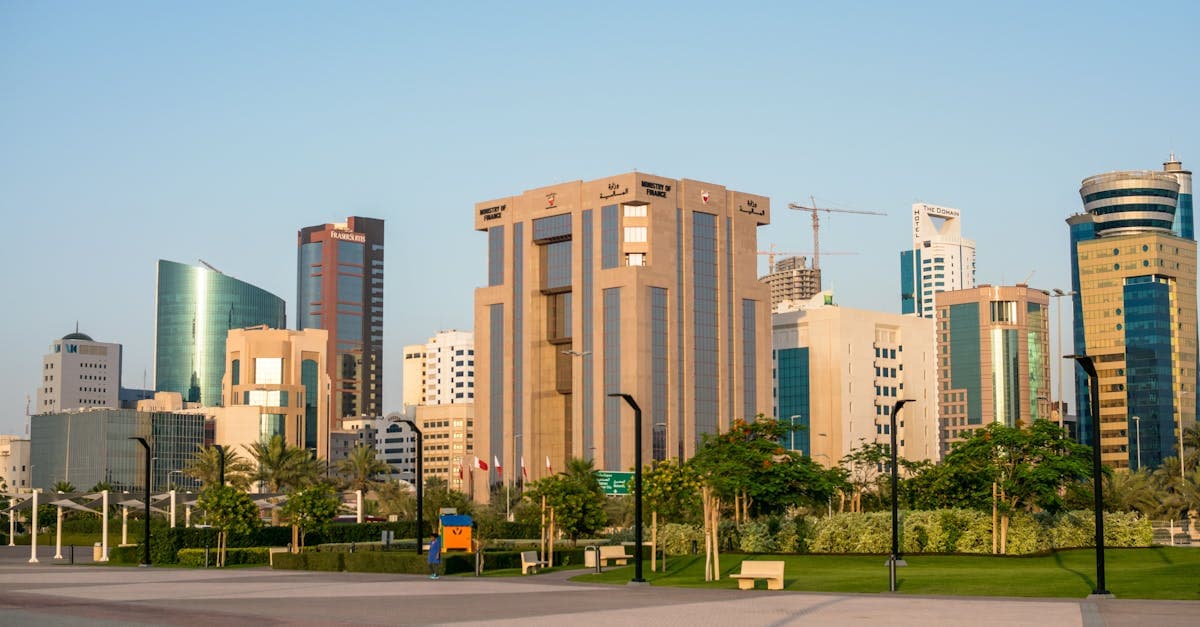
Manama at a glance for Delaware LLC founders
- Country: Bahrain
- Region: Middle East
- Population: ~700,000
Bahrain's capital. Regional financial-services hub; relatively open economy.
Who in Manama forms Delaware LLCs
Manama founders span fintech, consulting, and trading-adjacent businesses.
What is specific to Manama
Bahrain has no comprehensive US income tax treaty, so US-source FDAP income faces the 30% default. Strong regional banking infrastructure.
Top industries among Manama-based Delaware LLC founders
Formation timeline from Manama
The 8-10 day Delaware LLC formation timeline applies uniformly: Day 1 we file the Certificate of Formation with Delaware; Days 2-3 Delaware confirms and we email you the stamped certificate; Days 4-7 we apply for EIN with the IRS; Days 8-10 EIN approval arrives and you receive the full post-formation packet. From Manama, your involvement is entirely WhatsApp and email: no need to visit the US, no notarization in Bahrain required.
Banking flow from Manama
After EIN approval, Manama founders typically open one of three US business bank accounts: Mercury (most common for tech and ecommerce founders), Relay Financial (for ecommerce with more refined sub-account features), or Wise Business (for multi-currency operations). All three accept Manamaresidents as foreign-owner LLC operators after EIN issuance. Alternatives when primary applications are rejected are in the US business banking guide.
Tax treaty status: Bahrain-US
For tax-treaty-rate withholding on US-source FDAP income (royalties, certain affiliate income, AdSense), Bahrainresidents filing W-8BEN or W-8BEN-E with US payers can capture the treaty rate where a Bahrain-US tax treaty applies. Where no treaty is in force, the default 30% rate applies; see the W-8BEN vs W-8BEN-E guide.
5472 + pro forma 1120 obligation
Every Manama-based founder owning a single-member Delaware LLC is a "foreign-owned disregarded entity" for US tax purposes. Form 5472 plus pro forma Form 1120 must be filed annually by April 15 (or October 15 with extension). Penalty for non-filing: $25,000 per occurrence. CPA fees: $500-1,200 typical. See the Form 5472 pillar for complete walkthrough.
Distribution and repatriation from US LLC to Manama
Once US LLC distributions are made to your US bank account, moving funds to Manama happens via Wise (typically lowest cost), Mercury international transfer, or direct SWIFT.
BOI report from Manama
Under FinCEN's Interim Final Rule of March 26, 2025, LLCs formed in the United States, including a Delaware LLC, are exempt from Beneficial Ownership Information reporting. A Manama-based owner of a Delaware LLC has no BOI report to file; the obligations that remain are the $300 Delaware franchise tax and the annual Form 5472. See the BOI report glossary for how the rule changed.
Why Manama-specific guidance helps
Most generic Delaware LLC content is written for US-resident founders, then minimally adapted for non-residents. Manamafounders face a different operational stack: bank-account applications from Bahrain IPs, Stripe approval timelines from Bahrain, tax-treaty article numbers specific to Bahrain, and remittance patterns specific to Bahrainbanking infrastructure. Pages tailored to your city skip the generic adaptation step.
Why do founders in Manama choose a Delaware LLC over a local structure?
Manama sits at the center of Bahrain's financial-services economy, and the founders who work here tend to build companies that sell beyond the island. A SaaS team writing code for clients in Riyadh, London, and New York, or a consulting practice billing firms across the Gulf, quickly runs into a structural mismatch. A locally registered Bahraini company is built for serving the domestic market and for satisfying local commercial registration rules, not for invoicing a customer in Texas or plugging into a US payment processor. A Delaware LLC solves that mismatch by giving a Manama founder a US legal entity that American platforms, banks, and clients already recognize without a second look.
The appeal is practical rather than abstract. Stripe, most US software marketplaces, and a long list of B2B procurement portals expect a US Employer Identification Number and a US-registered company before they will pay you cleanly. For a founder in Manama who is already comfortable operating across currencies and time zones, the Delaware LLC is the missing piece that turns "a Bahraini freelancer with foreign clients" into "a US company that happens to be run from Manama." The formation itself is inexpensive relative to what it unlocks. The state charges $110 for the Certificate of Formation, and our pricing is a one-time $297, so the entire setup costs less than a single month of revenue for most of the fintech and consulting operators based in the city.
Which US banks realistically approve applicants from Manama?
Bahrain is not a country that triggers automatic friction with US fintech onboarding, which puts Manama founders in a relatively comfortable position. Bahrain holds a comprehensive tax relationship and information-sharing posture with the US, and its banking infrastructure is mature and well-documented, so the compliance teams at US neobanks tend to treat a Manama applicant as a known quantity rather than a flag. In practice, the providers that most often approve founders operating from Bahrain are Mercury, Wise, Relay, Lili, and Payoneer. Each opens an account for the Delaware LLC itself rather than for you personally, which is exactly what a non-resident founder needs.
The decisive factor is documentation, not your physical location. A US bank reviewing a Manama applicant wants to see a clean, consistent paper trail, so it helps to line up the essentials before you apply:
- The stamped Delaware Certificate of Formation showing the LLC's name and date.
- The EIN confirmation tied to that exact entity name.
- A Bahraini passport or national ID with a current Manama address.
- A short, honest description of what the business does and who pays it.
When those four items agree with each other, approval for a Bahrain-based founder is usually straightforward. The rejections we see come from mismatches, such as an EIN issued under a slightly different spelling than the formation document, or a vague business description that reads as evasive. A Manama consultant who states plainly that they advise Gulf financial firms and bill in dollars gives the reviewer nothing to worry about.
How do Manama's top industries map onto a US LLC?
The record for this city lists SaaS and consulting as the dominant founder activities, and both translate into a Delaware LLC almost perfectly. SaaS revenue is the cleanest possible fit for a US entity because the customer never needs to know or care where the developer sits. A Manama founder shipping a subscription product collects through Stripe under the LLC, and the money lands in a Mercury or Wise account in dollars, with no Bahraini commercial-registration question ever entering the transaction. Consulting is nearly as clean, since a US LLC lets a Manama advisor send a familiar US-style invoice to a client in the States or Europe and receive an ACH or wire that the client's accounts-payable team can process without a special vendor exception.
The two industries also map well onto the US tax treatment of a single-member LLC. Because the LLC is a pass-through for a non-resident owner with no US presence and no US-sourced effectively connected income, the structure stays administratively light. That matters for the kind of work Manama founders do:
- A SaaS founder selling globally rarely creates US-source income simply by hosting on US servers.
- A consultant delivering advice remotely from Bahrain is performing services where they sit, in Manama.
- Both can keep the LLC as a clean billing and banking layer rather than a US tax-generating operation.
The result is that the Delaware LLC behaves like financial plumbing for these businesses. It carries dollars in and out, satisfies the platforms, and leaves the founder's day-to-day work exactly where it already happens, on the ground in Bahrain.
Does the time difference between Manama and the US slow formation down?
Manama runs on Arabia Standard Time, which sits eight hours ahead of US Eastern and eleven ahead of US Pacific. Founders sometimes assume that gap will stretch out the formation timeline, but it has almost no effect. The Delaware filing itself is handled electronically, and the realistic schedule from filing to a usable company is roughly eight to ten business days, driven mainly by the EIN process rather than by anything sensitive to your clock. The state issues the Certificate of Formation quickly, and the longer wait is the Internal Revenue Service assigning the EIN from the SS-4 application, which for a non-US founder without a Social Security Number takes about eight to ten business days on its own.
Where the time difference actually shows up is in the follow-up steps, and a little planning erases the friction:
- A US bank's support team works US hours, so a Manama founder gets the fastest replies by writing in their evening.
- EIN follow-ups by fax or phone land best when sent before the US workday begins, meaning the back half of a Manama afternoon.
- Stripe and platform verification emails arrive overnight Bahrain time, so checking first thing in the morning keeps momentum.
None of this changes the eight-to-ten-day core estimate. The gap is something to schedule around, not something that adds days. A founder in Manama who batches their US-facing tasks into the local late afternoon and evening effectively works in step with the American business day.
What currency and remittance friction should a Manama founder expect?
Bahrain pegs its dinar to the US dollar at a long-standing fixed rate, which removes one of the headaches that founders in floating-currency countries deal with constantly. A Manama founder does not have to worry about a sudden swing wiping out the value of a dollar invoice between billing and payout, because the dinar and the dollar move together. That stability is a quiet advantage. It means the US LLC's dollar balance in Mercury or Wise holds a predictable value when measured against local costs in Manama, and it makes pricing in dollars feel natural rather than risky.
The friction that remains is mechanical rather than monetary, and it centers on moving money the last mile into a Bahraini account. A few patterns help:
- Wise generally gives the cleanest dinar conversion when you do need to pull funds into a local bank.
- Keeping most operating cash in dollars inside the LLC's account avoids repeated conversion costs.
- Payoneer is useful when a client or marketplace pays in a currency other than dollars and you want one consolidation point.
Bahrain's strong banking infrastructure means the receiving side rarely blocks legitimate inbound transfers, but a Manama founder should still expect a local bank to ask, at least once, about the source of recurring dollar deposits. The honest answer, that these are payouts from a US LLC serving foreign clients, is easy to support with the LLC's formation document and a couple of invoices, so keeping those handy prevents a routine question from turning into a delay.
What documents does a Manama founder actually need to form the LLC?
The paperwork burden on a founder in Manama is lighter than most people expect, because Delaware does not require a non-resident owner to produce notarized local corporate filings or in-person attestations. The core of what you need is identity and a few decisions. A current Bahraini passport is the primary identity document, and a national ID with your Manama address supports it. Beyond that, the formation runs on choices you make rather than papers you gather, such as the company name, the nature of the business, and the registered agent in Delaware that receives official mail on the entity's behalf.
It helps to walk in with a short checklist already settled:
- A passport or national ID confirming identity and a Manama residential address.
- A chosen LLC name and a one-line description of the SaaS or consulting work it does.
- The SS-4 details needed to request the EIN, naming you as the responsible party.
- An email and phone reachable across the US time gap for bank and platform verification.
Because Bahrain participates in comprehensive information exchange with the US, a Manama founder will not be asked for the kind of extra source-of-wealth dossiers that applicants from higher-risk jurisdictions sometimes face. The practical lesson is to keep names and spellings identical across every document. A passport, an EIN letter, and a bank application that all use the same legal name move through review without snags, and that consistency is worth more than any single piece of paper.
How does the home-country tax angle work for a founder based in Bahrain?
Bahrain is one of the more favorable home-country settings a non-US founder can operate from, because the country does not impose a personal income tax on individuals. For a Manama founder, that means the income flowing through a Delaware LLC is generally not eaten into by a local income-tax layer in the way it would be in many other countries. The localContext for this city also notes a comprehensive tax relationship with the US, which reduces ambiguity about how the two systems interact and makes the overall picture unusually clean for someone running a US entity from Bahrain.
On the US side, the structure stays light when the LLC has no US presence. A single-member LLC owned by a non-resident is treated as a disregarded entity, so the company itself does not normally owe US federal income tax on foreign-sourced earnings, though it carries a specific filing obligation discussed in the next section. A Manama founder should still keep a few principles in view:
- Income earned from work performed in Manama is sourced to where the founder sits, not to Delaware.
- The absence of Bahraini personal income tax does not remove the US information-filing duty.
- A local accountant in Bahrain can confirm whether any commercial-registration rules touch your activity.
Tax situations are individual, and this is general information rather than advice for your specific case. Even so, the combination of no local personal income tax and a clean US treaty footing makes Bahrain a setting where the Delaware LLC tends to behave predictably and without surprise tax layers stacking on top of one another.
What is Form 5472, and why must a Manama founder file it?
The one US filing a single-member Delaware LLC owner in Manama cannot ignore is Form 5472, filed together with a pro forma Form 1120. This requirement applies because the LLC is a foreign-owned disregarded entity, and the US uses these forms to track transactions between the company and its non-US owner, such as the capital you put in and the money you take out. It is an information return rather than a tax bill in most cases, but it is mandatory, and the penalty for missing it is steep, at $25,000. That figure alone makes this the single item a Manama founder should put on the calendar the moment the LLC is active.
The good news is that the obligation is procedural and entirely manageable with basic record-keeping. A Manama SaaS or consulting founder who tracks the flows through the LLC will have everything Form 5472 asks for:
- Contributions you made to fund the company.
- Distributions you took out to yourself across the year.
- The reportable transactions between you and the entity.
The filing is due alongside the annual return cycle, so a founder should not treat it as an afterthought in the spring. Keeping a simple running log of every transfer between your personal Bahraini accounts and the LLC's US account through the year makes the form a short administrative task rather than a scramble. For most Manama operators, the discipline of recording these flows as they happen is the whole game, and it keeps that $25,000 penalty firmly out of reach.
Do Manama founders need to file a BOI report with FinCEN?
Beneficial ownership reporting was, for a stretch, one of the loudest questions among non-US founders, and Manama founders heard plenty of conflicting guidance about it. The picture changed with the FinCEN Interim Final Rule issued on March 26, 2025. Under that rule, US-formed entities such as a Delaware LLC are exempt from the beneficial ownership information reporting requirement. For a founder in Manama who formed a Delaware company, that means there is no BOI report to file with FinCEN as a result of forming the LLC, which removes a step that earlier guidance had treated as obligatory.
It is worth being precise about what this exemption does and does not mean for a Bahrain-based owner:
- The exemption covers entities formed in the US, which is exactly your Delaware LLC.
- It does not change your separate Form 5472 information-filing duty.
- It does not change Delaware's own annual franchise tax obligation.
For a Manama founder, the practical takeaway is that the compliance map is simpler than the noise of 2024 suggested. You form the entity, you keep your transaction records for Form 5472, and you pay Delaware's annual flat amount. The BOI step that once loomed over the process has been lifted for US-formed LLCs, so a Bahrain founder can plan around the remaining items without budgeting time or worry for a FinCEN beneficial ownership filing.
What does it cost a Manama founder to keep the LLC alive each year?
The ongoing cost of a Delaware LLC is refreshingly flat, which suits the way Manama founders think about overhead. Every Delaware LLC owes a $300 franchise tax each year, and that amount is a fixed charge rather than a percentage of revenue, so a Manama consultant earning steadily and a SaaS founder scaling fast both pay the same $300. The due date is June 1, and a Bahrain founder should treat that date as a fixed annual appointment, because the dinar's dollar peg means the cost in local terms is stable and easy to budget for from one year to the next.
Stacking up the full picture of what a Manama founder actually pays makes the model easy to plan around:
- $110 once for the Delaware Certificate of Formation at the start.
- $297 one-time for our formation service, with no recurring service fee built into that number.
- $300 every year for the Delaware franchise tax, due June 1.
- Free for the EIN itself, since the SS-4 application carries no government charge.
That predictability is the point. A founder in Manama who builds the $300 June obligation into their annual plan keeps the company in good standing without any guesswork. Because the EIN is free and the formation is a single one-time outlay, the only recurring number to remember is the franchise tax, which keeps the administrative load on a Bahrain-based owner about as low as a US entity can offer.
What mistakes do Manama founders make most often?
Most of the trouble we see from Manama founders is avoidable and comes from a handful of repeat patterns rather than anything unique to Bahrain. The most common is treating the Delaware LLC as a one-time setup and then forgetting the June 1 franchise tax, which quietly pushes the company out of good standing. A close second is underestimating Form 5472, because a founder who never owed local income tax in Bahrain may assume there is nothing to file in the US either, and that assumption runs straight into the $25,000 penalty for the missing information return.
The other frequent errors cluster around documentation and banking:
- Spelling the company name slightly differently on the EIN than on the Certificate of Formation, which stalls bank approval.
- Giving a US bank a vague business description instead of plainly naming the SaaS or consulting work done from Manama.
- Converting every dollar payout straight into dinars and absorbing avoidable conversion costs rather than holding operating cash in dollars.
- Mixing personal Bahraini account transfers with the LLC's account without logging them, which makes Form 5472 harder later.
Each of these is simple to prevent with a little upfront discipline. Keep names identical across every document, describe the business honestly, log the transfers between your personal accounts and the LLC as they happen, and put June 1 on the calendar permanently. A Manama founder who does those four things tends to run the entity for years without a single avoidable complication, and the structure stays the clean billing layer it was meant to be.
Related guides for this city & country
- Delaware LLC cost breakdown
- US business banking guide
- Dissolve a Delaware LLC (step by step)
- Delaware LLC from Muscat
- Delaware LLC from Istanbul
- Delaware LLC from Ankara
- Delaware LLC from Amman
- Delaware LLC from Beirut
- Delaware LLC from Tel Aviv
- Delaware LLC from Jakarta
- Delaware LLC from Kuala Lumpur
- Delaware LLC from Bangkok
- Delaware LLC from Ho Chi Minh City
- Delaware LLC from Hanoi
Frequently asked questions
Can a founder based in Manama form a Delaware LLC?
Yes. Manama (Bahrain) founders form a Delaware LLC entirely online, with no US visit, SSN, or US address required. Formation works the same as the rest of Bahrain: an 8-10 day timeline for the LLC, EIN, and bank applications, for $297 plus the $110 Delaware state fee.
What banking options work for Delaware LLC founders in Manama?
Bahrain has no comprehensive US income tax treaty, so US-source FDAP income faces the 30% default. Strong regional banking infrastructure.
Who typically forms a Delaware LLC in Manama?
Manama founders span fintech, consulting, and trading-adjacent businesses. The most common sectors are saas, consulting.
Does living in Manama change Delaware LLC taxes versus the rest of Bahrain?
No. Delaware LLC formation and US tax treatment are identical across Bahrain. What is specific to Manama is the local banking and remittance flow described above.
What is IRS Form 5472 and who must file it?
Form 5472 is required annually from foreign-owned single-member US LLCs treated as disregarded entities. The penalty for not filing is $25,000 per occurrence. Form 5472 must be filed with pro forma Form 1120 by April 15 (extendable to October 15).
What does a Delaware LLC cost?
Delaware LLC year-one costs are $110 state filing fee plus registered agent fees ($50-$179/year depending on provider) plus optional service fees. Delewarellc charges $297 plus the state fee for full formation including registered agent for Year 1, EIN application, Operating Agreement, and bank account applications.
Related resources
Form your Delaware LLC today
$299 + Delaware state fee, one-time. 8-10 days. One-time pricing.