Delaware LLC for Jakarta founders (2026): from-Jakarta formation, banking, taxes
Local guide for Jakarta-based founders forming a Delaware LLC: banking flow from Jakarta, Indonesia tax-treaty status, formation timeline, and what changes if you live in Jakarta specifically.

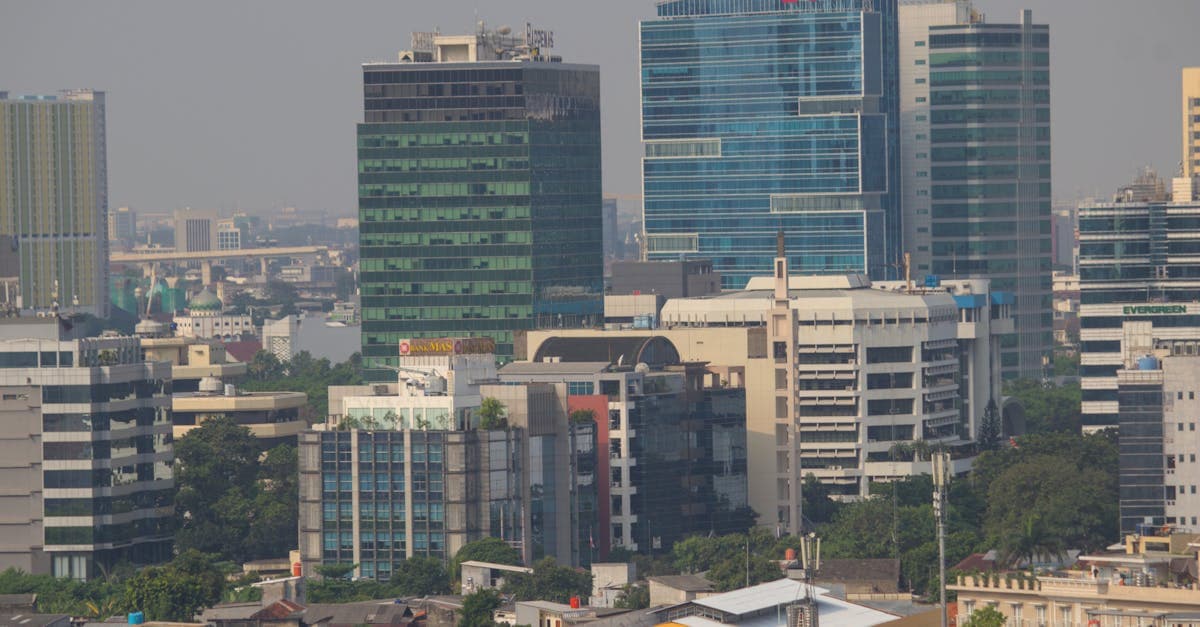
Jakarta at a glance for Delaware LLC founders
- Country: Indonesia
- Region: Southeast Asia
- Population: ~31 million metro
Indonesia's capital and largest city. Southeast Asia's largest consumer market; growing tech and fintech ecosystem.
Who in Jakarta forms Delaware LLCs
Jakarta founders include ecommerce sellers, fintech entrepreneurs, agency operators, and content creators.
What is specific to Jakarta
Indonesia's complex banking regulations make Delaware LLC plus Mercury/Wise attractive for US-market-facing operations.
Top industries among Jakarta-based Delaware LLC founders
- Delaware LLC for SaaS founders
- Delaware LLC for Shopify store owners
- Delaware LLC for Digital agencies
Formation timeline from Jakarta
The 8-10 day Delaware LLC formation timeline applies uniformly: Day 1 we file the Certificate of Formation with Delaware; Days 2-3 Delaware confirms and we email you the stamped certificate; Days 4-7 we apply for EIN with the IRS; Days 8-10 EIN approval arrives and you receive the full post-formation packet. From Jakarta, your involvement is entirely WhatsApp and email: no need to visit the US, no notarization in Indonesia required.
Banking flow from Jakarta
After EIN approval, Jakarta founders typically open one of three US business bank accounts: Mercury (most common for tech and ecommerce founders), Relay Financial (for ecommerce with more refined sub-account features), or Wise Business (for multi-currency operations). All three accept Jakartaresidents as foreign-owner LLC operators after EIN issuance. Detailed banking flow for Indonesia including alternatives when primary applications are rejected: Indonesia banking deep dive.
Tax treaty status: Indonesia-US
For tax-treaty-rate withholding on US-source FDAP income (royalties, certain affiliate income, AdSense), Indonesiaresidents filing W-8BEN or W-8BEN-E with US payers can capture the treaty rate where a Indonesia-US tax treaty applies. Full detail: Indonesia tax treaty deep dive.
5472 + pro forma 1120 obligation
Every Jakarta-based founder owning a single-member Delaware LLC is a "foreign-owned disregarded entity" for US tax purposes. Form 5472 plus pro forma Form 1120 must be filed annually by April 15 (or October 15 with extension). Penalty for non-filing: $25,000 per occurrence. CPA fees: $500-1,200 typical. See the Form 5472 pillar for complete walkthrough.
Distribution and repatriation from US LLC to Jakarta
Once US LLC distributions are made to your US bank account, moving funds to Jakarta happens via Wise (typically lowest cost), Mercury international transfer, or direct SWIFT. Specific Indonesia considerations for repatriation: Indonesia repatriation guide.
BOI report from Jakarta
Under FinCEN's Interim Final Rule of March 26, 2025, LLCs formed in the United States, including a Delaware LLC, are exempt from Beneficial Ownership Information reporting. A Jakarta-based owner of a Delaware LLC has no BOI report to file; the obligations that remain are the $300 Delaware franchise tax and the annual Form 5472. See the BOI report glossary for how the rule changed.
Why Jakarta-specific guidance helps
Most generic Delaware LLC content is written for US-resident founders, then minimally adapted for non-residents. Jakartafounders face a different operational stack: bank-account applications from Indonesia IPs, Stripe approval timelines from Indonesia, tax-treaty article numbers specific to Indonesia, and remittance patterns specific to Indonesiabanking infrastructure. Pages tailored to your city skip the generic adaptation step.
Why do Jakarta founders form a Delaware LLC instead of a local PT?
Jakarta sits at the center of Southeast Asia's largest consumer market, and the founders working here are rarely building only for Indonesia. The typical profile that we see from this city includes ecommerce sellers shipping to US buyers, fintech entrepreneurs, agency operators billing Western clients, and content creators monetizing through US platforms. For all of these people, an Indonesian PT (Perseroan Terbatas) solves the wrong problem. A PT is the right vehicle for serving the domestic Indonesian market, but it does not give a founder a clean US entity that Stripe, American banks, and US enterprise buyers recognize without friction. A Delaware LLC does exactly that, and it does so without requiring the founder to relocate, hold a US visa, or be a US citizen.
The practical pull is access. When a Jakarta agency wins a contract with a US brand, that brand often wants to pay a US company on US payment rails, and it wants a Form W-9 or a recognizable invoice rather than an international wire to an Indonesian bank with its own compliance review. A Delaware LLC closes that gap. The state charges $110 for the Certificate of Formation, the entity can be owned 100'% by a non-US resident, and there is no requirement to ever set foot in Delaware. For founders who already understand Indonesia's layered banking and foreign-ownership rules, the appeal of a structure that is deliberately simple is easy to feel. The Delaware entity becomes the contracting and billing layer for the international side of the business, while local operations stay in the PT where they belong.
Which US banks realistically approve applicants based in Jakarta?
This is the question that decides whether a Jakarta founder actually uses their Delaware LLC or lets it sit idle. Traditional US brick-and-mortar banks generally want a US Social Security Number, a US address you physically visit, and in-person identity checks, which makes them impractical for someone in Jakarta. The realistic path runs through US fintech platforms built for remote and non-resident owners. The names that consistently work for Indonesian founders are Mercury, Wise, Relay, Lili, and Payoneer. Each evaluates applicants on the LLC's formation documents, the owner's passport, and the EIN rather than on a US credit history that a Jakarta founder would have no way to build.
- Mercury suits SaaS and fintech founders who want US ACH and wire access plus a clean dashboard for international ownership.
- Wise is strong for holding and converting between US dollars and Indonesian rupiah at transparent mid-market rates.
- Relay works well for ecommerce sellers who want multiple sub-accounts to separate tax, inventory, and operating cash.
- Lili and Payoneer give content creators and freelancers a straightforward way to receive US marketplace payouts.
The local context from Jakarta matters here. Indonesia's banking regulations are layered and the compliance review on inbound international transfers can be slow, which is precisely why the Delaware LLC plus a US fintech account is so attractive for the US-market-facing side of a Jakarta business. Approval is never guaranteed and each platform runs its own checks, so a founder should have a tidy set of documents ready and should expect to explain the nature of the business clearly. The pairing that most Jakarta founders settle on is a US fintech account for receiving and holding dollars and Wise for moving money home when they need rupiah, which keeps the international cash flow predictable.
How do Jakarta's core industries map onto a US LLC?
The record for this city points to three industries that dominate the founder base here: SaaS, Shopify stores, and agencies. Each maps onto a Delaware LLC in a distinct way. A SaaS founder in Jakarta usually needs to charge subscription revenue through Stripe, sign US-style terms of service, and look like a US company to enterprise procurement teams that will not buy software from an unfamiliar foreign entity. A Delaware LLC gives that founder a recognized contracting party and a Stripe account tied to a US business, which removes the single largest objection a US buyer raises.
Shopify stores and agencies have their own fit. An Indonesian ecommerce operator running a Shopify store for US customers wants Shopify Payments and Stripe to settle into a US business account, which a Delaware LLC plus a Mercury or Relay account makes possible. Agency operators in Jakarta, who often serve Western marketing and design clients, benefit from invoicing as a US company because it shortens payment terms and reduces the back-and-forth over international wires.
- SaaS: Stripe billing, US enterprise contracts, and recognizable terms of service under a US entity.
- Shopify stores: US payment settlement, cleaner tax handling on US sales, and trust signals at checkout.
- Agencies: US-company invoicing, faster client payment, and simpler onboarding with US brands.
The common thread is that Jakarta's growing tech and fintech ecosystem produces founders whose customers are abroad even when their team is at home. The Delaware LLC is the layer that lets the work product stay in Jakarta while the commercial relationship sits where the buyer expects it.
What does the 8 to 10 day timeline look like from Jakarta's time zone?
Jakarta runs on Western Indonesia Time, which is 11 to 12 hours ahead of US Eastern Time depending on US daylight saving. That gap shapes the rhythm of forming a Delaware LLC more than founders expect. When a Jakarta founder submits formation paperwork in the morning local time, Delaware offices are closed for the night, so the state processing clock effectively starts on the next US business day. The Certificate of Formation itself can clear quickly, but the EIN is where the time difference is felt. The free EIN obtained by filing Form SS-4 with the IRS typically takes around 8 to 10 business days for a non-US applicant without a Social Security Number, and that window is measured in US business days, not Jakarta days.
The way to work with the offset rather than against it is to batch decisions before you sleep. A Jakarta founder who finalizes the company name, the responsible party details, and the mailing address in the evening gives the US side a full working day to act while Jakarta rests. Banking sits at the end of the chain because Mercury, Relay, and the other platforms generally want the EIN confirmation before they open an account. So the honest sequence is formation first, then the EIN over roughly 8 to 10 business days, then the bank application. A founder who plans around the 12-hour gap, replies to any verification request during their evening, and avoids waiting on instant answers will move through the whole process without the offset ever becoming a real obstacle.
How do currency and remittance friction from Indonesia affect the setup?
Moving money between US dollars and Indonesian rupiah is the part of the plan most likely to quietly erode a Jakarta founder's margin. Indonesia's banking system applies its own compliance review to inbound international transfers, and local bank conversion spreads on incoming dollars can be wide. If a founder routes every payment straight from a US client into a domestic rupiah account, the bank's exchange rate and handling fees can take a meaningful slice off the top of each invoice before the money even arrives.
The structure that reduces this friction is to hold dollars in a US fintech account and convert only what you need, when you need it. A Jakarta SaaS or agency founder can let Stripe settle into Mercury or Relay, keep the operating balance in US dollars, and use Wise to send rupiah home at mid-market rates when payroll or living costs require it.
- Hold the bulk of revenue in dollars and convert in deliberate batches rather than on every transaction.
- Use Wise for the US-dollar-to-rupiah leg to keep the spread transparent and predictable.
- Keep records of each transfer and its business purpose so Indonesian compliance reviews resolve faster.
This separation also protects the founder from sudden rupiah swings, since dollars earned abroad stay in dollars until there is a reason to bring them home. The Delaware LLC and its US account become the dollar reservoir, and the rupiah conversion becomes a controlled decision rather than an automatic toll on every sale.
What documents does a Jakarta founder need to form and bank?
The document list for a Jakarta founder is short, but each piece has to be clean because the US side cannot meet you in person to fix mistakes. The starting point is a valid Indonesian passport, which is the primary identity document every US fintech platform will check. From there the founder needs the Delaware formation paperwork, the EIN confirmation, and a clear description of the business that explains how it earns money and who its customers are. Because there is no US identity history to lean on, the passport and the entity documents carry the full weight of the verification.
- A current Indonesian passport for the owner and any responsible party named on Form SS-4.
- The Delaware Certificate of Formation showing the entity exists, filed for the $110 state fee.
- The EIN confirmation produced after the SS-4 process, which banks ask for before opening an account.
- A Jakarta residential or business address for mailing and account records.
- A plain-language explanation of the business model and expected payment sources.
It helps to keep digital copies of everything in one place, because Mercury, Relay, Lili, and the others may ask for a document again during review. A Jakarta founder who has the passport scan, the Certificate of Formation, and the EIN letter ready can usually complete a bank application in a single sitting. The friction that derails applications is almost always a mismatch between names or addresses across documents, so making the owner name and the Jakarta address identical on every form is the simplest way to keep the process moving.
What is the home-country tax angle for an Indonesia-based owner?
A Delaware LLC does not exempt a Jakarta founder from Indonesian tax. Indonesia taxes its residents on worldwide income, so a founder who lives in Jakarta and earns through a US LLC generally still has Indonesian tax obligations on that income. The Delaware entity changes where the business contracts and banks, not where its owner is taxed as an individual. This is the single most important point for a Jakarta founder to internalize, because the US structure is a commercial tool and not a way to escape local reporting. A founder should treat the US LLC and their Indonesian personal tax position as two connected but separate matters, and should plan to declare the income at home as required by Indonesian rules.
On the US side, a single-member LLC owned by a non-resident with no US trade or business and no US-source income often has no US income tax, but it still has a federal information-reporting duty. The entity must file Form 5472 together with a pro forma Form 1120 each year, and skipping that filing carries a $25,000 penalty. This filing reports transactions between the LLC and its foreign owner and is required even when no US tax is owed. For a Jakarta founder this means budgeting for an annual US compliance step and confirming their specific situation with a qualified tax adviser who understands both the Indonesian residency rules and the US reporting regime, since the interaction of the two systems depends on the facts of each business.
What annual costs and filings should a Jakarta founder plan for?
The recurring cost of a Delaware LLC is predictable, which is part of why it suits founders managing rupiah cash flow. The main yearly item is the Delaware franchise tax, a flat $300 due on June 1 for an LLC regardless of revenue. That flat figure makes annual budgeting easy from Jakarta because it does not scale with how much the business earns. Alongside it sits the federal Form 5472 and pro forma Form 1120 filing described above, with its $25,000 penalty for non-compliance, so the calendar for a Jakarta owner has two fixed obligations to track each year.
- $300 flat Delaware franchise tax due every June 1, independent of income.
- Form 5472 with a pro forma Form 1120 filed annually with the IRS.
- Indonesian personal tax reporting on the income, handled under local rules.
- Any registered agent renewal that keeps the Delaware entity in good standing.
Because Jakarta is so many hours ahead of the US, a founder should set reminders against US deadlines rather than local ones, and should aim to act a day early to leave room for the time difference. The flat structure of these costs is a genuine advantage for a founder watching margins, since there are no surprise scaling fees tied to a good month. Knowing the full set of recurring items in advance lets a Jakarta SaaS, Shopify, or agency operator price their services with the US compliance overhead already built in.
Does the LLC need a BOI report under the FinCEN rule?
Beneficial ownership reporting caused real anxiety for international founders when it first appeared, and many Jakarta entrepreneurs still ask about it. The position changed with the FinCEN Interim Final Rule of March 26 2025, under which LLCs formed in the United States are exempt from the Beneficial Ownership Information reporting requirement. For a Jakarta founder forming a Delaware LLC, this means there is no BOI filing to submit to FinCEN for a US-formed entity, which removes a step that previously worried non-resident owners about disclosing personal details to a US enforcement bureau.
It is worth being precise about what this exemption covers, because rules in this area have shifted before. The exemption applies to the federal BOI reporting obligation for US-formed LLCs as set by the March 26 2025 rule. It does not change a founder's Indonesian obligations, their Delaware franchise tax, or their Form 5472 duty, all of which remain in place. A Jakarta founder should treat the BOI exemption as one fewer US filing to manage rather than as a broad release from reporting. Because regulatory positions can evolve, confirming the current state of the rule before relying on it is sensible, but as the framework stands a US-formed Delaware LLC owned from Jakarta does not file a BOI report.
What mistakes do Jakarta founders make when forming a Delaware LLC?
The errors that cost Jakarta founders the most are predictable, and nearly all of them come from underestimating the distance and the time difference. The first is treating the Delaware LLC as a way to avoid Indonesian tax, which it is not. The second is name and address mismatches across the passport, the Certificate of Formation, and the bank application, which trigger the verification holds that stall remote openings. The third is missing the June 1 franchise tax deadline because the founder tracked it against Jakarta time and lost a day to the 12-hour offset.
- Assuming the US entity removes Indonesian reporting duties on worldwide income.
- Letting the owner name or Jakarta address differ between documents and stalling bank review.
- Forgetting the annual Form 5472 filing and exposing the business to the $25,000 penalty.
- Applying for a bank account before the EIN confirmation arrives and getting rejected.
- Pricing services without building in the flat $300 franchise tax and US compliance work.
The founders who avoid these problems share a habit: they prepare documents fully before submitting, they sequence formation, EIN, and banking in order, and they respect that the US side operates while Jakarta sleeps. A SaaS, Shopify, or agency operator who plans around the offset and keeps the Indonesian and US obligations clearly separated turns the Delaware LLC into exactly what it should be for a Jakarta business, which is a clean US contracting and banking layer that sits on top of work the founder still does at home.
Related guides for this city & country
- Delaware LLC from Indonesia
- US business banking from Indonesia
- Indonesia, US tax treaty
- Sending profits home to Indonesia
- Delaware LLC cost breakdown
- US business banking guide
- Dissolve a Delaware LLC (step by step)
- Delaware LLC from Kuala Lumpur
- Delaware LLC from Bangkok
- Delaware LLC from Ho Chi Minh City
- Delaware LLC from Hanoi
- Delaware LLC from Manila
- Delaware LLC from Cebu City
- Delaware LLC from Sao Paulo
Frequently asked questions
Can a founder based in Jakarta form a Delaware LLC?
Yes. Jakarta (Indonesia) founders form a Delaware LLC entirely online, with no US visit, SSN, or US address required. Formation works the same as the rest of Indonesia: an 8-10 day timeline for the LLC, EIN, and bank applications, for $297 plus the $110 Delaware state fee.
What banking options work for Delaware LLC founders in Jakarta?
Indonesia's complex banking regulations make Delaware LLC plus Mercury/Wise attractive for US-market-facing operations.
Who typically forms a Delaware LLC in Jakarta?
Jakarta founders include ecommerce sellers, fintech entrepreneurs, agency operators, and content creators. The most common sectors are saas, shopify-store, agencies.
Does living in Jakarta change Delaware LLC taxes versus the rest of Indonesia?
No. Delaware LLC formation and US tax treatment are identical across Indonesia. What is specific to Jakarta is the local banking and remittance flow described above. See the Indonesia tax-treaty guide for how US-source income is treated for Indonesia residents.
What is IRS Form 5472 and who must file it?
Form 5472 is required annually from foreign-owned single-member US LLCs treated as disregarded entities. The penalty for not filing is $25,000 per occurrence. Form 5472 must be filed with pro forma Form 1120 by April 15 (extendable to October 15).
What does a Delaware LLC cost?
Delaware LLC year-one costs are $110 state filing fee plus registered agent fees ($50-$179/year depending on provider) plus optional service fees. Delewarellc charges $297 plus the state fee for full formation including registered agent for Year 1, EIN application, Operating Agreement, and bank account applications.
Related resources
Form your Delaware LLC today
$299 + Delaware state fee, one-time. 8-10 days. One-time pricing.