Delaware LLC for Manila founders (2026): from-Manila formation, banking, taxes
Local guide for Manila-based founders forming a Delaware LLC: banking flow from Manila, Philippines tax-treaty status, formation timeline, and what changes if you live in Manila specifically.

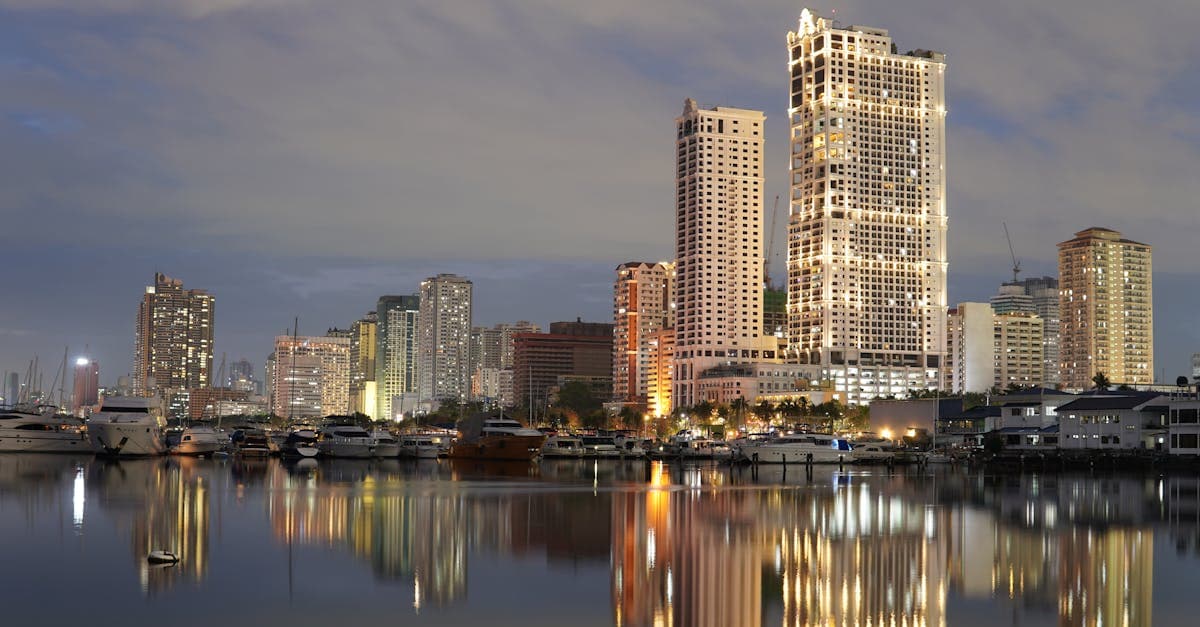
Manila at a glance for Delaware LLC founders
- Country: Philippines
- Region: Southeast Asia
- Population: ~14 million metro
Philippines' capital. Major BPO industry; English-speaking workforce.
Who in Manila forms Delaware LLCs
Manila founders span BPO-derivative service businesses, agencies, freelance services, and ecommerce.
What is specific to Manila
Philippines-US tax treaty exists. English-language advantage helps Manila founders serve US clients directly.
Top industries among Manila-based Delaware LLC founders
- Delaware LLC for Digital agencies
- Delaware LLC for Freelancers and consultants
- Delaware LLC for Shopify store owners
- Delaware LLC for SaaS founders
Formation timeline from Manila
The 8-10 day Delaware LLC formation timeline applies uniformly: Day 1 we file the Certificate of Formation with Delaware; Days 2-3 Delaware confirms and we email you the stamped certificate; Days 4-7 we apply for EIN with the IRS; Days 8-10 EIN approval arrives and you receive the full post-formation packet. From Manila, your involvement is entirely WhatsApp and email: no need to visit the US, no notarization in Philippines required.
Banking flow from Manila
After EIN approval, Manila founders typically open one of three US business bank accounts: Mercury (most common for tech and ecommerce founders), Relay Financial (for ecommerce with more refined sub-account features), or Wise Business (for multi-currency operations). All three accept Manilaresidents as foreign-owner LLC operators after EIN issuance. Detailed banking flow for Philippines including alternatives when primary applications are rejected: Philippines banking deep dive.
Tax treaty status: Philippines-US
For tax-treaty-rate withholding on US-source FDAP income (royalties, certain affiliate income, AdSense), Philippinesresidents filing W-8BEN or W-8BEN-E with US payers can capture the treaty rate where a Philippines-US tax treaty applies. Full detail: Philippines tax treaty deep dive.
5472 + pro forma 1120 obligation
Every Manila-based founder owning a single-member Delaware LLC is a "foreign-owned disregarded entity" for US tax purposes. Form 5472 plus pro forma Form 1120 must be filed annually by April 15 (or October 15 with extension). Penalty for non-filing: $25,000 per occurrence. CPA fees: $500-1,200 typical. See the Form 5472 pillar for complete walkthrough.
Distribution and repatriation from US LLC to Manila
Once US LLC distributions are made to your US bank account, moving funds to Manila happens via Wise (typically lowest cost), Mercury international transfer, or direct SWIFT. Specific Philippines considerations for repatriation: Philippines repatriation guide.
BOI report from Manila
Under FinCEN's Interim Final Rule of March 26, 2025, LLCs formed in the United States, including a Delaware LLC, are exempt from Beneficial Ownership Information reporting. A Manila-based owner of a Delaware LLC has no BOI report to file; the obligations that remain are the $300 Delaware franchise tax and the annual Form 5472. See the BOI report glossary for how the rule changed.
Why Manila-specific guidance helps
Most generic Delaware LLC content is written for US-resident founders, then minimally adapted for non-residents. Manilafounders face a different operational stack: bank-account applications from Philippines IPs, Stripe approval timelines from Philippines, tax-treaty article numbers specific to Philippines, and remittance patterns specific to Philippinesbanking infrastructure. Pages tailored to your city skip the generic adaptation step.
Why do Manila founders form a Delaware LLC instead of a local corporation?
Manila sits at the center of one of the world's largest English-speaking service economies, and that English-language advantage is exactly why so many founders here build for US clients directly. When you run an agency, a freelance practice, a Shopify store, or a SaaS product whose customers pay in dollars, a Delaware LLC gives you a clean US legal home that those customers recognize. A US client signing with a Philippine sole proprietorship often hesitates over withholding, contract enforceability, and unfamiliar invoicing. A Delaware LLC removes that friction because the buyer is contracting with a US entity governed by Delaware law, the same framework their own lawyers already understand.
The structure is also lighter than registering a domestic corporation in the Philippines. A Delaware LLC is filed with a $110 Certificate of Formation, and the annual upkeep is a flat $300 franchise tax due every June 1, with no graduated rates tied to revenue. For a Manila founder running a lean BPO-derivative service business or a small ecommerce operation, that predictability matters more than it does for a capital-heavy enterprise. You are not managing share capital requirements, resident-director rules, or local incorporation paperwork in Makati or Pasig. You keep your operations where you live and add a US wrapper that exists mainly to invoice, bank, and contract in dollars. Many founders here keep their Philippine registration for local clients and use the Delaware LLC purely for the US side of the business.
Which US banks realistically approve applicants from Manila?
The practical banking path for a Manila founder runs through US fintech platforms that onboard remotely, because traditional US branch banks expect an in-person visit that is rarely worth a flight from the Philippines. Mercury, Wise, Relay, Lili, and Payoneer all open accounts for non-resident-owned US LLCs and verify identity through a passport and proof of address rather than a Social Security Number. For a founder in Metro Manila, the workable sequence is to form the Delaware LLC first, obtain the EIN, then apply with the EIN, the formation documents, and a Philippine passport in hand.
Each platform fits a slightly different Manila business model, so it helps to match the tool to the work:
- Mercury and Relay suit agencies and SaaS founders who want a US account number and routing number for receiving client ACH and wire payments.
- Wise is strong for freelancers and agencies who invoice clients in several currencies and want to convert dollars to pesos at a transparent mid-market rate.
- Payoneer is familiar to many Manila freelancers already, since it is widely used across the local BPO and contractor community for cross-border payouts.
- Lili targets solo founders and single-member operators who want simple bookkeeping baked into the account.
Approval is not automatic, so present the business cleanly. A Manila applicant who describes a specific service, names the kind of US clients served, and shows a real website tends to clear review faster than one with a vague description. Keep your proof-of-address document, usually a Philippine utility bill or bank statement, recent and legible, because a mismatched or expired address is the most common reason a remote application stalls.
How do Manila's top industries map onto a US LLC?
The record for Manila lists agencies, freelancers, Shopify stores, and SaaS as the dominant founder types, and each of those maps onto a Delaware LLC in a direct way. Agencies that grew out of the Philippines' deep BPO and outsourcing talent pool often serve US marketing, design, or operations clients, and a US entity lets them sign master service agreements and receive payment without the client treating them as a foreign vendor. Freelancers who already work through platforms gain a business bank account and a real invoicing identity, which moves them from informal contractor to a company that can sign retainers.
Shopify and ecommerce founders benefit because a US LLC gives them a US-domiciled merchant identity, which smooths access to payment processors and the dollar settlement that follows. SaaS founders gain the clearest advantage of all, since software buyers, app stores, and B2B procurement systems expect a US vendor of record. Here is how the mapping tends to play out for Manila operators:
- Agencies: a US LLC as the contracting party for retainer and project work with American clients.
- Freelancers: a banked, invoicing entity that converts a personal practice into a company.
- Shopify stores: a US merchant home for processing and dollar settlement on US sales.
- SaaS: a US vendor of record for subscriptions, app marketplaces, and enterprise procurement.
Because Manila's founder base leans toward services and digital products rather than physical manufacturing, the LLC usually has no US inventory, no US office, and no US payroll. That keeps the federal filing profile simple and keeps the entity squarely in the category of a non-resident-owned service company.
How does the Manila time zone affect the 8 to 10 day formation timeline?
Manila runs on Philippine Standard Time, which is UTC+8 and roughly 12 to 16 hours ahead of the US business hours where Delaware filings and the IRS operate. That gap shapes the rhythm of formation more than it changes the total length. The Delaware Certificate of Formation itself is processed quickly, but the EIN is the step where the time difference is felt. The IRS issues an EIN free when you file Form SS-4, and that process commonly takes about 8 to 10 business days for a non-resident applicant without a Social Security Number. Because the IRS works US daytime hours, a request you send from Manila late at night lands the next US morning, so plan around that handoff rather than expecting same-day back-and-forth.
The time zone is also an asset once you understand it. A Manila founder can review documents, sign, and respond first thing in the morning Philippine time, which is the previous US evening, and again before US offices open. That means a full round trip of question and answer can happen within a single US business day if you stay responsive. To keep the 8 to 10 day window tight from Manila, get your passport scan and proof of address ready before you start, answer any verification email within your morning so it is waiting when US reviewers begin work, and avoid submitting right before a US federal holiday, since the queue pauses on days that may be ordinary working days in the Philippines.
What currency and remittance friction should a Manila founder expect?
The core friction for a Manila founder is moving money between the US dollar world of the LLC and the Philippine peso world where you live and spend. Your Delaware LLC will earn and hold dollars, but your rent, staff, and daily costs are in pesos, so every transfer crosses a currency boundary. The Bangko Sentral ng Pilipinas and local banks apply documentation expectations on inbound remittances, and large or irregular transfers can trigger questions about source of funds. None of this blocks a legitimate business, but it rewards founders who keep clean records that connect each US deposit to an invoice.
To reduce cost and delay, lean on the same fintech rails that bank your LLC:
- Use Wise or Payoneer for the dollar-to-peso conversion, since both publish rates and tend to beat the spread on a traditional bank wire into the Philippines.
- Keep a buffer of dollars in the US account and convert in planned batches rather than after every payment, which smooths the exchange-rate noise.
- Save the invoice, contract, and bank confirmation for each transfer so a peso-side bank inquiry is answered in minutes, not days.
- Match the remittance description to the underlying service so the local receiving bank sees a consistent story.
Manila founders who treat the dollar account as the business treasury and the peso transfers as deliberate withdrawals avoid the messiest mistakes. Mixing personal peso spending directly into the US business flow is what creates the paperwork headaches, both with local banks and with your own bookkeeping at year end.
What documents does a founder in Manila actually need?
The document list for a Manila founder is short, and most of it you already hold. The anchor is a valid Philippine passport, which serves as the primary identity document for both the LLC formation and the bank applications. You also need a proof of address that ties you to a real location in Metro Manila, typically a recent utility bill, a bank statement, or a government-issued document showing your name and address. A clear, current document here prevents the single most common cause of a stalled fintech application.
On the US side, the LLC generates its own paperwork that you will keep and reuse. After filing the $110 Certificate of Formation you receive the stamped formation document, and after the SS-4 process you receive the EIN confirmation. Those two items, plus your passport, are what every bank asks for. A practical Manila checklist looks like this:
- Valid Philippine passport for identity verification.
- Proof of address in Metro Manila, dated within the last few months.
- The Delaware Certificate of Formation for the new LLC.
- The EIN confirmation from the IRS.
- A short, accurate description of the business and the clients it serves.
- A working website or portfolio link that matches that description.
You do not need a US address of your own, a US visa, or a US phone number to form the LLC or to bank with the fintech platforms. The registered agent supplies the required Delaware address, and the rest of your contact details can remain your Manila ones.
How does the Philippines-US tax treaty affect a Manila founder's position?
The Manila record notes that a Philippines-US tax treaty exists, and that matters because it gives founders a defined framework for how income is treated between the two countries rather than leaving it to guesswork. For a non-resident owner of a US LLC whose work is performed in Manila and who has no US office, employees, or dependent agent, the LLC's service income is generally not treated as US-effectively-connected in the way a US-based business would be. The treaty and the underlying rules are designed so that you are not casually taxed twice on the same earnings, but the outcome depends on your specific facts and on filing correctly on both sides.
The honest answer is that this is where a Manila founder should get advice tied to their own situation rather than relying on a general rule. A single-member LLC owned by a non-resident is a disregarded entity for US federal purposes, so the US side often centers on information reporting rather than US income tax on foreign-earned service income. On the Philippine side, you remain a Philippine taxpayer on your worldwide income under local law, and the treaty exists to coordinate the two. Keep your invoices, contracts, and bank records organized so that whichever professional you engage in Manila or in the US can apply the treaty to real numbers. Do not assume the treaty erases all filing duty, because reporting obligations remain even when the tax owed in one country is reduced.
What US federal filings does a Manila-owned LLC have to keep up?
Even when a Manila founder owes little or no US income tax, the US LLC carries filing duties that you cannot skip. The one that catches non-residents off guard is Form 5472, paired with a pro forma Form 1120, which a foreign-owned single-member LLC must file each year to report transactions between the owner and the company. The penalty for missing it is $25,000, and that figure is fixed regardless of whether the business made money. For a Manila founder this is the single most important calendar item on the US side, because it is easy to overlook a form that exists only to report information.
Alongside that, mark the annual Delaware franchise tax of $300, which is due every June 1 and keeps the LLC in good standing. A clean Manila compliance routine looks like this:
- File Form 5472 with the pro forma 1120 each year, on time, to avoid the $25,000 penalty.
- Pay the flat $300 Delaware franchise tax by June 1 every year.
- Keep your EIN documents and formation papers stored where you can reach them from Manila.
- Track every transfer between you and the LLC, since those are exactly what Form 5472 reports.
One piece of good news removes a worry that founders in 2025 and 2026 often raise. Under the FinCEN Interim Final Rule of March 26 2025, US-formed LLCs are exempt from the Beneficial Ownership Information report, so a Manila founder forming a Delaware LLC does not file a BOI report for that entity. That keeps the ongoing list focused on the federal income forms and the Delaware franchise tax.
What does it cost a Manila founder to start and run the LLC?
Cost predictability is one of the reasons Manila founders favor this structure, because the numbers are flat rather than scaled to revenue. The formation involves the $110 Delaware Certificate of Formation, and the recurring obligation is the $300 franchise tax due each June 1. The EIN itself is free when you file the SS-4, so no one should charge you for the number alone. Delewarellc offers a $297 one-time price that bundles the formation work so a Manila founder is not assembling each piece separately across time zones.
For budgeting from Manila, separate the one-time setup from the recurring upkeep so the peso cost is clear:
- One-time: the $110 state filing and the $297 one-time formation service price.
- Free: the EIN obtained through Form SS-4.
- Recurring: the $300 Delaware franchise tax every June 1.
- Variable: the fintech account fees and the currency spread on each peso conversion.
Because these dollar amounts are fixed, a Manila founder can convert them to pesos at the current exchange rate and plan a yearly budget with confidence. The figures do not climb as your agency, store, or SaaS revenue grows, which is a meaningful contrast with structures whose annual cost rises alongside earnings. Build the $300 franchise tax into your calendar the same way you would a recurring software subscription so the June 1 deadline never becomes a scramble or a late fee.
What mistakes do Manila founders make most often?
The recurring mistakes for Manila founders cluster around timing, banking, and bookkeeping rather than the formation itself. The first is treating the EIN as instant. A founder rushing to bank applies before the SS-4 process completes, then gets stuck because every fintech account needs the EIN. Building in the 8 to 10 business day window, and accounting for the Manila-to-US time gap, prevents that stall. The second is underestimating the proof-of-address requirement, since a Metro Manila address document that is expired or does not match the passport name is the classic reason a remote bank application gets rejected.
The other frequent errors show up later, and they are more expensive:
- Forgetting Form 5472, which exposes the founder to the $25,000 penalty even on a business that earned little.
- Missing the June 1 franchise tax and letting the LLC fall out of good standing.
- Mixing peso personal spending directly through the US business account, which scrambles the records that Form 5472 depends on.
- Assuming the Philippines-US treaty means no filing anywhere, when reporting duties remain on both sides.
- Converting dollars to pesos at a bank's wire rate instead of using a transparent fintech rail.
Avoiding these comes down to a habit rather than a one-time action. A Manila founder who keeps invoices matched to deposits, marks the June 1 and annual federal deadlines, and runs personal withdrawals as deliberate transfers will sidestep almost every problem that trips up first-time owners. The formation is the easy part. The discipline that follows is what keeps the Delaware LLC clean and useful for the years you run your business from Manila.
Related guides for this city & country
- Delaware LLC from Philippines
- US business banking from Philippines
- Philippines, US tax treaty
- Sending profits home to Philippines
- Delaware LLC from Cebu City
- Freelance services founder from Philippines forming a Delaware LLC
- Accounting services founder from Philippines forming a Delaware LLC
- Delaware LLC cost breakdown
- US business banking guide
- Dissolve a Delaware LLC (step by step)
- Delaware LLC from Sao Paulo
- Delaware LLC from Rio de Janeiro
- Delaware LLC from Mexico City
- Delaware LLC from Buenos Aires
Frequently asked questions
Can a founder based in Manila form a Delaware LLC?
Yes. Manila (Philippines) founders form a Delaware LLC entirely online, with no US visit, SSN, or US address required. Formation works the same as the rest of Philippines: an 8-10 day timeline for the LLC, EIN, and bank applications, for $297 plus the $110 Delaware state fee.
What banking options work for Delaware LLC founders in Manila?
Philippines-US tax treaty exists. English-language advantage helps Manila founders serve US clients directly.
Who typically forms a Delaware LLC in Manila?
Manila founders span BPO-derivative service businesses, agencies, freelance services, and ecommerce. The most common sectors are agencies, freelancers, shopify-store, saas.
Does living in Manila change Delaware LLC taxes versus the rest of Philippines?
No. Delaware LLC formation and US tax treatment are identical across Philippines. What is specific to Manila is the local banking and remittance flow described above. See the Philippines tax-treaty guide for how US-source income is treated for Philippines residents.
What is IRS Form 5472 and who must file it?
Form 5472 is required annually from foreign-owned single-member US LLCs treated as disregarded entities. The penalty for not filing is $25,000 per occurrence. Form 5472 must be filed with pro forma Form 1120 by April 15 (extendable to October 15).
What does a Delaware LLC cost?
Delaware LLC year-one costs are $110 state filing fee plus registered agent fees ($50-$179/year depending on provider) plus optional service fees. Delewarellc charges $297 plus the state fee for full formation including registered agent for Year 1, EIN application, Operating Agreement, and bank account applications.
Related resources
Form your Delaware LLC today
$299 + Delaware state fee, one-time. 8-10 days. One-time pricing.