Delaware LLC for Bangkok founders (2026): from-Bangkok formation, banking, taxes
Local guide for Bangkok-based founders forming a Delaware LLC: banking flow from Bangkok, Thailand tax-treaty status, formation timeline, and what changes if you live in Bangkok specifically.

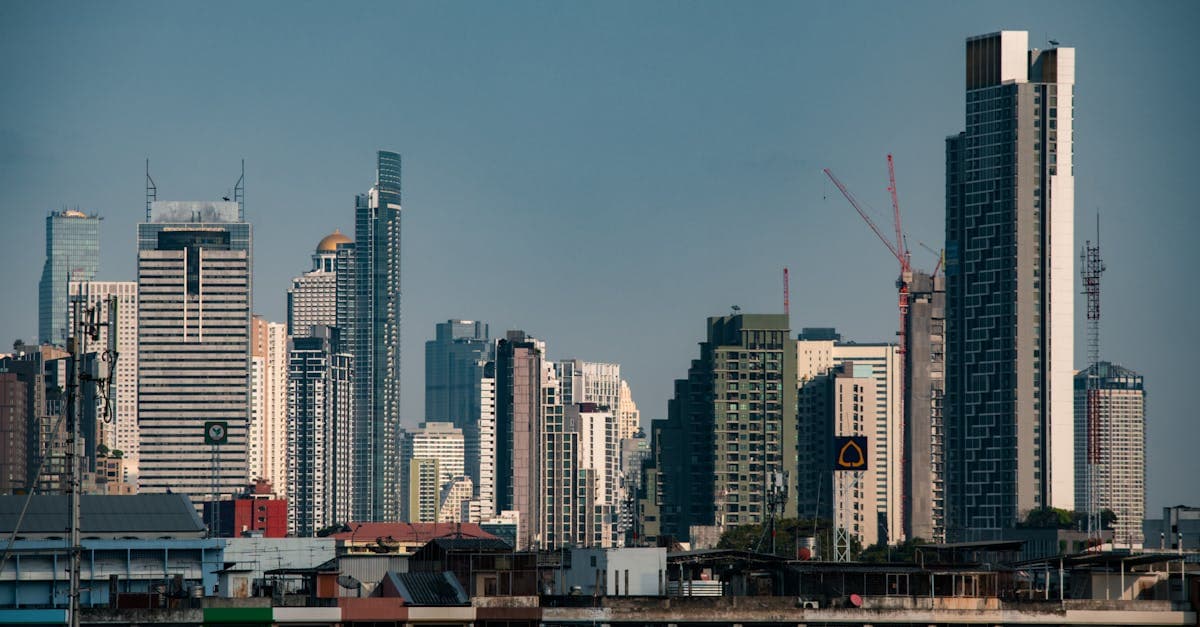
Bangkok at a glance for Delaware LLC founders
- Country: Thailand
- Region: Southeast Asia
- Population: ~10 million metro
Thailand's capital. Tourism, manufacturing, and growing tech ecosystem.
Who in Bangkok forms Delaware LLCs
Bangkok founders include digital nomads, ecommerce sellers, agency operators, and content creators.
What is specific to Bangkok
Thailand-US tax treaty exists. Bangkok has substantial digital-nomad population using Delaware LLCs for US-client work.
Top industries among Bangkok-based Delaware LLC founders
- Delaware LLC for Digital agencies
- Delaware LLC for Shopify store owners
- Delaware LLC for Freelancers and consultants
- Delaware LLC for Content creators
Formation timeline from Bangkok
The 8-10 day Delaware LLC formation timeline applies uniformly: Day 1 we file the Certificate of Formation with Delaware; Days 2-3 Delaware confirms and we email you the stamped certificate; Days 4-7 we apply for EIN with the IRS; Days 8-10 EIN approval arrives and you receive the full post-formation packet. From Bangkok, your involvement is entirely WhatsApp and email: no need to visit the US, no notarization in Thailand required.
Banking flow from Bangkok
After EIN approval, Bangkok founders typically open one of three US business bank accounts: Mercury (most common for tech and ecommerce founders), Relay Financial (for ecommerce with more refined sub-account features), or Wise Business (for multi-currency operations). All three accept Bangkokresidents as foreign-owner LLC operators after EIN issuance. Detailed banking flow for Thailand including alternatives when primary applications are rejected: Thailand banking deep dive.
Tax treaty status: Thailand-US
For tax-treaty-rate withholding on US-source FDAP income (royalties, certain affiliate income, AdSense), Thailandresidents filing W-8BEN or W-8BEN-E with US payers can capture the treaty rate where a Thailand-US tax treaty applies. Full detail: Thailand tax treaty deep dive.
5472 + pro forma 1120 obligation
Every Bangkok-based founder owning a single-member Delaware LLC is a "foreign-owned disregarded entity" for US tax purposes. Form 5472 plus pro forma Form 1120 must be filed annually by April 15 (or October 15 with extension). Penalty for non-filing: $25,000 per occurrence. CPA fees: $500-1,200 typical. See the Form 5472 pillar for complete walkthrough.
Distribution and repatriation from US LLC to Bangkok
Once US LLC distributions are made to your US bank account, moving funds to Bangkok happens via Wise (typically lowest cost), Mercury international transfer, or direct SWIFT. Specific Thailand considerations for repatriation: Thailand repatriation guide.
BOI report from Bangkok
Under FinCEN's Interim Final Rule of March 26, 2025, LLCs formed in the United States, including a Delaware LLC, are exempt from Beneficial Ownership Information reporting. A Bangkok-based owner of a Delaware LLC has no BOI report to file; the obligations that remain are the $300 Delaware franchise tax and the annual Form 5472. See the BOI report glossary for how the rule changed.
Why Bangkok-specific guidance helps
Most generic Delaware LLC content is written for US-resident founders, then minimally adapted for non-residents. Bangkokfounders face a different operational stack: bank-account applications from Thailand IPs, Stripe approval timelines from Thailand, tax-treaty article numbers specific to Thailand, and remittance patterns specific to Thailandbanking infrastructure. Pages tailored to your city skip the generic adaptation step.
Why do Bangkok founders form a Delaware LLC instead of a Thai company?
Bangkok sits at the center of Thailand's tourism, manufacturing, and growing tech economy, and the founders who reach for a Delaware LLC are rarely traditional importers. They are digital nomads, ecommerce sellers, agency operators, and content creators who bill clients in the United States and Europe. For that profile, a Thai limited company carries friction that does not match the work. Local incorporation in Thailand often expects Thai shareholding, a registered office in the Kingdom, and accounting filed in Thai. A solo operator in a Sukhumvit co-working space who serves US customers does not need any of that. A Delaware LLC lets a single non-US founder own 100% of the entity, sign US contracts under a recognized legal form, and keep the structure light.
The cost comparison also lands in Delaware's favor for this audience. Delaware charges a one-time $110 Certificate of Formation and a flat $300 annual franchise tax that is due each June 1, with no graduated scale tied to revenue. That predictability matters when a Bangkok creator's income swings month to month with brand deals or marketplace payouts. The Delewarellc one-time price of $297 covers the formation work itself, and the EIN that unlocks US banking is free directly from the IRS through Form SS-4. None of this requires the founder to leave Thailand, hold a US visa, or maintain a US address of their own.
Which US banks realistically approve applicants from Bangkok?
The honest answer for a Bangkok-based founder is that traditional brick-and-mortar US banks will almost never open a remote account for someone who cannot walk into a branch. What does work is the category of US fintech platforms built for exactly this situation. Mercury, Wise, Relay, Lili, and Payoneer all serve owners of US LLCs who live abroad, and they onboard through a web flow rather than an in-person visit. For a founder typing from a condo in Thonglor or a beach desk in a Bangkok suburb, that distinction is the whole game. You apply with your formation documents and EIN, verify your identity with a passport, and fund the account from there.
A few practical notes specific to applicants in Thailand are worth keeping in mind:
- Have your Delaware Certificate of Formation and IRS EIN confirmation ready as PDFs before you start any application.
- Use a consistent Bangkok residential address across the LLC records and the bank form, because mismatches trigger manual review.
- Expect identity checks that read your Thai passport or your home-country passport, so the photo and document must be clear.
- Be ready to describe your business in plain terms, such as a marketing agency serving US clients or a Shopify store shipping to US buyers.
Approval is never guaranteed by any platform, and each one weighs its own risk signals. The realistic path is to apply to one fintech that fits your model, answer the business-activity questions honestly, and keep your documents aligned. Bangkok founders who treat the application as a paperwork exercise rather than a sales pitch tend to clear review without drama.
How do Bangkok's top industries map onto a US LLC?
The record for this city lists agencies, Shopify stores, freelancers, and content creators as the dominant founder types, and each maps cleanly onto a single-member Delaware LLC. A Bangkok marketing or design agency that invoices US brands gains a recognizable US billing entity, which removes the awkward conversation where a Fortune-500 procurement team asks for a vendor form they understand. A Shopify store operator selling to US shoppers can connect a US LLC to payment processors and ad platforms that prefer a US business identity. Freelancers who string together US contracts get a clean separation between personal money and business money, which simplifies their own bookkeeping back in Thailand.
Content creators are a category Bangkok produces in volume, and they have a specific reason to value the structure. Ad networks, sponsorship platforms, and affiliate programs frequently pay through US rails and request a US tax form. Holding the relationship through a US LLC lets a creator centralize those payouts under one entity, sign brand agreements under a company name, and present a more durable face to partners than a personal handle. Across all four groups, the common thread is the same: the customers and the money sit in the United States, so a US legal wrapper reduces the number of times a founder in Bangkok has to explain why they do not have one.
What does the time-zone gap between Bangkok and Delaware do to the timeline?
Bangkok runs roughly 11 to 12 hours ahead of the US East Coast depending on US daylight saving, and that gap shapes how the 8 to 10 business day rhythm of formation feels in practice. The Delaware state filing for the Certificate of Formation is processed during US business hours, so a request you submit at midnight Bangkok time lands in the Delaware morning queue. The EIN step is where the gap is most visible. The IRS issues EINs to non-US applicants through Form SS-4, and that process commonly takes about 8 to 10 business days, with IRS phone and fax channels operating on US hours. A Bangkok founder effectively works a full day, sleeps, and finds responses waiting in the morning.
The way to use that gap rather than fight it is to batch your actions. Prepare every document and answer every intake question before you go to bed in Bangkok, so your filing is moving while you rest. Avoid the temptation to wait by the screen for instant confirmations that will not arrive until the US wakes up. Founders who plan around the 8 to 10 business day window, and who account for US federal holidays that do not exist in the Thai calendar, rarely feel delayed. Those who expect same-day turnarounds on a US-hours process feel stuck for no real reason.
How does currency and remittance friction from Thailand affect the work?
Money entering and leaving Thailand passes through Bank of Thailand oversight, and the Thai baht is not a free-floating offshore currency in the way the US dollar is. For a Bangkok founder, this means the goal is usually to hold and spend in dollars where possible and to convert to baht only when you genuinely need local spending money. A US LLC paired with a US fintech account lets revenue land in dollars, which avoids paying a conversion spread on every single client payment. When you do move money home to a Thai bank account, you face a currency conversion and potential remittance reporting on larger transfers.
Practical habits that reduce the friction for Bangkok founders include:
- Keep operating funds in USD inside the US account and convert in deliberate batches rather than on every payout.
- Use a platform like Wise or Payoneer that quotes the conversion rate transparently before you send baht home.
- Keep records of the business purpose for inbound transfers to Thailand, since clean documentation helps with bank questions.
- Separate personal remittances from business transfers so your Thai tax position stays easy to explain.
The structure does not erase Thai exchange rules, and it should not be used to dodge them. What it does is let you choose when to convert, which over a year of US-client income is the difference between losing a slice on every invoice and losing it once on a planned transfer.
What documents does a founder in Bangkok actually need?
The document list for a Bangkok founder is shorter than most expect, because a Delaware LLC for a non-US owner does not demand a US visa, a US Social Security Number, or a US address of your own. The core items are a valid passport for identity, a reliable Bangkok mailing address for your records, and the entity paperwork that the formation produces. From the filing you receive the Certificate of Formation, and from the IRS you receive the EIN confirmation after the SS-4 process. Those two outputs are the keys that every downstream step, especially banking, will ask to see.
Where Bangkok founders sometimes trip is on consistency rather than quantity. The name on your passport, the address on your LLC record, and the details you enter into a bank application should match each other exactly. A founder who lists one spelling of a Sukhumvit street on the formation and a different one at the bank invites a manual review that adds days. It also helps to keep digital copies of everything in one folder, since US-hours support channels cannot wait on a Bangkok founder to find a paper original. Treat the document set as a small, tidy package you assemble once, and the rest of the process moves on top of it without repeated searches.
How does the Thailand-US tax treaty change a Bangkok founder's picture?
The record for Bangkok notes that a Thailand-US tax treaty exists, and that matters because it gives a Bangkok founder a recognized framework for how income is treated across both countries. A treaty does not let anyone avoid tax twice over, and it does not exempt a Thai resident from Thai obligations on income they bring home. What it does is provide rules that reduce the risk of the same income being fully taxed in both places, which is a real concern for a founder whose money originates from US clients but who lives and spends in Thailand.
A single-member US LLC owned by a non-US person is generally treated as a pass-through for US federal income tax, meaning the LLC itself is not the taxpayer in the way a corporation is. The practical effect for many Bangkok founders is that US-source questions and Thai-residence questions are handled separately, and the treaty informs how they interact. Because each founder's residency status, time spent in Thailand, and income mix differ, this is the one area where a Bangkok founder should confirm details with a Thai tax professional rather than rely on a general guide. The structure is straightforward, but the personal tax treatment is specific to the individual.
Do Bangkok founders need to worry about BOI reporting?
Beneficial ownership reporting caused a wave of anxiety among foreign owners of US entities, and Bangkok founders heard the same worry. The position changed with the FinCEN Interim Final Rule of March 26, 2025, which exempted US-formed entities such as a domestic Delaware LLC from the beneficial ownership information filing that applied under the Corporate Transparency Act. For a Bangkok founder forming a standard Delaware LLC, this removes a recurring federal reporting step that many had braced for.
That exemption does not erase the genuine federal obligations a foreign-owned single-member LLC still carries, and a Bangkok founder should not confuse the two. The most important ongoing item is the information return described below. The BOI relief simply means one specific filing is off the table for a US-formed LLC, which is a meaningful simplification for a solo operator in Bangkok who would otherwise have to track yet another deadline across the time-zone gap. Keep the two ideas separate: BOI is not required for your US-formed LLC, but your tax information return is.
What is Form 5472 and why must a Bangkok owner file it?
A single-member LLC owned by a non-US person, which describes the typical Bangkok founder, is a reportable entity for US purposes and must file Form 5472 together with a pro forma Form 1120 each year. This is an information return rather than an income tax bill for most solo founders, but the US Internal Revenue Service treats the deadline seriously. The penalty for failing to file Form 5472 is $25,000, and that figure does not scale down for a small one-person operation in Bangkok. It applies regardless of how modest the revenue was.
The form reports transactions between the foreign owner and the US LLC, such as money the founder put into the entity or took out of it. For a Bangkok agency owner or Shopify seller, that means keeping a clear record of contributions and distributions across the year so the figures are ready at filing time. The time-zone gap makes this easier to forget, since a US filing deadline can pass during the Bangkok night. The defense is simple: mark the annual filing on your calendar, keep your transaction list current, and treat the $25,000 penalty as the reason this is not an optional step. A founder who stays organized files it without strain.
What mistakes do Bangkok founders make most often?
The recurring mistakes among Bangkok founders cluster around treating a US LLC like a Thai company or like a magic shield. The most common errors include:
- Assuming a US LLC removes Thai tax obligations on money brought into Thailand, which it does not.
- Forgetting the $300 Delaware franchise tax due each June 1 and letting the entity fall out of good standing.
- Missing the Form 5472 filing and exposing themselves to the $25,000 penalty.
- Applying to a traditional US bank that will not serve a remote applicant, instead of a fintech that will.
- Entering mismatched name or address details across the formation and the bank application.
A second cluster of mistakes is about timing and expectations. Bangkok founders sometimes expect a US-hours process to move on Bangkok hours, then feel something is broken when the EIN takes the full 8 to 10 business days. Others convert every client payment to baht the moment it arrives, bleeding a conversion spread that adds up across a year of US income. The founders who do well treat the LLC as a clean US billing and banking layer, keep their Thai tax position honest, and plan their filings and conversions in deliberate batches rather than reacting payment by payment.
How should a Bangkok founder think about the first year end to end?
Mapping the full first year helps a Bangkok founder see how the pieces connect. The sequence begins with formation, where the $110 Certificate of Formation establishes the Delaware LLC and the $297 one-time Delewarellc price covers the work of standing it up. Next comes the EIN through Form SS-4, which usually takes about 8 to 10 business days and runs on US hours, so it lands while Bangkok sleeps. With the Certificate and EIN in hand, the founder opens a US fintech account through Mercury, Wise, Relay, Lili, or Payoneer and begins receiving US-client revenue in dollars.
From there the year settles into a light rhythm. Revenue collects in USD, and the founder converts to baht in planned batches when local spending requires it. The $300 Delaware franchise tax is paid by June 1, and the Form 5472 information return is filed on its annual deadline to stay clear of the $25,000 penalty. Because the LLC is US-formed, no beneficial ownership filing is required under the FinCEN Interim Final Rule of March 26, 2025. The founder confirms their personal Thai tax position with a local professional under the Thailand-US treaty framework. Seen as a whole, the structure is a small set of fixed annual tasks layered on top of a clean US billing relationship, which is exactly what a Bangkok agency, store, freelancer, or creator is looking for.
Related guides for this city & country
- Delaware LLC from Thailand
- US business banking from Thailand
- Thailand, US tax treaty
- Sending profits home to Thailand
- Delaware LLC cost breakdown
- US business banking guide
- Dissolve a Delaware LLC (step by step)
- Delaware LLC from Ho Chi Minh City
- Delaware LLC from Hanoi
- Delaware LLC from Manila
- Delaware LLC from Cebu City
- Delaware LLC from Sao Paulo
- Delaware LLC from Rio de Janeiro
- Delaware LLC from Mexico City
Frequently asked questions
Can a founder based in Bangkok form a Delaware LLC?
Yes. Bangkok (Thailand) founders form a Delaware LLC entirely online, with no US visit, SSN, or US address required. Formation works the same as the rest of Thailand: an 8-10 day timeline for the LLC, EIN, and bank applications, for $297 plus the $110 Delaware state fee.
What banking options work for Delaware LLC founders in Bangkok?
Thailand-US tax treaty exists. Bangkok has substantial digital-nomad population using Delaware LLCs for US-client work.
Who typically forms a Delaware LLC in Bangkok?
Bangkok founders include digital nomads, ecommerce sellers, agency operators, and content creators. The most common sectors are agencies, shopify-store, freelancers, content-creators.
Does living in Bangkok change Delaware LLC taxes versus the rest of Thailand?
No. Delaware LLC formation and US tax treatment are identical across Thailand. What is specific to Bangkok is the local banking and remittance flow described above. See the Thailand tax-treaty guide for how US-source income is treated for Thailand residents.
What is IRS Form 5472 and who must file it?
Form 5472 is required annually from foreign-owned single-member US LLCs treated as disregarded entities. The penalty for not filing is $25,000 per occurrence. Form 5472 must be filed with pro forma Form 1120 by April 15 (extendable to October 15).
What does a Delaware LLC cost?
Delaware LLC year-one costs are $110 state filing fee plus registered agent fees ($50-$179/year depending on provider) plus optional service fees. Delewarellc charges $297 plus the state fee for full formation including registered agent for Year 1, EIN application, Operating Agreement, and bank account applications.
Related resources
Form your Delaware LLC today
$299 + Delaware state fee, one-time. 8-10 days. One-time pricing.