Delaware LLC for Muscat founders (2026): from-Muscat formation, banking, taxes
Local guide for Muscat-based founders forming a Delaware LLC: banking flow from Muscat, Oman tax-treaty status, formation timeline, and what changes if you live in Muscat specifically.

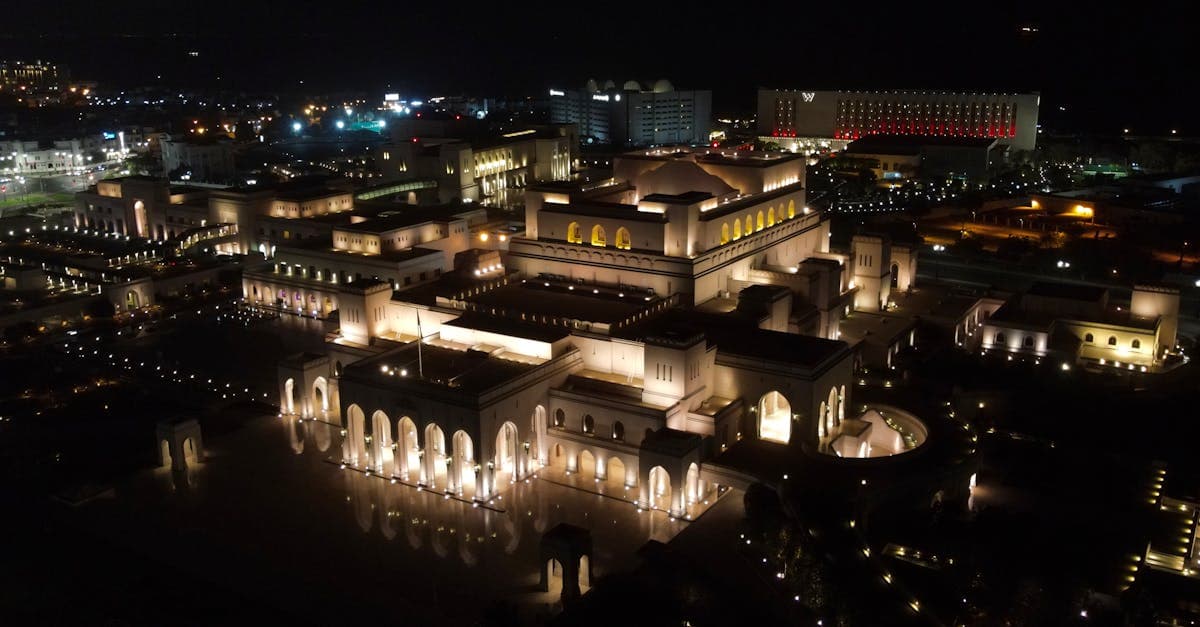
Muscat at a glance for Delaware LLC founders
- Country: Oman
- Region: Middle East
- Population: ~1.6 million metro
Oman's capital. Diversifying from oil into tourism, logistics, and tech.
Who in Muscat forms Delaware LLCs
Muscat founders include consultants and emerging tech entrepreneurs.
What is specific to Muscat
Quieter market than Dubai or Riyadh; growing.
Top industries among Muscat-based Delaware LLC founders
Formation timeline from Muscat
The 8-10 day Delaware LLC formation timeline applies uniformly: Day 1 we file the Certificate of Formation with Delaware; Days 2-3 Delaware confirms and we email you the stamped certificate; Days 4-7 we apply for EIN with the IRS; Days 8-10 EIN approval arrives and you receive the full post-formation packet. From Muscat, your involvement is entirely WhatsApp and email: no need to visit the US, no notarization in Oman required.
Banking flow from Muscat
After EIN approval, Muscat founders typically open one of three US business bank accounts: Mercury (most common for tech and ecommerce founders), Relay Financial (for ecommerce with more refined sub-account features), or Wise Business (for multi-currency operations). All three accept Muscatresidents as foreign-owner LLC operators after EIN issuance. Alternatives when primary applications are rejected are in the US business banking guide.
Tax treaty status: Oman-US
For tax-treaty-rate withholding on US-source FDAP income (royalties, certain affiliate income, AdSense), Omanresidents filing W-8BEN or W-8BEN-E with US payers can capture the treaty rate where a Oman-US tax treaty applies. Where no treaty is in force, the default 30% rate applies; see the W-8BEN vs W-8BEN-E guide.
5472 + pro forma 1120 obligation
Every Muscat-based founder owning a single-member Delaware LLC is a "foreign-owned disregarded entity" for US tax purposes. Form 5472 plus pro forma Form 1120 must be filed annually by April 15 (or October 15 with extension). Penalty for non-filing: $25,000 per occurrence. CPA fees: $500-1,200 typical. See the Form 5472 pillar for complete walkthrough.
Distribution and repatriation from US LLC to Muscat
Once US LLC distributions are made to your US bank account, moving funds to Muscat happens via Wise (typically lowest cost), Mercury international transfer, or direct SWIFT.
BOI report from Muscat
Under FinCEN's Interim Final Rule of March 26, 2025, LLCs formed in the United States, including a Delaware LLC, are exempt from Beneficial Ownership Information reporting. A Muscat-based owner of a Delaware LLC has no BOI report to file; the obligations that remain are the $300 Delaware franchise tax and the annual Form 5472. See the BOI report glossary for how the rule changed.
Why Muscat-specific guidance helps
Most generic Delaware LLC content is written for US-resident founders, then minimally adapted for non-residents. Muscatfounders face a different operational stack: bank-account applications from Oman IPs, Stripe approval timelines from Oman, tax-treaty article numbers specific to Oman, and remittance patterns specific to Omanbanking infrastructure. Pages tailored to your city skip the generic adaptation step.
Why do founders in Muscat form a Delaware LLC instead of a local company?
Muscat sits in a quieter market than Dubai or Riyadh, and that calm is exactly why so many founders here look outward when they pick a legal home for a business that sells beyond Oman. A consultant in Qurum or an emerging tech founder working out of Knowledge Oasis Muscat often finds that the customer is in New York, London, or Singapore long before the customer is in Ruwi. When the revenue is dollar-denominated and the clients are global, a Delaware LLC gives that founder a recognized US legal wrapper that buyers, payment processors, and software platforms already trust. It does not replace anything in Oman. It sits beside the founder's life in Muscat and handles the international side of the work.
The practical pull is cost and clarity. Delaware charges a $110 Certificate of Formation to create the company and a flat $300 franchise tax due each June 1, with no state income tax on income earned outside Delaware. For a Muscat consultant billing a handful of overseas clients, that fixed and predictable structure is easier to plan around than a corporate setup that scales its fees with activity. Founders here tend to value the following:
- A US entity that Stripe, PayPal, and SaaS marketplaces accept without friction.
- Flat, knowable annual costs rather than variable local corporate overhead.
- A clean separation between personal assets in Oman and the trading entity.
- Contracts governed by Delaware law, which international clients recognize on sight.
Which US banks realistically approve applicants from Muscat?
The honest answer for a Muscat founder is that traditional US brick-and-mortar banks are hard to open without a US visit and a US address, so most founders here go straight to the fintech platforms built for remote owners. Mercury, Wise, Relay, Lili, and Payoneer are the realistic options, and each treats an Oman-resident applicant differently. Mercury and Relay give a true US business checking account with routing and account numbers, which matters when a US client wants to pay by ACH. Wise and Payoneer lean toward multi-currency receiving, which fits a founder collecting payments from several countries and wanting to hold balances rather than convert every time.
Approval from Muscat hinges on the paperwork being consistent, not on the country itself. Founders here improve their odds by presenting a clean set of documents and a clear business description that matches the consulting or SaaS work the entity actually does. A few points that local applicants should plan for:
- Have the EIN confirmation letter ready before applying, since most platforms ask for it.
- Use the same legal name and address across the formation documents and the bank form.
- Expect identity verification against an Omani passport rather than a national ID card.
- Describe the business plainly, for example "management consulting for overseas clients," rather than vaguely.
No platform guarantees approval, and a founder in Muscat may be approved by one and declined by another for reasons that have nothing to do with the quality of the business. Applying to two of them in parallel is a reasonable hedge.
How do consulting and SaaS businesses in Muscat map onto a US LLC?
Muscat's founder base leans toward consulting and SaaS, and both of those translate unusually well into a Delaware LLC because neither needs a US physical presence to operate. A management or strategy consultant in Muscat sells time and judgment, and the client cares about the invoice, the contract, and the bank details far more than where the consultant sleeps. A Delaware LLC lets that consultant issue a US invoice from a US entity, sign a Delaware-governed engagement letter, and receive funds into a US account, all while living and working in Oman. The work product crosses borders as a PDF or a video call, so the entity's location never becomes a bottleneck.
SaaS founders in Muscat get an even cleaner fit. A subscription product billed in dollars wants a US payment processor, and US processors strongly prefer a US entity with an EIN and a US bank account. The Delaware LLC supplies all three. As Oman diversifies from oil into tourism, logistics, and tech, the emerging tech entrepreneurs the city is producing increasingly build for an audience that was never confined to the Gulf. The structure tends to support work such as:
- Recurring SaaS subscriptions billed through Stripe under a US entity.
- Cross-border consulting retainers paid by ACH or international wire.
- App store and marketplace payouts that route to a US business account.
- White-label or reseller agreements signed under Delaware law.
What does the four-hour time-zone gap with the US do to your formation timeline?
Muscat runs on Gulf Standard Time, which is eight or nine hours ahead of the US business day depending on US daylight saving. That gap shapes how the typical eight to ten business day formation feels from the ground in Oman. When a Muscat founder submits documents in the afternoon, the Delaware filing office and the US-side processing are still hours from opening, so the work effectively starts the next US morning. This is not a delay so much as a rhythm: a founder who sends everything before lunch in Muscat hands the US day a full window to act, while a founder who files late at night loses most of a cycle.
The EIN step is where the time zone matters most. The free EIN obtained by filing Form SS-4 runs on US processing windows and takes roughly eight to ten business days for an applicant without a US Social Security number. A founder in Muscat can shorten the calendar by working ahead of the clock rather than behind it. Practical habits that help:
- Send signed documents in the Muscat morning so they land in the US overnight queue.
- Treat Friday as a soft cutoff, since the Gulf and US weekends overlap only partially.
- Keep scanned passport pages ready so a same-day request never stalls on a missing file.
- Expect confirmations to arrive in your inbox during the Muscat evening, US working hours.
How does moving money between Muscat and a US account actually work?
The Omani rial is pegged to the US dollar, which removes one of the headaches founders in floating-currency countries face. A Muscat founder does not watch the exchange rate swing week to week, so revenue received in dollars and later moved to Oman keeps a stable value. The friction is not the peg but the transfer mechanics: getting dollars from a US business account into an Omani personal or business account involves international wires, intermediary bank fees, and the documentation that Omani banks request when funds arrive from abroad. None of this is unusual, but it does need planning rather than improvisation.
The smoother path for most Muscat founders is to keep working capital inside the US or multi-currency account and only repatriate what they need. Platforms like Wise and Payoneer let a founder hold a dollar balance and convert on their own schedule, which avoids paying a spread on money that is just going to be spent on US software subscriptions anyway. Points worth building into the plan:
- Budget for wire and intermediary fees on each transfer back to Oman.
- Keep records of the source of incoming funds for Omani bank queries.
- Hold a US dollar buffer for recurring US-billed expenses rather than converting twice.
- Use the peg to your advantage by not over-converting when the rate is fixed anyway.
What documents does a Muscat founder need to gather before starting?
The document list for a founder in Muscat is short, but the quality of each item decides how smoothly formation and banking go. The anchor document is a valid Omani passport, because every fintech bank and the IRS verification process leans on a passport rather than the national ID card that residents use day to day inside Oman. A founder should check that the passport has comfortable validity remaining, since a passport close to expiry can trigger extra questions during bank onboarding. Alongside that, a founder needs a reliable mailing address and a responsible contact email that they check during US working hours, which fall in the Muscat evening.
Beyond identity, the founder is mostly assembling information rather than physical papers. Delaware formation does not require notarized Omani corporate documents or an apostille for a single-member LLC, which spares Muscat founders a trip to a ministry. What they do need to decide in advance is the company name, the nature of the business, and the registered agent arrangement in Delaware. A working checklist for someone in Muscat looks like this:
- A current Omani passport with clear scans of the photo page.
- A residential or business address in Oman for the formation record.
- An email monitored during US hours for EIN and bank confirmations.
- A chosen company name and a plain description of the consulting or SaaS activity.
- A proof of address document if a bank requests one during onboarding.
Does forming a Delaware LLC create a tax problem back in Oman?
Oman has historically had no personal income tax, which is a large part of why founders here can pair a US entity with their home life without the double-layer worry that founders in high-tax countries carry. A single-member Delaware LLC owned by a non-US person is generally treated as a pass-through and disregarded entity for US purposes, so the LLC itself does not pay US federal income tax on income that is not effectively connected to a US trade or business. For a Muscat consultant serving clients remotely, the income usually flows to the founder rather than being taxed at the entity level in the US. This is general information and not personal tax advice, and Oman's rules can change, so a founder should confirm their own position with an Omani adviser.
The point a Muscat founder should hold onto is that the Delaware LLC is a US compliance object, not an Omani one, and the two systems are kept separate by design. The US side asks for an annual federal filing and the Delaware franchise tax, while the Oman side follows whatever Omani law requires of a resident earning foreign income. A founder who keeps clean books makes both sides simple. Things to keep straight:
- The US franchise tax of $300 is due to Delaware every June 1 regardless of profit.
- US federal information filings are separate from any Omani obligation.
- Keep US and Oman records distinct so neither authority has to untangle the other.
- Confirm your personal Omani residency tax position with a local professional.
What is Form 5472 and why must a Muscat owner take it seriously?
Form 5472 is the single most important US filing for a Muscat founder to understand, because it is the one with real teeth. A single-member LLC owned by a non-US person and treated as disregarded must file Form 5472 together with a pro forma Form 1120 each year to report transactions between the foreign owner and the company. This includes the money the founder puts in to start the business and the money they take out, so even a quiet first year with little revenue still triggers the filing. The penalty for missing it is $25,000, and that figure does not scale down for a small Muscat consultancy that simply forgot.
Founders in Muscat sometimes assume that because Oman asks little of them, the US will too, and that assumption is where the danger sits. The filing is an information report rather than a tax bill in most remote-services cases, so the cost of compliance is the effort, not the money owed. A founder who marks the deadline and keeps a simple ledger of owner contributions and distributions removes almost all of the risk. The discipline to build in year one:
- Record every transfer between you personally and the LLC, in both directions.
- File Form 5472 with the pro forma 1120 even in a year with no profit.
- Treat the $25,000 penalty as a reason to never skip the filing, not a worst case to gamble on.
- Set a calendar reminder that accounts for the Muscat-to-US time difference.
Are Muscat owners affected by US beneficial ownership reporting?
This is a question that caused real anxiety among Gulf founders, and the answer changed in a way that helps Muscat owners. Under the FinCEN Interim Final Rule of March 26, 2025, US-formed entities like a Delaware LLC are exempt from beneficial ownership information reporting. For a founder in Muscat, that means the Delaware LLC they create does not require them to file a BOI report disclosing their personal ownership details to FinCEN. The earlier expectation that every small LLC would have to report its owners no longer applies to a domestically formed company, which removes a layer of paperwork that Muscat founders were bracing for.
What this does not do is erase the other obligations, and a Muscat founder should not read the BOI exemption as a sign that compliance has gone away. The franchise tax, the EIN, and the Form 5472 filing all remain. The healthier way to read the change is that the US has narrowed the reporting burden for the exact kind of entity a Muscat consultant or SaaS founder is likely to form. Keep these distinctions in mind:
- A US-formed Delaware LLC is exempt from BOI reporting under the March 26, 2025 rule.
- The exemption does not cancel the annual franchise tax or federal filings.
- Rules in this area have shifted before, so verify status before each filing year.
- Do not confuse the BOI exemption with the separate Form 5472 requirement.
What mistakes do Muscat founders make most often?
The recurring mistake among Muscat founders is treating the Delaware LLC as a one-time setup rather than an entity with a yearly heartbeat. Because Oman asks for so little, a founder gets used to a light-touch relationship with authorities and forgets that Delaware wants $300 every June 1 and the IRS wants Form 5472 every year. The second common error is mixing personal and company money, which is easy to do when the consultant is a single person handling everything from a laptop in Muscat. When owner contributions and business income flow through the same account, the Form 5472 reporting becomes a guessing exercise, and the clean separation that made the LLC worthwhile starts to blur.
The third mistake is rushing the bank application before the EIN exists, which leads to a decline and a wasted attempt. A Muscat founder who applies to a fintech platform without the EIN confirmation letter is asking the platform to approve an incomplete picture. The fixes are all about sequence and habit:
- Diarize June 1 for the franchise tax and the annual Form 5472 deadline.
- Open a dedicated business account and never run personal spending through it.
- Wait for the EIN letter before submitting any bank application.
- Keep a running ledger so year-end filing is a lookup, not a reconstruction.
How should a Muscat founder think about pricing and getting started?
For a founder weighing the cost in Muscat, the numbers are fixed and small relative to the revenue a single overseas consulting client or SaaS account can produce. Delewarellc charges a one-time $297 to form the company and handle the setup, which sits on top of the $110 Delaware Certificate of Formation. The EIN itself is free when obtained by filing Form SS-4, so a founder should be wary of anyone treating the EIN as a paid extra. After year one, the predictable recurring cost is the $300 franchise tax each June 1, plus whatever a founder spends on preparing the annual Form 5472. None of these figures move with how much the business earns, which is what makes the structure easy to budget from Muscat.
Getting started from Muscat is less about money and more about ordering the steps so the time zone works for the founder rather than against them. A sensible path is to settle the company name and business description first, file the formation, request the EIN, and only then approach a bank with the confirmation letter in hand. A founder in Oman who follows that order tends to clear the whole sequence inside the eight to ten business day window without a single rejected application. The first moves to make:
- Decide the name and a plain description of the consulting or SaaS activity.
- File the formation early in the Muscat day to use the US overnight queue.
- Secure the free EIN before touching any bank form.
- Apply to two fintech platforms in parallel to hedge against a single decline.
Related guides for this city & country
- Delaware LLC cost breakdown
- US business banking guide
- Dissolve a Delaware LLC (step by step)
- Delaware LLC from Istanbul
- Delaware LLC from Ankara
- Delaware LLC from Amman
- Delaware LLC from Beirut
- Delaware LLC from Tel Aviv
- Delaware LLC from Jakarta
- Delaware LLC from Kuala Lumpur
- Delaware LLC from Bangkok
- Delaware LLC from Ho Chi Minh City
- Delaware LLC from Hanoi
- Delaware LLC from Manila
Frequently asked questions
Can a founder based in Muscat form a Delaware LLC?
Yes. Muscat (Oman) founders form a Delaware LLC entirely online, with no US visit, SSN, or US address required. Formation works the same as the rest of Oman: an 8-10 day timeline for the LLC, EIN, and bank applications, for $297 plus the $110 Delaware state fee.
What banking options work for Delaware LLC founders in Muscat?
Quieter market than Dubai or Riyadh; growing.
Who typically forms a Delaware LLC in Muscat?
Muscat founders include consultants and emerging tech entrepreneurs. The most common sectors are consulting, saas.
Does living in Muscat change Delaware LLC taxes versus the rest of Oman?
No. Delaware LLC formation and US tax treatment are identical across Oman. What is specific to Muscat is the local banking and remittance flow described above.
What is IRS Form 5472 and who must file it?
Form 5472 is required annually from foreign-owned single-member US LLCs treated as disregarded entities. The penalty for not filing is $25,000 per occurrence. Form 5472 must be filed with pro forma Form 1120 by April 15 (extendable to October 15).
What does a Delaware LLC cost?
Delaware LLC year-one costs are $110 state filing fee plus registered agent fees ($50-$179/year depending on provider) plus optional service fees. Delewarellc charges $297 plus the state fee for full formation including registered agent for Year 1, EIN application, Operating Agreement, and bank account applications.
Related resources
Form your Delaware LLC today
$299 + Delaware state fee, one-time. 8-10 days. One-time pricing.