Delaware LLC for Casablanca founders (2026): from-Casablanca formation, banking, taxes
Local guide for Casablanca-based founders forming a Delaware LLC: banking flow from Casablanca, Morocco tax-treaty status, formation timeline, and what changes if you live in Casablanca specifically.

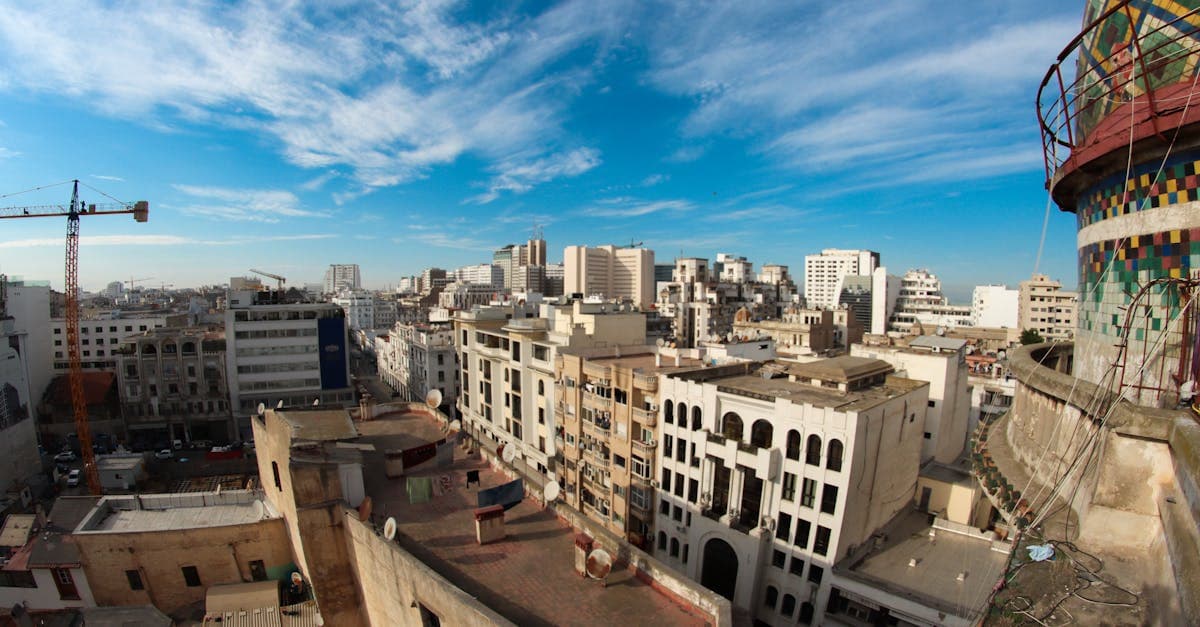
Casablanca at a glance for Delaware LLC founders
- Country: Morocco
- Region: North Africa
- Population: ~4 million metro
Morocco's economic capital. Africa-Europe bridge; growing fintech and SaaS sector; French-language tech market.
Who in Casablanca forms Delaware LLCs
Casablanca founders span fintech, agency services, ecommerce, and freelance services for European and US clients.
What is specific to Casablanca
Morocco-US tax treaty provides reduced withholding on certain income types. CFC (Casablanca Finance City) status available for certain financial entities.
Top industries among Casablanca-based Delaware LLC founders
- Delaware LLC for SaaS founders
- Delaware LLC for Digital agencies
- Delaware LLC for Shopify store owners
Formation timeline from Casablanca
The 8-10 day Delaware LLC formation timeline applies uniformly: Day 1 we file the Certificate of Formation with Delaware; Days 2-3 Delaware confirms and we email you the stamped certificate; Days 4-7 we apply for EIN with the IRS; Days 8-10 EIN approval arrives and you receive the full post-formation packet. From Casablanca, your involvement is entirely WhatsApp and email: no need to visit the US, no notarization in Morocco required.
Banking flow from Casablanca
After EIN approval, Casablanca founders typically open one of three US business bank accounts: Mercury (most common for tech and ecommerce founders), Relay Financial (for ecommerce with more refined sub-account features), or Wise Business (for multi-currency operations). All three accept Casablancaresidents as foreign-owner LLC operators after EIN issuance. Detailed banking flow for Morocco including alternatives when primary applications are rejected: Morocco banking deep dive.
Tax treaty status: Morocco-US
For tax-treaty-rate withholding on US-source FDAP income (royalties, certain affiliate income, AdSense), Moroccoresidents filing W-8BEN or W-8BEN-E with US payers can capture the treaty rate where a Morocco-US tax treaty applies. Full detail: Morocco tax treaty deep dive.
5472 + pro forma 1120 obligation
Every Casablanca-based founder owning a single-member Delaware LLC is a "foreign-owned disregarded entity" for US tax purposes. Form 5472 plus pro forma Form 1120 must be filed annually by April 15 (or October 15 with extension). Penalty for non-filing: $25,000 per occurrence. CPA fees: $500-1,200 typical. See the Form 5472 pillar for complete walkthrough.
Distribution and repatriation from US LLC to Casablanca
Once US LLC distributions are made to your US bank account, moving funds to Casablanca happens via Wise (typically lowest cost), Mercury international transfer, or direct SWIFT. Specific Morocco considerations for repatriation: Morocco repatriation guide.
BOI report from Casablanca
Under FinCEN's Interim Final Rule of March 26, 2025, LLCs formed in the United States, including a Delaware LLC, are exempt from Beneficial Ownership Information reporting. A Casablanca-based owner of a Delaware LLC has no BOI report to file; the obligations that remain are the $300 Delaware franchise tax and the annual Form 5472. See the BOI report glossary for how the rule changed.
Why Casablanca-specific guidance helps
Most generic Delaware LLC content is written for US-resident founders, then minimally adapted for non-residents. Casablancafounders face a different operational stack: bank-account applications from Morocco IPs, Stripe approval timelines from Morocco, tax-treaty article numbers specific to Morocco, and remittance patterns specific to Moroccobanking infrastructure. Pages tailored to your city skip the generic adaptation step.
Why do Casablanca founders register a Delaware LLC instead of a Moroccan SARL?
Casablanca sits where Africa meets Europe, and the founders who build here rarely sell to a single market. A SaaS team in the Maarif district might bill a client in Lyon, a partner in Lagos, and a customer in Texas inside the same week. A Moroccan SARL is built for the domestic market and for dirham-denominated trade, so the moment a founder in Casablanca wants to invoice in US dollars, accept Stripe payments, or sign a contract under a legal system a US buyer recognizes, the local entity starts to feel narrow. A Delaware LLC answers that gap. It gives a Casablanca founder a US legal home that American banks, payment processors, and enterprise procurement teams already understand without explanation.
The practical pull is that Delaware does not require members to be US citizens or residents, so a founder operating from Casablanca can own the entire company while living in Morocco. The state charges a $110 Certificate of Formation fee to create the entity and a flat $300 franchise tax due every June 1, with no income-based scaling and no requirement to travel to the United States. For a Casablanca operator who already deals with French and Arabic paperwork at home, the appeal is a clean, predictable English-language structure that does not punish growth.
Which US banks realistically approve a founder applying from Casablanca?
The honest answer for Casablanca is that traditional US branch banks are difficult to open from Morocco because they usually expect an in-person visit and a US address with a long paper trail. What works for founders here are the fintech platforms built around remote, non-resident owners. Mercury, Wise, Relay, Lili, and Payoneer all onboard Delaware LLC owners online, and they verify identity using a passport plus the company's formation documents rather than a US Social Security number. A Casablanca founder who has an EIN, a stamped Certificate of Formation, and a Moroccan passport can usually complete an application from a laptop in the Sidi Maarouf tech corridor.
Approval is never guaranteed, and Casablanca applicants should plan for it like a process rather than a formality. A few habits raise the odds:
- Apply only after the EIN letter arrives, because most platforms ask for it during signup.
- Use a real description of the business that matches the LLC purpose, since vague answers trigger review.
- Have the Moroccan passport and a proof of address in French or English ready as a scan.
- Keep early transfers modest and consistent, because sudden large dirham-to-dollar movements invite questions.
Founders in Casablanca who treat the first ninety days as a trust-building window, moving real client payments through the account rather than test transfers, tend to keep their accounts in good standing and avoid the freezes that hit accounts with erratic patterns.
How do Casablanca's core industries map onto a Delaware LLC?
The Casablanca founder profile leans heavily into SaaS, agency services, and Shopify-style ecommerce, and each of those maps cleanly onto a US LLC. A SaaS team selling subscription software needs to collect recurring card payments from US and European customers, and a Delaware LLC paired with Stripe gives them a billing entity those customers recognize. Agencies in Casablanca, often serving French and US clients with design, marketing, or development work, benefit even more directly because their US clients frequently prefer to pay a US company and to receive a clean US invoice for their own bookkeeping.
Ecommerce founders running Shopify stores out of Casablanca face a different but related problem. Payment gateways, dropshipping suppliers, and ad platforms increasingly gate the smoothest terms behind a US business entity. A Delaware LLC unlocks better access to those rails. Here is how the three map:
- SaaS: a US billing entity for Stripe subscriptions and enterprise procurement approval.
- Agencies: a US-invoicing structure that French and American clients pay without friction.
- Shopify stores: cleaner gateway approval and supplier terms tied to a US company.
Because Casablanca describes itself as Morocco's economic capital and an Africa-Europe bridge, founders here often serve more than one currency zone at once, and the Delaware LLC becomes the single legal hub that holds those revenue streams together under one recognizable structure.
Does the time zone in Casablanca change the 8 to 10 day formation timeline?
Casablanca runs close to UTC, which is one of the quieter advantages of forming from here. A founder in Casablanca shares a large overlap with both the United Kingdom and the US East Coast, so when a Delaware filing agent or a bank support team is working their morning, the Casablanca founder is in their afternoon. That overlap matters because formation is a sequence of handoffs. The state issues the Certificate of Formation, then the founder applies for the EIN, then the bank reviews the application, and each step depends on a reply landing before the next can start.
The Certificate of Formation itself is often processed in a couple of business days. The EIN is the step that sets the real pace, because the free SS-4 route runs roughly 8 to 10 business days for non-residents without a US Social Security number. A Casablanca founder cannot speed up the IRS, but they can avoid losing days to time-zone lag by replying to any agent or bank request the same working day it arrives. Because Casablanca mornings reach US desks early, a founder who checks email before lunch can keep the whole chain moving without the overnight gaps that slow founders further east in Asia or the Gulf.
What currency and remittance friction should a Casablanca founder expect?
Morocco maintains exchange controls through the Office des Changes, and the dirham is not freely convertible, so moving money between a personal Moroccan account and a US business account is the single most underestimated part of the plan for Casablanca founders. Revenue earned inside the US LLC lives in dollars at Mercury, Wise, or Payoneer, and bringing some of that home to Casablanca means converting to dirhams through a channel the Office des Changes recognizes. Founders who ignore this and try to shuffle large sums informally create both banking and regulatory headaches.
The cleaner pattern for a Casablanca operator is to keep the business and the personal worlds separate by design:
- Let the US LLC hold and spend dollars for US tools, ads, and contractor payments.
- Repatriate to Morocco deliberately, in documented amounts, through a compliant channel.
- Keep records that show each transfer is genuine business income, not hidden capital flight.
- Use Wise or Payoneer for the dirham conversion leg, since their rates are transparent.
Treating repatriation as a planned, documented event rather than a series of ad hoc transfers keeps a Casablanca founder on the right side of both Moroccan exchange rules and US bank monitoring, and it makes the eventual Moroccan tax conversation far simpler.
What documents does a founder in Casablanca actually need to gather?
The document list for a Casablanca founder is shorter than most people expect, which is part of why Delaware is approachable from Morocco. The foundation is a valid Moroccan passport, used as the primary identity proof for both the formation and the bank applications. The founder also needs a registered agent in Delaware, which is included in formation service, and a US business address that the company can use on filings and banking forms. None of this requires a notarized translation in most cases, since the formation paperwork is generated in English.
Beyond identity, a Casablanca founder should prepare the substance of the business. Banks and the EIN application both ask what the company does, so a clear one-line description that matches the LLC purpose, along with a website or portfolio, smooths the path. The core set looks like this:
- Moroccan passport, valid and clearly scanned.
- Certificate of Formation showing the Delaware LLC exists.
- EIN confirmation letter from the IRS after the SS-4 is processed.
- A proof of residential address in Casablanca, in French or English.
- A short, honest description of the business activity.
Founders in Casablanca who assemble these before starting, rather than scrambling mid-process, usually move from filing to a funded US bank account without the stalls that come from missing a single scan.
How does the US filing interact with Morocco's tax rules for a Casablanca resident?
A single-member Delaware LLC owned by a non-resident is treated as a disregarded entity for US federal income tax, which means the LLC itself generally does not pay US income tax on income that is not effectively connected to a US trade or business. For a Casablanca founder selling software or services to clients from Morocco, that often results in no US income tax at the federal level, though it does not erase US filing duties. The income still belongs to the founder as a Moroccan tax resident, and Morocco taxes its residents on their worldwide income.
This is where the city's own context matters. Morocco and the United States have a tax treaty that provides reduced withholding on certain income types, which can affect how specific cross- border payments are treated. Casablanca also offers Casablanca Finance City status for certain financial entities, a regime that some founders explore for qualifying activities. None of that removes the duty to report US LLC income on a Moroccan return, so a Casablanca founder should treat the US structure as a US legal and banking layer sitting on top of a real Moroccan tax obligation. A local accountant who understands the treaty and the CFC framework is worth far more than guesswork, because the interaction between the two systems is specific to Morocco.
What US filings must a Casablanca-based owner never miss?
Even when a Casablanca founder owes no US income tax, the US compliance calendar still applies, and missing it is expensive. A foreign-owned single-member LLC must file Form 5472 together with a pro forma Form 1120 each year to report transactions between the owner and the company. The penalty for failing to file Form 5472 is $25,000, and it is one of the harshest surprises a Casablanca founder can hit, precisely because they assumed a no-tax LLC meant no paperwork. The franchise tax of $300 is also due every June 1 regardless of revenue.
The good news for Casablanca founders is that one major obligation was removed. Under the FinCEN Interim Final Rule of March 26 2025, US-formed LLCs are exempt from the Beneficial Ownership Information report, so a Delaware LLC formed by a Casablanca resident does not file BOI. The recurring obligations a Casablanca owner must track are these:
- Form 5472 plus a pro forma Form 1120, filed annually, with a $25,000 penalty for skipping it.
- The flat $300 Delaware franchise tax, due every June 1.
- Keeping the registered agent active so state notices arrive.
Building a calendar around these three before the first invoice goes out spares a Casablanca founder from learning about the 5472 penalty after the fact.
What mistakes do Casablanca founders make most often?
The most common error among Casablanca founders is treating the Delaware LLC as a way to vanish from Moroccan tax, when in reality it is a US legal and banking layer that sits alongside a Moroccan obligation that does not go away. A founder who routes income through a US account but never reports it in Morocco is exposed, especially as exchange-control records and bank reporting become more connected. The second frequent mistake is mixing the US business account with personal dirham spending, which both confuses the bookkeeping and weakens the legal separation the LLC is supposed to provide.
Other recurring missteps cluster around process and paperwork:
- Applying to banks before the EIN arrives, then getting rejected and assuming the whole plan failed.
- Forgetting Form 5472, then facing the $25,000 penalty for a company that owed no tax.
- Moving large undocumented sums between Morocco and the US, triggering account reviews.
- Letting the registered agent lapse and missing a state notice as a result.
Casablanca founders who avoid these patterns share one trait: they plan the US structure and the Moroccan side together from the start, rather than bolting compliance on after the money starts moving. That single habit prevents the majority of the problems this guide describes.
How should a Casablanca founder sequence the whole process from day one?
Sequence beats speed for a Casablanca founder, because each step unlocks the next and skipping ahead causes rejections. The natural order starts with deciding the business activity clearly, since that description follows the founder through the EIN application and every bank form. Next comes the formation itself, paying the $110 Certificate of Formation fee and naming a Delaware registered agent. Only after the entity exists does the EIN application make sense, and that step carries the 8 to 10 business day wait that sets the overall pace for a Casablanca operator.
With the EIN letter in hand, the Casablanca founder moves to banking, choosing one of Mercury, Wise, Relay, Lili, or Payoneer and applying with the passport and formation documents. A sensible path looks like this:
- Define the activity and confirm the company name.
- File the Certificate of Formation and set the registered agent.
- Apply for the EIN and absorb the 8 to 10 day wait.
- Open a fintech account once the EIN arrives.
- Connect Stripe or the relevant gateway and start invoicing in dollars.
- Book the franchise tax and Form 5472 dates into a calendar immediately.
Delewarellc handles the formation, registered agent, and EIN steps under one $297 one-time price, which lets a Casablanca founder focus on the parts only they can do: describing the business, passing the bank review, and keeping the Moroccan tax side honest. Run in that order, the move from a Casablanca laptop to a funded US LLC is a matter of days of waiting rather than months of confusion.
Related guides for this city & country
- Delaware LLC from Morocco
- US business banking from Morocco
- Morocco, US tax treaty
- Sending profits home to Morocco
- Delaware LLC cost breakdown
- US business banking guide
- Dissolve a Delaware LLC (step by step)
- Delaware LLC from Tunis
- Delaware LLC from Dubai
- Delaware LLC from Abu Dhabi
- Delaware LLC from Riyadh
- Delaware LLC from Jeddah
- Delaware LLC from Doha
- Delaware LLC from Kuwait City
Frequently asked questions
Can a founder based in Casablanca form a Delaware LLC?
Yes. Casablanca (Morocco) founders form a Delaware LLC entirely online, with no US visit, SSN, or US address required. Formation works the same as the rest of Morocco: an 8-10 day timeline for the LLC, EIN, and bank applications, for $297 plus the $110 Delaware state fee.
What banking options work for Delaware LLC founders in Casablanca?
Morocco-US tax treaty provides reduced withholding on certain income types. CFC (Casablanca Finance City) status available for certain financial entities.
Who typically forms a Delaware LLC in Casablanca?
Casablanca founders span fintech, agency services, ecommerce, and freelance services for European and US clients. The most common sectors are saas, agencies, shopify-store.
Does living in Casablanca change Delaware LLC taxes versus the rest of Morocco?
No. Delaware LLC formation and US tax treatment are identical across Morocco. What is specific to Casablanca is the local banking and remittance flow described above. See the Morocco tax-treaty guide for how US-source income is treated for Morocco residents.
What is IRS Form 5472 and who must file it?
Form 5472 is required annually from foreign-owned single-member US LLCs treated as disregarded entities. The penalty for not filing is $25,000 per occurrence. Form 5472 must be filed with pro forma Form 1120 by April 15 (extendable to October 15).
What does a Delaware LLC cost?
Delaware LLC year-one costs are $110 state filing fee plus registered agent fees ($50-$179/year depending on provider) plus optional service fees. Delewarellc charges $297 plus the state fee for full formation including registered agent for Year 1, EIN application, Operating Agreement, and bank account applications.
Related resources
Form your Delaware LLC today
$299 + Delaware state fee, one-time. 8-10 days. One-time pricing.