Delaware LLC for Dubai founders (2026): from-Dubai formation, banking, taxes
Local guide for Dubai-based founders forming a Delaware LLC: banking flow from Dubai, UAE tax-treaty status, formation timeline, and what changes if you live in Dubai specifically.

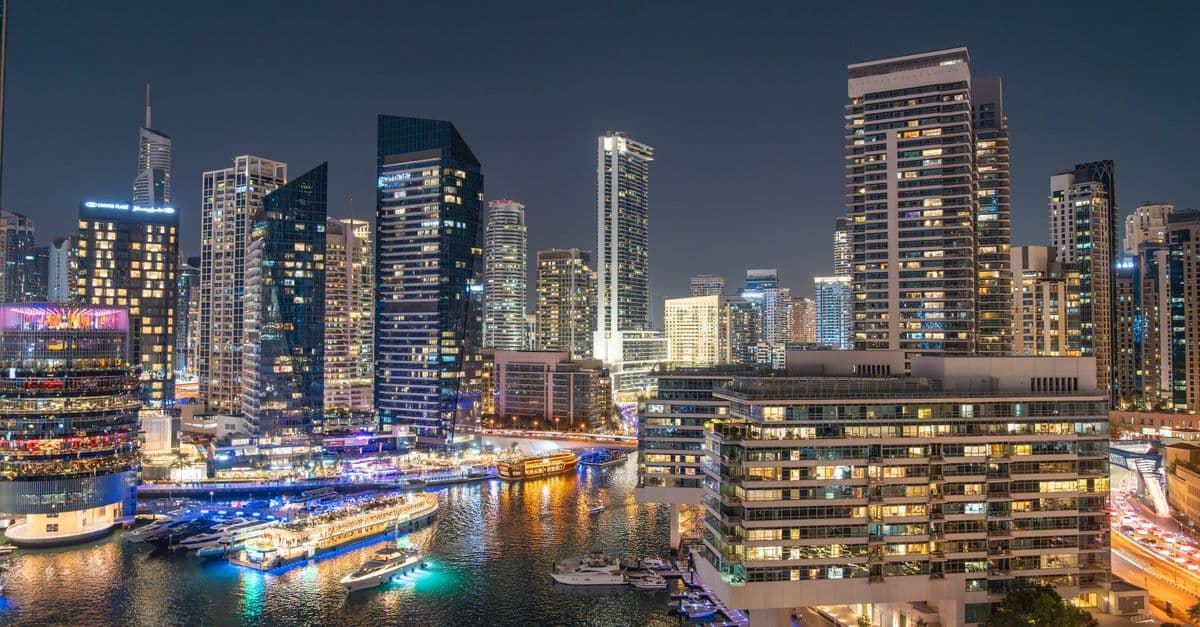
Dubai at a glance for Delaware LLC founders
- Country: UAE
- Region: Middle East
- Population: ~3.5 million
Middle East's commercial hub. Free zones (DIFC, DMCC) parallel to Delaware structure; major fintech and ecommerce presence.
Who in Dubai forms Delaware LLCs
Dubai is the Middle East's largest LLC-forming founder hub. Fintech entrepreneurs, ecommerce brands, agencies, and content creators dominate.
What is specific to Dubai
Dubai-resident founders often pair UAE free-zone company (for local tax residence) with Delaware LLC (for US-market access).
The UAE has no comprehensive US income tax treaty, so US-source FDAP income faces the 30% default. Dubai banking infrastructure (Emirates NBD, HSBC, Wio) supports both UAE and US LLC structures.
Top industries among Dubai-based Delaware LLC founders
- Delaware LLC for SaaS founders
- Delaware LLC for Shopify store owners
- Delaware LLC for Digital agencies
- Delaware LLC for Content creators
Formation timeline from Dubai
The 8-10 day Delaware LLC formation timeline applies uniformly: Day 1 we file the Certificate of Formation with Delaware; Days 2-3 Delaware confirms and we email you the stamped certificate; Days 4-7 we apply for EIN with the IRS; Days 8-10 EIN approval arrives and you receive the full post-formation packet. From Dubai, your involvement is entirely WhatsApp and email: no need to visit the US, no notarization in UAE required.
Banking flow from Dubai
After EIN approval, Dubai founders typically open one of three US business bank accounts: Mercury (most common for tech and ecommerce founders), Relay Financial (for ecommerce with more refined sub-account features), or Wise Business (for multi-currency operations). All three accept Dubairesidents as foreign-owner LLC operators after EIN issuance. Detailed banking flow for UAE including alternatives when primary applications are rejected: UAE banking deep dive.
Tax treaty status: UAE-US
For tax-treaty-rate withholding on US-source FDAP income (royalties, certain affiliate income, AdSense), UAEresidents filing W-8BEN or W-8BEN-E with US payers can capture the treaty rate where a UAE-US tax treaty applies. Full detail: UAE tax treaty deep dive.
5472 + pro forma 1120 obligation
Every Dubai-based founder owning a single-member Delaware LLC is a "foreign-owned disregarded entity" for US tax purposes. Form 5472 plus pro forma Form 1120 must be filed annually by April 15 (or October 15 with extension). Penalty for non-filing: $25,000 per occurrence. CPA fees: $500-1,200 typical. See the Form 5472 pillar for complete walkthrough.
Distribution and repatriation from US LLC to Dubai
Once US LLC distributions are made to your US bank account, moving funds to Dubai happens via Wise (typically lowest cost), Mercury international transfer, or direct SWIFT. Specific UAE considerations for repatriation: UAE repatriation guide.
BOI report from Dubai
Under FinCEN's Interim Final Rule of March 26, 2025, LLCs formed in the United States, including a Delaware LLC, are exempt from Beneficial Ownership Information reporting. A Dubai-based owner of a Delaware LLC has no BOI report to file; the obligations that remain are the $300 Delaware franchise tax and the annual Form 5472. See the BOI report glossary for how the rule changed.
Why Dubai-specific guidance helps
Most generic Delaware LLC content is written for US-resident founders, then minimally adapted for non-residents. Dubaifounders face a different operational stack: bank-account applications from UAE IPs, Stripe approval timelines from UAE, tax-treaty article numbers specific to UAE, and remittance patterns specific to UAEbanking infrastructure. Pages tailored to your city skip the generic adaptation step.
Why do Dubai founders form a Delaware LLC instead of relying only on a UAE free zone?
Dubai sits at the center of the Middle East's commercial activity, and the free zones that founders here already know, DIFC and DMCC, run on a logic that looks familiar once you study Delaware. Both give you a clean corporate wrapper, both separate the company from the founder's personal assets, and both are built to be understood by outside counterparties. The difference is reach. A DMCC license is excellent for UAE residence and local invoicing, but it does not automatically open the US payment rails, US marketplaces, or the US contract templates that an American customer expects to sign. A Delaware LLC fills exactly that gap, which is why so many Dubai-resident founders end up holding both structures at once.
The pairing is deliberate. Founders keep the UAE free-zone company for tax residence and regional operations, then add a Delaware LLC for US-market access. Stripe, US-based SaaS billing, and American B2B buyers all treat a Delaware entity as a known quantity, whereas a foreign-only structure can trigger extra review. The formation cost is modest against that access. Delaware charges $110 for the Certificate of Formation and a flat $300 franchise tax due each June 1, with no income tax on activity earned outside the state. For a Dubai fintech or ecommerce operator who already lives inside a free-zone framework, the Delaware layer is less a leap and more a second door into a different market. The two entities do different jobs, and keeping them distinct is what makes the combination work.
Which US banks realistically approve applicants based in Dubai?
The practical reality for a Dubai-based founder is that the US digital banking platforms, not the legacy branch banks, are the ones that approve foreign applicants. Mercury, Wise, Relay, Lili, and Payoneer were all built around remote onboarding, and each accepts the same core package: a Delaware LLC, an EIN from the IRS, a formation certificate, and a passport. A founder sitting in DIFC or Business Bay can complete that onboarding from a laptop without flying anywhere. UAE residence is generally a strong signal during review because the documentation trail, Emirates ID and free-zone licensing, is well organized and easy for a US platform to read.
It helps to separate the two banking worlds rather than collapse them. Local Dubai banks such as Emirates NBD, HSBC, and Wio serve the UAE side of the business, holding dirham balances and handling regional payments. The US platforms hold the dollar balances tied to the Delaware LLC. A few points worth keeping in mind for Dubai applicants:
- Apply only after the EIN arrives, since every US platform asks for it during the application.
- Use a consistent business address across the Delaware filing, the EIN, and the bank application to avoid mismatch flags.
- Expect identity checks tied to your passport and, where requested, your Emirates ID or free-zone license.
- Keep the US dollar account and the UAE dirham account clearly separated in your bookkeeping from the first transaction.
How do Dubai's top industries map onto a Delaware LLC?
The founder base in Dubai is concentrated in a handful of sectors, and each one maps cleanly onto a US LLC. SaaS founders building subscription products need US billing and a US entity to satisfy enterprise procurement, and a Delaware LLC gives them the wrapper that Stripe and American buyers expect. Shopify and ecommerce brands selling into the US benefit from a domestic entity that pairs with US fulfillment, US payment processing, and marketplace accounts that prefer a local seller of record. The Delaware structure removes the friction that a UAE-only entity can create at checkout and during payout.
Agencies and content creators round out the picture, and both have a direct reason to hold a US LLC. The sectors that dominate Dubai formation include:
- SaaS and software products that bill US customers on recurring plans.
- Shopify and ecommerce stores shipping to or selling into the US market.
- Agencies invoicing American clients who want to pay a US entity on US terms.
- Content creators monetizing US ad networks, sponsorships, and platform payouts.
For an agency in Dubai, the value is contractual. American clients are far more comfortable signing a master services agreement with a Delaware LLC than with a foreign entity they cannot easily research. For a content creator, the value is payout: US ad and sponsorship platforms route money to a US business account with fewer questions. In each case the Delaware LLC is not replacing the Dubai operation, it is giving the same founder a US-facing version of the same business.
Does the Dubai time zone affect the 8 to 10 day formation timeline?
Dubai runs on Gulf Standard Time, which sits four hours ahead of GMT and roughly eight to nine hours ahead of US Eastern time. That gap shapes how the formation timeline actually feels day to day. The Delaware Certificate of Formation itself is fast and largely automated, so the state filing does not stall on time zones. The part that depends on timing is the EIN. The IRS issues an EIN for free through the SS-4 process, and for a foreign founder without a US Social Security number that typically takes around 8 to 10 business days. None of those days are lost to Dubai's clock, but the back-and-forth can feel slower because a question sent from Dubai in the afternoon often lands when US offices are closed.
The way to neutralize the time-zone effect is to front-load the documents. A Dubai founder who has the passport scan, the chosen company name, and the registered-agent details ready before starting can compress the human delay to near zero. Submitting late in the Dubai evening means the US side picks it up the same business morning, which actually uses the time difference in your favor. Treat the 8 to 10 business day EIN window as the real pacing element and plan around it, rather than expecting the time gap itself to add days. For most Dubai founders the entire sequence, formation through EIN, lands inside two working weeks.
What currency and remittance friction do Dubai founders face?
Dubai founders operate in dirham, which is pegged to the US dollar at a fixed rate, and that peg removes a layer of friction that founders in floating-currency markets have to fight constantly. Because the dirham does not swing against the dollar, money moving between a UAE account and a US Delaware LLC account does not carry the exchange-rate uncertainty that, say, a founder in a volatile-currency country would face. What remains is the mechanics of moving funds and the bank fees attached to cross-border transfers, not large swings in value.
Even with the peg, a few remittance realities are worth planning for. The cleanest approach is to keep dollar revenue inside the US platforms and move only what you need into the UAE side:
- Hold US customer revenue in the Delaware LLC's dollar account and avoid converting it unnecessarily.
- Use Wise or Payoneer rails when you do need to move money between the UAE and US sides, since their cross-border pricing is transparent.
- Document every transfer between your UAE company and your Delaware LLC, because the two are legally separate entities and the paper trail matters for tax.
- Expect each Dubai bank to apply its own transfer fees and review steps on inbound US dollars.
The peg is a genuine advantage. It means a Dubai founder can treat the dollar revenue as relatively stable rather than something to hedge, which simplifies pricing and cash planning considerably.
What documents does a Dubai founder actually need?
The document list for a Dubai-based founder is short, and most of it you already hold. The Delaware LLC is formed with a Certificate of Formation filed for $110, and the founder does not need to be a US resident or citizen to be a member. What the process requires is identity and a US presence on paper, both of which a Dubai founder can supply without leaving the city.
Here is the realistic checklist for someone forming from Dubai:
- A valid passport for each member, used for both the formation and later bank onboarding.
- A registered agent in Delaware, which the formation service provides as part of the filing.
- The EIN obtained through the SS-4 application, free from the IRS, arriving in about 8 to 10 business days.
- A consistent business address used across the filing, the EIN, and bank applications.
- Your UAE free-zone license or Emirates ID where a US platform asks for supporting residence documents.
Note what is not on the list. You do not need a US visa, a US address you physically occupy, or a US partner. The free-zone documentation that a Dubai founder maintains for DIFC or DMCC is more than enough to satisfy the identity checks that follow. Because the founder package is light, the slow step is almost always the EIN wait, not document gathering. Assembling these items before you file is the single change that keeps a Dubai formation inside the two-week range.
How does the US LLC interact with the home-country tax angle for Dubai founders?
The tax picture for a Dubai founder is more favorable than for founders in most other cities, and it starts with the local environment. The UAE has historically had no personal income tax, and Dubai founders typically anchor their tax residence through a UAE free-zone company. The Delaware LLC sits on top of that as a US-facing entity. A single-member LLC owned by a non-US person is a disregarded entity for US tax purposes, which means the LLC itself is generally not taxed in the US on income that is not connected to a US trade or business in the technical sense the IRS uses.
Two things deserve real attention. First, the US LLC carries a reporting obligation even when it owes no US tax. A foreign-owned single-member LLC must file Form 5472 together with a pro forma Form 1120 each year, and missing that filing carries a $25,000 penalty. This is reporting, not taxation, but it is not optional. Second, there is no UAE-US income tax treaty, so US-source FDAP income (such as US dividends or royalties) faces the default 30% withholding with no treaty reduction; Dubai founders should confirm how their free-zone structure and the Delaware LLC are treated together rather than in isolation. The clean separation of the two entities, UAE company for residence and Delaware LLC for US access, is what keeps the tax angle straightforward, provided the 5472 filing is never skipped.
Are Delaware LLCs owned by Dubai founders affected by BOI reporting?
Beneficial ownership reporting was a live worry for foreign founders for a stretch, and Dubai entrepreneurs asked about it constantly because they did not want a US filing that exposed personal details across borders. The position changed with the FinCEN Interim Final Rule of March 26, 2025. Under that rule, US-formed entities, including a Delaware LLC owned by a Dubai-based founder, are exempt from the beneficial ownership information reporting requirement. For a founder weighing privacy alongside structure, that removed a recurring concern from the decision.
It is worth being precise about what the exemption covers so a Dubai founder does not over-read it. The BOI exemption applies to the reporting obligation for US-formed LLCs, and it does not change any of the other filings the entity must complete. The $300 Delaware franchise tax is still due each June 1. The Form 5472 and pro forma 1120 are still required every year for a foreign-owned single-member LLC, with the same $25,000 penalty attached to non-filing. In other words, the BOI relief simplifies the privacy question for Dubai founders without lightening the genuine annual compliance load. Treat it as one fewer form, not as a reason to relax the filings that remain mandatory.
What mistakes do Dubai founders make most often?
The errors that cost Dubai founders the most are rarely about Delaware itself and almost always about how the two entities interact. The most common is treating the UAE free-zone company and the Delaware LLC as one blended operation. They are legally distinct, and money that moves between them without documentation creates a messy trail that complicates both the US 5472 filing and the UAE side. A second frequent mistake is applying to US banks before the EIN has arrived, which guarantees a rejected or stalled application because every platform asks for it up front.
A few other patterns show up repeatedly among Dubai founders:
- Forgetting the June 1 franchise tax deadline because it does not align with any UAE filing date they already track.
- Skipping the Form 5472 filing on the assumption that no US tax owed means no US filing required, which exposes them to the $25,000 penalty.
- Using different business addresses across the formation, the EIN, and the bank application, triggering identity mismatches.
- Assuming a DMCC or DIFC license substitutes for US-market credibility, when American buyers specifically want a US entity.
Each of these is avoidable with a small amount of upfront discipline. Keep the entities separate in the books, wait for the EIN, calendar the June 1 date the moment the LLC is formed, and file the 5472 every year regardless of tax owed. Dubai founders who get these four habits right tend to find the structure quiet and predictable thereafter.
How long does the full Dubai-to-Delaware setup take from decision to live account?
From the moment a Dubai founder decides to proceed, the realistic end-to-end timeline runs to roughly two to three working weeks, and the pacing is dominated by the EIN rather than the formation. The Delaware Certificate of Formation processes quickly. The EIN, obtained free through the SS-4 process, is the step that takes about 8 to 10 business days for a non-US founder. Only once the EIN is in hand can the founder open a US bank account with Mercury, Wise, Relay, Lili, or Payoneer, and that onboarding itself usually resolves within a few days for a well-documented UAE applicant.
The sequence matters more than raw speed. A Dubai founder who tries to run steps in parallel, applying to a bank before the EIN exists, simply restarts the bank clock and loses time. The orderly path is formation first, EIN second, bank third, and it compresses well when the documents are ready in advance. Pricing is predictable across the whole arc: $297 one-time for the formation work, $110 for the state certificate, and the $300 franchise tax that arrives each June 1 thereafter. For a founder in Business Bay or DIFC, that means a US-operating Delaware LLC with a live dollar account inside about three weeks, built entirely from a Dubai desk without a single US trip.
Related guides for this city & country
- Delaware LLC from UAE
- US business banking from UAE
- UAE, US tax treaty
- Sending profits home to UAE
- Delaware LLC from Abu Dhabi
- Content creator from UAE forming a Delaware LLC
- Shopify store owner from UAE forming a Delaware LLC
- Delaware LLC cost breakdown
- US business banking guide
- Dissolve a Delaware LLC (step by step)
- Delaware LLC from Riyadh
- Delaware LLC from Jeddah
- Delaware LLC from Doha
- Delaware LLC from Kuwait City
Frequently asked questions
Can a founder based in Dubai form a Delaware LLC?
Yes. Dubai (UAE) founders form a Delaware LLC entirely online, with no US visit, SSN, or US address required. Formation works the same as the rest of UAE: an 8-10 day timeline for the LLC, EIN, and bank applications, for $297 plus the $110 Delaware state fee.
What banking options work for Delaware LLC founders in Dubai?
Dubai-resident founders often pair UAE free-zone company (for local tax residence) with Delaware LLC (for US-market access). The UAE has no comprehensive US income tax treaty, so US-source FDAP income faces the 30% default. Dubai banking infrastructure (Emirates NBD, HSBC, Wio) supports both UAE and US LLC structures.
Who typically forms a Delaware LLC in Dubai?
Dubai is the Middle East's largest LLC-forming founder hub. Fintech entrepreneurs, ecommerce brands, agencies, and content creators dominate. The most common sectors are saas, shopify-store, agencies, content-creators.
Does living in Dubai change Delaware LLC taxes versus the rest of UAE?
No. Delaware LLC formation and US tax treatment are identical across UAE. What is specific to Dubai is the local banking and remittance flow described above. See the UAE tax-treaty guide for how US-source income is treated for UAE residents.
What is IRS Form 5472 and who must file it?
Form 5472 is required annually from foreign-owned single-member US LLCs treated as disregarded entities. The penalty for not filing is $25,000 per occurrence. Form 5472 must be filed with pro forma Form 1120 by April 15 (extendable to October 15).
What does a Delaware LLC cost?
Delaware LLC year-one costs are $110 state filing fee plus registered agent fees ($50-$179/year depending on provider) plus optional service fees. Delewarellc charges $297 plus the state fee for full formation including registered agent for Year 1, EIN application, Operating Agreement, and bank account applications.
Related resources
Form your Delaware LLC today
$299 + Delaware state fee, one-time. 8-10 days. One-time pricing.