Delaware LLC for Colombo founders (2026): from-Colombo formation, banking, taxes
Local guide for Colombo-based founders forming a Delaware LLC: banking flow from Colombo, Sri Lanka tax-treaty status, formation timeline, and what changes if you live in Colombo specifically.

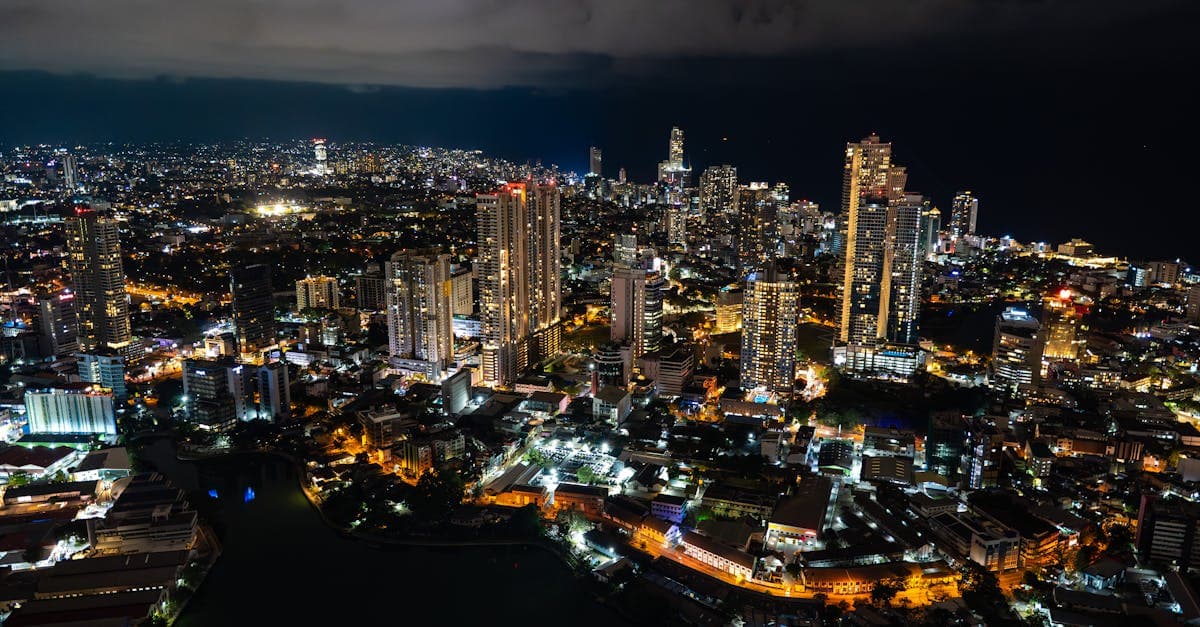
Colombo at a glance for Delaware LLC founders
- Country: Sri Lanka
- Region: South Asia
- Population: ~5.6 million metro
Sri Lanka's commercial capital. Growing BPO and IT-services exports.
Who in Colombo forms Delaware LLCs
Colombo founders span IT services, agency operations, and ecommerce.
What is specific to Colombo
Sri Lanka's foreign-exchange controls affect outward remittance. Delaware LLC plus USD banking attractive.
Top industries among Colombo-based Delaware LLC founders
- Delaware LLC for Digital agencies
- Delaware LLC for SaaS founders
- Delaware LLC for Shopify store owners
- Delaware LLC for Freelancers and consultants
Formation timeline from Colombo
The 8-10 day Delaware LLC formation timeline applies uniformly: Day 1 we file the Certificate of Formation with Delaware; Days 2-3 Delaware confirms and we email you the stamped certificate; Days 4-7 we apply for EIN with the IRS; Days 8-10 EIN approval arrives and you receive the full post-formation packet. From Colombo, your involvement is entirely WhatsApp and email: no need to visit the US, no notarization in Sri Lanka required.
Banking flow from Colombo
After EIN approval, Colombo founders typically open one of three US business bank accounts: Mercury (most common for tech and ecommerce founders), Relay Financial (for ecommerce with more refined sub-account features), or Wise Business (for multi-currency operations). All three accept Colomboresidents as foreign-owner LLC operators after EIN issuance. Detailed banking flow for Sri Lanka including alternatives when primary applications are rejected: Sri Lanka banking deep dive.
Tax treaty status: Sri Lanka-US
For tax-treaty-rate withholding on US-source FDAP income (royalties, certain affiliate income, AdSense), Sri Lankaresidents filing W-8BEN or W-8BEN-E with US payers can capture the treaty rate where a Sri Lanka-US tax treaty applies. Full detail: Sri Lanka tax treaty deep dive.
5472 + pro forma 1120 obligation
Every Colombo-based founder owning a single-member Delaware LLC is a "foreign-owned disregarded entity" for US tax purposes. Form 5472 plus pro forma Form 1120 must be filed annually by April 15 (or October 15 with extension). Penalty for non-filing: $25,000 per occurrence. CPA fees: $500-1,200 typical. See the Form 5472 pillar for complete walkthrough.
Distribution and repatriation from US LLC to Colombo
Once US LLC distributions are made to your US bank account, moving funds to Colombo happens via Wise (typically lowest cost), Mercury international transfer, or direct SWIFT. Specific Sri Lanka considerations for repatriation: Sri Lanka repatriation guide.
BOI report from Colombo
Under FinCEN's Interim Final Rule of March 26, 2025, LLCs formed in the United States, including a Delaware LLC, are exempt from Beneficial Ownership Information reporting. A Colombo-based owner of a Delaware LLC has no BOI report to file; the obligations that remain are the $300 Delaware franchise tax and the annual Form 5472. See the BOI report glossary for how the rule changed.
Why Colombo-specific guidance helps
Most generic Delaware LLC content is written for US-resident founders, then minimally adapted for non-residents. Colombofounders face a different operational stack: bank-account applications from Sri Lanka IPs, Stripe approval timelines from Sri Lanka, tax-treaty article numbers specific to Sri Lanka, and remittance patterns specific to Sri Lankabanking infrastructure. Pages tailored to your city skip the generic adaptation step.
Why do Colombo founders form a Delaware LLC instead of registering locally?
Colombo is Sri Lanka's commercial capital, and the founders who work here tend to sell outward rather than inward. They run IT-services teams, marketing and creative agencies, and ecommerce stores whose customers sit in the United States, the United Kingdom, and the Gulf. When the buyer is abroad and the payment is in dollars, a local Sri Lankan company structure starts to feel like a bottleneck rather than a foundation. A Delaware LLC gives a Colombo founder a US-domiciled entity that American clients recognise on a contract, that Stripe and similar processors accept without a second look, and that holds money in dollars before any conversion back to rupees ever has to happen.
The other driver is foreign-exchange friction. Sri Lanka's outward remittance controls make it slow and sometimes uncertain to move money out of the country, which matters for a founder who needs to pay an overseas contractor, a software subscription, or an ad platform. A Delaware LLC paired with USD banking flips that problem around. Revenue lands in a US account, expenses are paid from the same account in the currency they are billed in, and only the founder's personal drawings need to cross the border into Sri Lanka. The entity itself is cheap to keep alive: a $110 Certificate of Formation to create it and a flat $300 Delaware franchise tax each year, due on 1 June. That predictability is part of the appeal for a Colombo team that wants its US-facing operations to look settled.
Which US banks and fintechs realistically approve applicants from Colombo?
A founder in Colombo will almost never get a traditional US brick-and-mortar bank account without flying to the United States, so the realistic path runs through fintech platforms that onboard remotely. Mercury, Wise, Relay, Lili, and Payoneer all serve non-resident owners of US LLCs and complete their checks online. Each verifies the company through its Delaware formation documents and Employer Identification Number, then verifies the founder through a passport and, in most cases, proof of a Colombo residential address. None of them requires the founder to hold a US Social Security Number, which is the single fact that makes remote banking workable from Sri Lanka at all.
- Mercury and Relay are oriented toward operating accounts and tend to suit agencies and SaaS teams that want clean bookkeeping.
- Wise and Payoneer are strong for receiving client payments across currencies, which fits Colombo freelancers and agency owners billing in dollars, pounds, and euros.
- Lili is built around solo operators, which maps onto the many one-person ecommerce and freelance businesses in the city.
Approval is not automatic, and a Colombo founder should expect to explain the business clearly. Platforms weigh the type of activity, the countries the company deals with, and whether the application details line up. A clean, specific description of the work, such as "Shopify store selling to US customers" or "marketing agency serving US clients," lands better than a vague label. Sri Lanka is not on a footing that blocks these fintechs outright, but a founder should have the formation paperwork, the EIN confirmation, and a consistent address ready before applying, because gaps and mismatches are the most common reason a remote application stalls.
How do Colombo's top industries map onto a US LLC?
Colombo's founder base clusters into a few recognisable shapes, and each one fits a Delaware LLC for its own reason. The city's strongest export categories are services and software, where the product crosses a border as a file or a deliverable rather than as a shipped good, and that is exactly the case where a US entity removes the most friction.
- Agencies: Marketing, design, and development shops in Colombo sign US clients who prefer to contract with and pay a US company. The LLC becomes the name on the master services agreement and the entity that invoices in dollars.
- SaaS: Software teams selling subscriptions need a US entity to hold a Stripe or Paddle account cleanly and to present a US business to American buyers comparing vendors.
- Shopify stores: Ecommerce operators selling into the US market use the LLC to run their store, payment processor, and supplier payments through a single dollar-denominated structure.
- Freelancers: Independent developers, writers, and consultants in Colombo use the LLC to bill higher-value US clients who expect to engage a company rather than an individual abroad.
Across all four, the through-line is the same. Colombo founders sell intangible work to buyers who pay in dollars, and a Delaware LLC gives that work a US home that processors, marketplaces, and clients already trust. It does not change what the founder builds in Colombo. It changes how the revenue is collected, where it sits before conversion, and how professional the business looks to the person signing the contract on the other side.
How does the time-zone gap between Colombo and the US affect the 8 to 10 day timeline?
Colombo runs at UTC plus 5.5 hours, which puts it roughly nine and a half to twelve and a half hours ahead of the continental United States depending on the coast. That gap shapes the rhythm of formation more than the total length of it. When a founder sends a document or a question at the end of a Colombo working day, the US-side processing happens overnight in Sri Lanka, and the reply is waiting the next morning. Handled well, the time difference turns into a relay that moves the work forward around the clock rather than a delay.
The realistic schedule still has two parts. The Delaware filing itself is fast, and the Certificate of Formation is typically returned within a couple of business days. The Employer Identification Number is the slower leg for any non-resident, because a founder without a Social Security Number files Form SS-4 to the IRS, and that route generally takes around 8 to 10 business days to produce the number. For a Colombo founder, the practical lever is to submit complete information before going to sleep so that the half-day offset works in their favour, and to remember that the IRS observes US federal holidays that do not line up with Sri Lankan ones. A filing that crosses a US holiday week will sit untouched on a day that is an ordinary working day in Colombo.
What currency and remittance friction should a Colombo founder plan around?
Sri Lanka's foreign-exchange controls are the central money problem a Colombo founder is solving, and the Delaware LLC is the tool that contains it. The controls restrict how freely money moves out of the country, which is awkward for a business that needs to pay overseas suppliers, software vendors, contractors, and ad platforms on time. By keeping revenue inside a US bank account attached to the LLC, the founder pays those dollar costs directly from dollars and avoids routing every transaction through the local banking system and its outward limits.
The conversion to rupees then becomes a deliberate, smaller event rather than a constant tax on every payment. A Colombo founder can decide how much to bring home and when, instead of converting each client receipt the moment it arrives. A few habits keep this clean:
- Keep a clear record of which transfers into Sri Lanka are personal income, so they can be explained to a local bank if asked.
- Use the LLC's USD account for as many business expenses as possible to minimise the number of border crossings the money makes.
- Watch the spread and fees on each conversion, since repeated small conversions cost more in aggregate than planned larger ones.
- Expect that documentation for inbound remittances matters as much as for outbound ones under Sri Lanka's rules.
What documents does a founder in Colombo actually need?
The document list for a Colombo founder is short, and most of it is paperwork they already hold. The anchor is a valid passport, which serves as the primary identity document for both the formation and the bank onboarding. A founder does not need a US visa, a US address, or a Social Security Number to form the LLC or to open the fintech accounts described above. The company side of the paperwork, the Certificate of Formation and the EIN confirmation, is produced during formation rather than something the founder supplies in advance.
Where Colombo founders should prepare carefully is proof of address and the description of the business. Fintech platforms generally ask for evidence of a residential address, and a Sri Lankan utility bill, bank statement, or similar document in the founder's name covers it, as long as the name and address match the application exactly. The most common practical snag is a mismatch between a name as written on a passport and the same name on a local utility bill, so it is worth checking both before applying. A short, accurate explanation of what the company does and which countries it serves rounds out the file. With the passport, a matching proof of address, the formation document, and the EIN, a Colombo founder has everything a remote bank review normally asks for.
How does forming a US LLC interact with Sri Lankan tax obligations?
Forming a Delaware LLC does not move a Colombo founder out of Sri Lanka's tax system. A founder who lives in Colombo and runs the business from there is generally a Sri Lankan tax resident, and the income that reaches them personally is still relevant to their home-country filing. The LLC is a US legal wrapper for collecting and holding revenue, not a way to step outside Sri Lankan obligations. A founder should treat the two systems as connected and keep records that satisfy both, rather than assuming the US entity makes local reporting disappear.
On the US side, a non-resident single-member LLC with no US-based activity usually owes no US federal income tax on foreign-sourced income, but it still carries a filing duty. The owner must file Form 5472 together with a pro forma Form 1120 each year to report transactions between the owner and the company, and the penalty for missing that filing starts at $25,000, which makes it the obligation a Colombo founder least wants to overlook. The Delaware franchise tax of $300 is separate and falls due on 1 June each year. Because tax treatment depends on personal residency and the specifics of the business, a Colombo founder with meaningful revenue should confirm the Sri Lankan side with a local tax adviser rather than guessing from US-focused guidance.
Does a Colombo founder need to worry about BOI reporting?
Beneficial ownership information reporting was a live worry for many non-resident founders, and a Colombo founder researching this in 2026 will find a lot of older material that no longer applies. The position changed with the FinCEN Interim Final Rule of 26 March 2025. Under that rule, LLCs formed in the United States are exempt from the beneficial ownership information reporting requirement, so a Delaware LLC owned by a founder in Colombo does not file a BOI report on that basis.
That removes one recurring task from the founder's calendar, but it does not change the filings that do remain. The Delaware franchise tax of $300 still falls due on 1 June, and the Form 5472 plus pro forma 1120 obligation still applies to a non-resident-owned single-member LLC. A Colombo founder should be careful to separate these in their mind: the BOI exemption is about ownership disclosure to FinCEN, while the franchise tax and the 5472 are entirely separate duties that continue every year. Reading a guide written before the March 2025 rule and assuming BOI is still required is a small but understandable mistake, and the simplest correction is to check the date of any source before acting on it.
What mistakes do Colombo founders make most often?
The errors that catch Colombo founders are rarely about Delaware itself and almost always about the gap between Sri Lanka and the US systems. The first is treating the LLC as a way to ignore Sri Lankan tax residency, which it is not. The second is underestimating the EIN wait and promising a client a live bank account in a few days, when the SS-4 route to an EIN for a non-resident generally runs around 8 to 10 business days before banking can even begin.
- Letting the passport name and the proof-of-address name differ, which stalls fintech onboarding more than any other single issue.
- Forgetting the 1 June Delaware franchise tax of $300 because it does not line up with any Sri Lankan deadline.
- Overlooking the Form 5472 and pro forma 1120 filing and exposing the business to the $25,000 penalty.
- Converting every client payment to rupees on arrival instead of holding revenue in the USD account and converting deliberately.
- Describing the business vaguely on a bank application rather than naming the agency, SaaS, store, or freelance activity precisely.
None of these is hard to avoid once a Colombo founder sees the pattern. The business stays in Colombo, the entity and the dollars sit in the US, the home-country obligations continue, and a handful of US deadlines get added to the calendar. Pricing for the formation itself is a single one-time $297, and the recurring costs are the $110 already spent on the Certificate of Formation at the start and the predictable $300 franchise tax each June. Keeping those few moving parts straight is most of what separates a smooth setup from a frustrating one.
Related guides for this city & country
- Delaware LLC from Sri Lanka
- US business banking from Sri Lanka
- Sri Lanka, US tax treaty
- Sending profits home to Sri Lanka
- Delaware LLC cost breakdown
- US business banking guide
- Dissolve a Delaware LLC (step by step)
- Delaware LLC from Dhaka
- Delaware LLC from Chittagong
- Delaware LLC from Karachi
- Delaware LLC from Lahore
- Delaware LLC from Islamabad
- Delaware LLC from Mumbai
- Delaware LLC from Bangalore
Frequently asked questions
Can a founder based in Colombo form a Delaware LLC?
Yes. Colombo (Sri Lanka) founders form a Delaware LLC entirely online, with no US visit, SSN, or US address required. Formation works the same as the rest of Sri Lanka: an 8-10 day timeline for the LLC, EIN, and bank applications, for $297 plus the $110 Delaware state fee.
What banking options work for Delaware LLC founders in Colombo?
Sri Lanka's foreign-exchange controls affect outward remittance. Delaware LLC plus USD banking attractive.
Who typically forms a Delaware LLC in Colombo?
Colombo founders span IT services, agency operations, and ecommerce. The most common sectors are agencies, saas, shopify-store, freelancers.
Does living in Colombo change Delaware LLC taxes versus the rest of Sri Lanka?
No. Delaware LLC formation and US tax treatment are identical across Sri Lanka. What is specific to Colombo is the local banking and remittance flow described above. See the Sri Lanka tax-treaty guide for how US-source income is treated for Sri Lanka residents.
What is IRS Form 5472 and who must file it?
Form 5472 is required annually from foreign-owned single-member US LLCs treated as disregarded entities. The penalty for not filing is $25,000 per occurrence. Form 5472 must be filed with pro forma Form 1120 by April 15 (extendable to October 15).
What does a Delaware LLC cost?
Delaware LLC year-one costs are $110 state filing fee plus registered agent fees ($50-$179/year depending on provider) plus optional service fees. Delewarellc charges $297 plus the state fee for full formation including registered agent for Year 1, EIN application, Operating Agreement, and bank account applications.
Related resources
Form your Delaware LLC today
$299 + Delaware state fee, one-time. 8-10 days. One-time pricing.