Delaware LLC for Lahore founders (2026): from-Lahore formation, banking, taxes
Local guide for Lahore-based founders forming a Delaware LLC: banking flow from Lahore, Pakistan tax-treaty status, formation timeline, and what changes if you live in Lahore specifically.

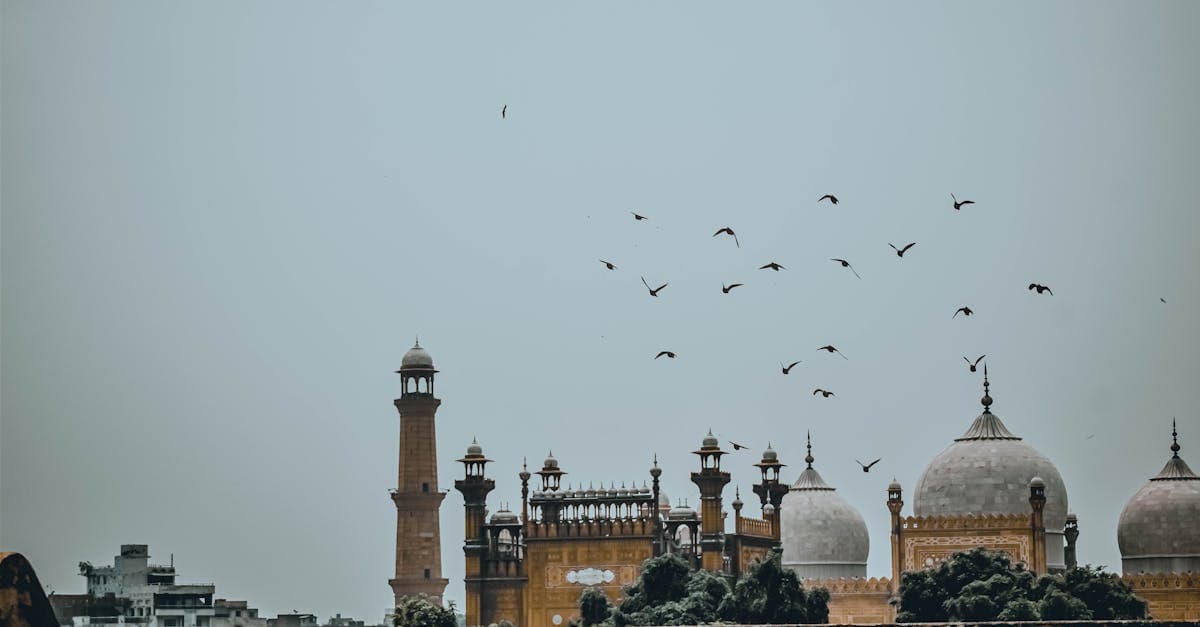
Lahore at a glance for Delaware LLC founders
- Country: Pakistan
- Region: South Asia
- Population: ~13 million metro
Pakistan's cultural and tech hub. Major IT-park presence; significant freelance worker base.
Who in Lahore forms Delaware LLCs
Lahore is Pakistan's tech-export heartland. Freelancers, agency founders, and SaaS makers form the bulk of LLC-forming demographic.
What is specific to Lahore
Lahore's PSEB (Pakistan Software Export Board) registration is parallel to Delaware LLC formation; the two coexist for most IT-export founders.
Top industries among Lahore-based Delaware LLC founders
- Delaware LLC for SaaS founders
- Delaware LLC for Digital agencies
- Delaware LLC for Freelancers and consultants
- Delaware LLC for Shopify store owners
- Delaware LLC for Content creators
Formation timeline from Lahore
The 8-10 day Delaware LLC formation timeline applies uniformly: Day 1 we file the Certificate of Formation with Delaware; Days 2-3 Delaware confirms and we email you the stamped certificate; Days 4-7 we apply for EIN with the IRS; Days 8-10 EIN approval arrives and you receive the full post-formation packet. From Lahore, your involvement is entirely WhatsApp and email: no need to visit the US, no notarization in Pakistan required.
Banking flow from Lahore
After EIN approval, Lahore founders typically open one of three US business bank accounts: Mercury (most common for tech and ecommerce founders), Relay Financial (for ecommerce with more refined sub-account features), or Wise Business (for multi-currency operations). All three accept Lahoreresidents as foreign-owner LLC operators after EIN issuance. Detailed banking flow for Pakistan including alternatives when primary applications are rejected: Pakistan banking deep dive.
Tax treaty status: Pakistan-US
For tax-treaty-rate withholding on US-source FDAP income (royalties, certain affiliate income, AdSense), Pakistanresidents filing W-8BEN or W-8BEN-E with US payers can capture the treaty rate where a Pakistan-US tax treaty applies. Full detail: Pakistan tax treaty deep dive.
5472 + pro forma 1120 obligation
Every Lahore-based founder owning a single-member Delaware LLC is a "foreign-owned disregarded entity" for US tax purposes. Form 5472 plus pro forma Form 1120 must be filed annually by April 15 (or October 15 with extension). Penalty for non-filing: $25,000 per occurrence. CPA fees: $500-1,200 typical. See the Form 5472 pillar for complete walkthrough.
Distribution and repatriation from US LLC to Lahore
Once US LLC distributions are made to your US bank account, moving funds to Lahore happens via Wise (typically lowest cost), Mercury international transfer, or direct SWIFT. Specific Pakistan considerations for repatriation: Pakistan repatriation guide.
BOI report from Lahore
Under FinCEN's Interim Final Rule of March 26, 2025, LLCs formed in the United States, including a Delaware LLC, are exempt from Beneficial Ownership Information reporting. A Lahore-based owner of a Delaware LLC has no BOI report to file; the obligations that remain are the $300 Delaware franchise tax and the annual Form 5472. See the BOI report glossary for how the rule changed.
Why Lahore-specific guidance helps
Most generic Delaware LLC content is written for US-resident founders, then minimally adapted for non-residents. Lahorefounders face a different operational stack: bank-account applications from Pakistan IPs, Stripe approval timelines from Pakistan, tax-treaty article numbers specific to Pakistan, and remittance patterns specific to Pakistanbanking infrastructure. Pages tailored to your city skip the generic adaptation step.
Why do Lahore founders register a Delaware LLC instead of staying purely local?
Lahore sits at the center of Pakistan's software-export economy, and the founders who contact us from the city tend to fall into a few clear groups: freelancers billing clients in dollars, agency owners running teams out of Gulberg or Johar Town, and SaaS makers who sell to a mostly US audience. For all of them, the same friction appears early. A US client or a Stripe-style processor wants to pay a US entity, not an individual sending invoices from a Lahore address. A Delaware LLC closes that gap by giving the founder a recognized US company that can hold a US bank account, sign US contracts, and appear on a Stripe or PayPal account without raising the questions a personal Pakistani profile would.
Delaware specifically, rather than another state, is the default for a reason Lahore founders care about: predictability. The Certificate of Formation costs $110, the annual franchise tax is a flat $300 due on June 1, and the rules around single-member foreign-owned LLCs are well understood by accountants and banks alike. For a Lahore agency that wants to look like a serious counterparty to a US software buyer, that boring consistency is the point. The founder is not trying to optimize an exotic structure. They want a clean, low-maintenance entity that an American client recognizes instantly and that does not demand a US visit or a US co-founder to operate.
Which US banks realistically approve applicants based in Lahore?
This is the question Lahore founders ask first, because a Delaware LLC without a working US bank account solves nothing. The practical answer is the fintech layer rather than the old branch-based banks. Mercury, Wise, Relay, Lili, and Payoneer are the names that repeatedly work for a Pakistan-resident founder who never sets foot in the United States. These platforms onboard remotely, accept a non-US founder, and verify the LLC using the formation documents and the EIN rather than demanding an in-person Social Security number check the way a traditional bank often does.
For a founder in Lahore, the realistic path usually looks like this:
- Form the Delaware LLC and obtain the EIN before applying to any bank.
- Apply to Mercury or Relay first, since both are built around startup and remote LLCs.
- Keep Wise and Payoneer ready as receiving rails, because they also handle the Pakistani side of getting money home.
- Use Lili as a fallback for a simpler single-member operation.
Approval is never guaranteed for any single applicant, and Pakistan is a market some platforms review more carefully than others. The reliable pattern is to present a clean profile: a real business description that matches the LLC, a consistent address, and the EIN letter in hand. A Lahore freelancer describing genuine software-export work will read very differently to an underwriting team than a vague, generic application, and that clarity is what moves a borderline review toward approval.
How do Lahore's top industries map onto a Delaware LLC?
The Lahore founder base is not abstract. It clusters around a handful of business types, and each one fits a Delaware LLC in a slightly different way. SaaS makers need a US entity to take subscription revenue through Stripe and to sign data-processing terms with US customers. Agencies need it to invoice retainers and to look like a domestic vendor to a US marketing or development client. Freelancers use it to graduate from per-project PayPal transfers into a proper company that can scale into a small team. Shopify store operators need it for payment processing and supplier relationships that expect a US business. Content creators need it to collect platform payouts, sponsorship income, and ad revenue under one clean structure.
Mapping those Lahore industries onto the LLC looks like this:
- SaaS: the LLC holds the Stripe account and the customer contracts, keeping recurring revenue in a US entity.
- Agencies: the LLC signs the master services agreement and issues the invoices, so the Lahore team operates behind a US-facing front.
- Freelancers: the LLC becomes the contracting party on Upwork-style or direct deals, separating personal and business money.
- Shopify stores: the LLC carries the payment gateway and the store's US business identity.
- Content creators: the LLC consolidates payouts from multiple platforms into one reportable structure.
In each case the LLC does not change the Lahore-based work. It changes how that work gets paid for and contracted, which is exactly the friction these founders are trying to remove.
What does the time-zone gap between Lahore and Delaware mean for your formation timeline?
Lahore runs on Pakistan Standard Time, which is roughly nine to ten hours ahead of the US East Coast where Delaware sits. That gap matters less than first-time founders fear, but it does shape the rhythm of a formation. The state filing for the Certificate of Formation is processed on Delaware business hours, so a request a Lahore founder submits late in their evening lands at the start of the US working day. The EIN step, which runs through the IRS on Form SS-4, takes roughly 8 to 10 business days for a foreign-owned LLC without a US Social Security number, and that window is measured in US business days, not Lahore days.
The practical effect is that the full formation, from filing to a usable EIN, lands in the same 8 to 10 business day range a founder anywhere else would see. The time-zone gap mostly affects back-and-forth: if a question comes up, the answer often arrives while the Lahore founder is asleep, so each clarification can add a calendar day even though the underlying work is fast. The way to keep the timeline tight from Lahore is to send complete and accurate information up front. A founder who supplies a clean passport scan, a settled company name, and a clear business description on day one rarely sees the time difference slow anything down.
How do currency and remittance work when money flows from a US LLC back to Lahore?
The earning side is straightforward once the LLC and its US account exist. The harder part for a Lahore founder is the journey from a US bank balance to Pakistani rupees in a local account, because Pakistan's foreign-exchange rules treat inbound remittances with care. This is where Wise and Payoneer earn their place alongside Mercury or Relay. The US fintech account holds the dollars the LLC earns, and a service like Wise or Payoneer moves those funds toward a Pakistani bank account with a clear digital trail.
Two points deserve attention for founders sending money home to Lahore:
- Keep the remittance paper trail clean, since IT-export earnings that arrive through documented channels are treated very differently from cash that appears without a source.
- Match the receiving channel to your PSEB and tax position, because export proceeds routed properly support the favorable treatment Pakistan extends to software exporters.
Exchange-rate movement between the dollar and the rupee is a real cost, and founders who leave large balances in dollars longer can smooth out some of that volatility. The core habit, though, is documentation. Every transfer from the LLC's US account toward Lahore should be explainable, because that is what keeps both the Pakistani banking side and the US compliance side calm.
What documents does a Lahore founder actually need to form the LLC?
The document list for a Lahore-based founder is shorter than most people expect, because a Delaware LLC does not require US residency, a US visit, or a US co-signer. The core item is a valid passport, which serves as the primary identity document for a non-US individual. A Pakistani national identity card can support the profile, but the passport is what the formation and the EIN application lean on. Beyond identity, the founder needs a clear and consistent business address, a settled company name, and a short, honest description of what the business does.
For the steps that follow formation, a Lahore founder should expect to provide:
- The Certificate of Formation and the EIN confirmation letter, which banks request during onboarding.
- An operating agreement, which is not filed with Delaware but is asked for by some banks and useful for the founder's own records.
- Proof of the Lahore address for know-your-customer checks at the fintech banks.
Notably absent from this list is anything requiring a notarized US affidavit or a US Social Security number. The SS-4 route to the EIN exists precisely so a foreign founder in a city like Lahore can obtain a tax ID without that number. Getting these documents organized before filing is the single largest lever a Lahore founder has over how smoothly the process goes.
How does forming a US LLC interact with your tax position in Pakistan?
A Lahore founder needs to hold two tax realities at once. On the US side, a single-member foreign-owned LLC is generally treated as a disregarded entity, which means the LLC itself usually pays no US federal income tax when the income is not effectively connected to a US trade or business in the way the tax rules define. What the LLC must do is file Form 5472 together with a pro forma Form 1120 every year, reporting transactions between the foreign owner and the company. Missing that filing carries a $25,000 penalty, so it is the one compliance task a Lahore founder cannot treat as optional.
On the Pakistan side, the founder remains a Pakistani tax resident, and the income the LLC generates is still relevant to their home-country obligations. Pakistan offers meaningful treatment for IT and software exporters, and Lahore founders frequently pair their LLC with a PSEB registration to access that treatment. The two structures are not in conflict. The Delaware LLC handles the US-facing contracting and banking, while the founder's Pakistani filings and PSEB status handle the home-country export reporting. This is general information rather than personal tax advice, and a founder with real revenue should confirm the specifics with a Pakistani tax professional who understands export income, since the details depend on the individual's situation and the tax year in question.
How does PSEB registration sit alongside a Delaware LLC for a Lahore IT exporter?
For most Lahore IT-export founders, the Pakistan Software Export Board registration and the Delaware LLC are parallel tools that coexist rather than substitute for one another. The PSEB registration is the Pakistani recognition that a founder or company is a legitimate software exporter, and it ties into the tax treatment and the formal export channels on the home side. The Delaware LLC is the US-facing vehicle that lets the same founder contract with American clients and hold a US bank account. A Lahore founder usually keeps both because each one answers a different need.
The way they fit together in practice tends to follow this logic:
- The Delaware LLC earns and holds revenue in dollars through a US fintech account.
- Funds move home through documented remittance channels that align with the founder's PSEB and export status.
- The Pakistani export reporting reflects those inbound proceeds, supporting the favorable treatment Pakistan extends to the sector.
A common mistake is to assume one structure replaces the other. It does not. A Lahore founder who drops the PSEB side while running everything through a US LLC can lose the home country benefits that make their margins work, and a founder who has only PSEB without a US entity still struggles to take payments cleanly from American clients. The two together cover the full path from a US contract to documented rupee income.
Are Delaware LLCs owned from Lahore subject to the BOI reporting rule?
Beneficial ownership information reporting caused a great deal of anxiety among foreign founders, including many in Lahore, when it first appeared. The position that matters for a Lahore founder forming a US-domestic LLC changed with the FinCEN Interim Final Rule of March 26, 2025. Under that rule, entities formed in the United States are exempt from the beneficial ownership information reporting requirement. A Delaware LLC formed by a Lahore founder is a US-formed entity, so it falls within that exemption as the rule stands.
This is welcome relief for a founder in Lahore who was bracing for another recurring filing with personal-detail disclosure. It does not, however, remove the other obligations that do apply. The annual Delaware franchise tax of $300 due June 1 still applies. The Form 5472 and pro forma 1120 filing with its $25,000 penalty for non-compliance still applies. The EIN and the banking know-your-customer checks still apply. A Lahore founder should treat the BOI exemption as one less thing to manage rather than as a sign that US compliance has become casual. Rules in this area have shifted before, so keeping documents organized and a calendar of the filings that do apply remains the sensible posture for anyone operating an LLC from Lahore.
What mistakes do Lahore founders make most often with a Delaware LLC?
The errors we see from Lahore founders are rarely about the formation itself, which is mechanical. They cluster around what happens after. The most damaging is forgetting the Form 5472 filing, because the $25,000 penalty dwarfs every other cost of running the entity. A Lahore freelancer who set up the LLC to win one good US client can lose far more than that contract was worth by skipping a filing they did not know existed. The second common error is treating the $300 franchise tax due June 1 as optional during a slow year, which lets penalties and interest accumulate against the entity.
Other recurring mistakes among Lahore founders include:
- Applying to banks before the EIN exists, which guarantees a rejected or stalled application.
- Mixing personal Lahore spending with the LLC's US account, which undermines the separation the structure is meant to create.
- Sending money home through undocumented channels, which complicates both the Pakistani export position and any future US review.
- Abandoning the PSEB side after forming the LLC and losing home-country benefits as a result.
- Giving banks a vague business description that does not match the LLC's stated purpose.
Each of these is avoidable with a small amount of planning. The Lahore founders who do well treat the LLC as a system with a few fixed annual chores rather than a one-time setup, and they keep the US and Pakistani sides of their paperwork in sync.
What does the full path from Lahore to a working Delaware LLC look like?
Putting the pieces together, a Lahore founder's realistic path runs in a clear order, and understanding that order prevents most of the friction described above. It begins with the formation: the Certificate of Formation is filed in Delaware for $110, and the one-time service handling the setup is priced at $297. The EIN follows through the SS-4 route, free from the IRS, arriving in roughly 8 to 10 business days for a foreign-owned single-member LLC. Only once the EIN letter is in hand does the founder move to banking, applying to Mercury, Relay, Wise, Lili, or Payoneer with a clean and consistent profile.
From there the structure becomes a steady operation rather than a project. The LLC earns in dollars, money moves home through documented channels that respect Pakistan's foreign-exchange rules, and the founder keeps their PSEB and Pakistani export reporting in order alongside the US side. The recurring US chores are limited and predictable: the $300 franchise tax each June 1 and the annual Form 5472 with its pro forma 1120. The BOI exemption for US-formed entities under the March 26, 2025 Interim Final Rule means one less filing to track. For a Lahore freelancer, agency owner, or SaaS maker, the whole point is that a single well-run Delaware LLC turns the awkward problem of getting paid by American clients into a routine, and it does so without ever requiring the founder to leave Lahore.
Related guides for this city & country
- Delaware LLC from Pakistan
- US business banking from Pakistan
- Pakistan, US tax treaty
- Sending profits home to Pakistan
- Delaware LLC from Karachi
- Delaware LLC from Islamabad
- Shopify store owner from Pakistan forming a Delaware LLC
- B2B SaaS founder from Pakistan forming a Delaware LLC
- Delaware LLC cost breakdown
- US business banking guide
- Dissolve a Delaware LLC (step by step)
- Delaware LLC from Mumbai
- Delaware LLC from Bangalore
- Delaware LLC from Delhi NCR
Frequently asked questions
Can a founder based in Lahore form a Delaware LLC?
Yes. Lahore (Pakistan) founders form a Delaware LLC entirely online, with no US visit, SSN, or US address required. Formation works the same as the rest of Pakistan: an 8-10 day timeline for the LLC, EIN, and bank applications, for $297 plus the $110 Delaware state fee.
What banking options work for Delaware LLC founders in Lahore?
Lahore's PSEB (Pakistan Software Export Board) registration is parallel to Delaware LLC formation; the two coexist for most IT-export founders.
Who typically forms a Delaware LLC in Lahore?
Lahore is Pakistan's tech-export heartland. Freelancers, agency founders, and SaaS makers form the bulk of LLC-forming demographic. The most common sectors are saas, agencies, freelancers, shopify-store, content-creators.
Does living in Lahore change Delaware LLC taxes versus the rest of Pakistan?
No. Delaware LLC formation and US tax treatment are identical across Pakistan. What is specific to Lahore is the local banking and remittance flow described above. See the Pakistan tax-treaty guide for how US-source income is treated for Pakistan residents.
What is IRS Form 5472 and who must file it?
Form 5472 is required annually from foreign-owned single-member US LLCs treated as disregarded entities. The penalty for not filing is $25,000 per occurrence. Form 5472 must be filed with pro forma Form 1120 by April 15 (extendable to October 15).
What does a Delaware LLC cost?
Delaware LLC year-one costs are $110 state filing fee plus registered agent fees ($50-$179/year depending on provider) plus optional service fees. Delewarellc charges $297 plus the state fee for full formation including registered agent for Year 1, EIN application, Operating Agreement, and bank account applications.
Related resources
Form your Delaware LLC today
$299 + Delaware state fee, one-time. 8-10 days. One-time pricing.