Delaware LLC for Dhaka founders (2026): from-Dhaka formation, banking, taxes
Local guide for Dhaka-based founders forming a Delaware LLC: banking flow from Dhaka, Bangladesh tax-treaty status, formation timeline, and what changes if you live in Dhaka specifically.

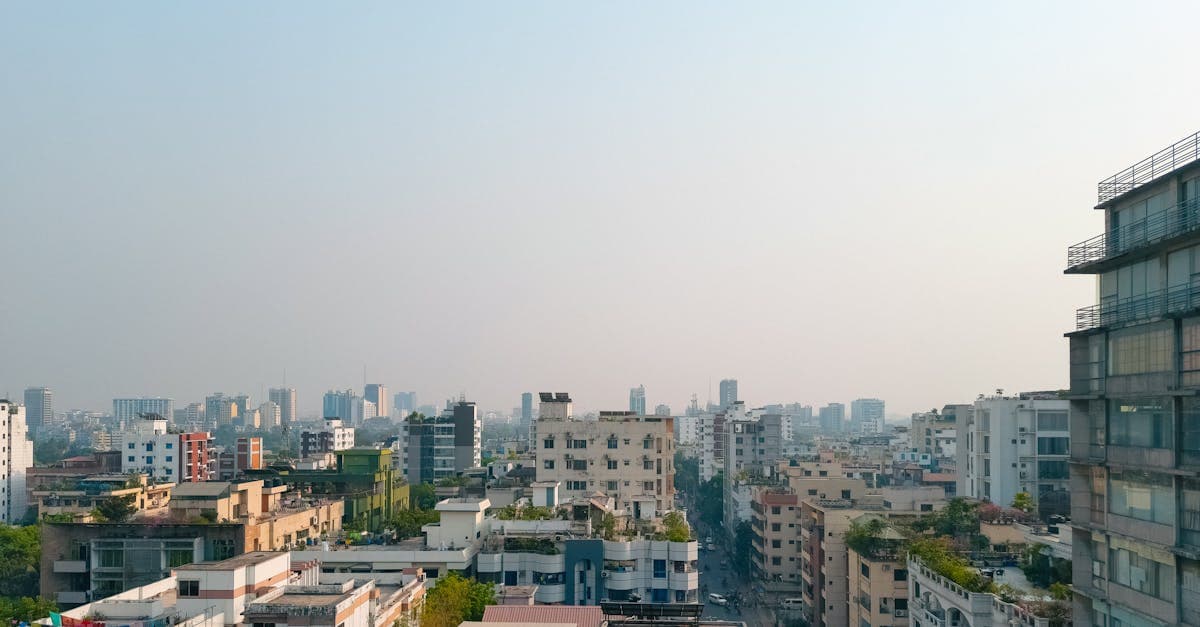
Dhaka at a glance for Delaware LLC founders
- Country: Bangladesh
- Region: South Asia
- Population: ~22 million metro
South Asia's fastest-growing capital economy, driven by ready-made garments, IT services exports, and remittance inflows.
Who in Dhaka forms Delaware LLCs
Dhaka founders are typically agency operators, Upwork/Fiverr top-rated freelancers, Amazon FBA private-label sellers, and SaaS founders building for US clients.
The city has Bangladesh's largest concentration of US-dollar earners.
What is specific to Dhaka
Wise Business and Payoneer are the most reliable account options for non-resident Delaware LLCs from Dhaka after EIN approval; Mercury and Relay Financial may be available but approval is not guaranteed and Mercury restricts founders in many countries.
Stripe approval rates from Dhaka improved noticeably after Stripe expanded supported documentation in late 2024.
Top industries among Dhaka-based Delaware LLC founders
- Delaware LLC for Digital agencies
- Delaware LLC for Freelancers and consultants
- Delaware LLC for Amazon FBA sellers
- Delaware LLC for SaaS founders
- Delaware LLC for Content creators
Formation timeline from Dhaka
The 8-10 day Delaware LLC formation timeline applies uniformly: Day 1 we file the Certificate of Formation with Delaware; Days 2-3 Delaware confirms and we email you the stamped certificate; Days 4-7 we apply for EIN with the IRS; Days 8-10 EIN approval arrives and you receive the full post-formation packet. From Dhaka, your involvement is entirely WhatsApp and email: no need to visit the US, no notarization in Bangladesh required.
Banking flow from Dhaka
After EIN approval, Dhaka founders typically open one of three US business bank accounts: Mercury (most common for tech and ecommerce founders), Relay Financial (for ecommerce with more refined sub-account features), or Wise Business (for multi-currency operations). All three accept Dhakaresidents as foreign-owner LLC operators after EIN issuance. Detailed banking flow for Bangladesh including alternatives when primary applications are rejected: Bangladesh banking deep dive.
Tax treaty status: Bangladesh-US
For tax-treaty-rate withholding on US-source FDAP income (royalties, certain affiliate income, AdSense), Bangladeshresidents filing W-8BEN or W-8BEN-E with US payers can capture the treaty rate where a Bangladesh-US tax treaty applies. Full detail: Bangladesh tax treaty deep dive.
5472 + pro forma 1120 obligation
Every Dhaka-based founder owning a single-member Delaware LLC is a "foreign-owned disregarded entity" for US tax purposes. Form 5472 plus pro forma Form 1120 must be filed annually by April 15 (or October 15 with extension). Penalty for non-filing: $25,000 per occurrence. CPA fees: $500-1,200 typical. See the Form 5472 pillar for complete walkthrough.
Distribution and repatriation from US LLC to Dhaka
Once US LLC distributions are made to your US bank account, moving funds to Dhaka happens via Wise (typically lowest cost), Mercury international transfer, or direct SWIFT. Specific Bangladesh considerations for repatriation: Bangladesh repatriation guide.
BOI report from Dhaka
Under FinCEN's Interim Final Rule of March 26, 2025, LLCs formed in the United States, including a Delaware LLC, are exempt from Beneficial Ownership Information reporting. A Dhaka-based owner of a Delaware LLC has no BOI report to file; the obligations that remain are the $300 Delaware franchise tax and the annual Form 5472. See the BOI report glossary for how the rule changed.
Why Dhaka-specific guidance helps
Most generic Delaware LLC content is written for US-resident founders, then minimally adapted for non-residents. Dhakafounders face a different operational stack: bank-account applications from Bangladesh IPs, Stripe approval timelines from Bangladesh, tax-treaty article numbers specific to Bangladesh, and remittance patterns specific to Bangladeshbanking infrastructure. Pages tailored to your city skip the generic adaptation step.
Why do founders in Dhaka choose a Delaware LLC over a local company?
Dhaka sits at the center of Bangladesh's largest pool of US-dollar earners, and that single fact shapes almost every formation decision made here. Agency operators in Gulshan and Banani, top-rated freelancers working through Upwork and Fiverr, and Amazon FBA private-label sellers all share the same problem: their customers and marketplaces pay in dollars, but a Bangladeshi sole proprietorship or private limited company cannot easily receive, hold, or reinvest those dollars without friction. A Delaware LLC gives a Dhaka founder a US legal entity, a US Employer Identification Number, and access to US fintech accounts that treat the business as a domestic customer. That combination unlocks Stripe, US-based payout rails, and marketplace accounts that often reject or limit Bangladeshi-registered sellers.
The cost math also favors Delaware for a Dhaka founder who is comparing it against a local limited company. Delaware charges a $110 Certificate of Formation and a flat $300 annual franchise tax due every June 1, with no requirement to visit the United States and no minimum capital. A non-resident single-member LLC pays no US federal income tax on income that is not effectively connected to a US trade or business, which is the common situation for a Dhaka agency serving clients remotely. Because the LLC is formed in the US, it is exempt from the federal Beneficial Ownership Information report under the FinCEN Interim Final Rule of March 26, 2025, so a Dhaka founder avoids that filing entirely. The entity is lean, predictable, and built for someone operating thousands of miles from the registered agent.
Which US banks and fintechs realistically approve applicants from Dhaka?
Approval reality matters more than the marketing pages of US fintechs, and from Dhaka the picture is specific. Wise Business and Payoneer are the most reliable account options for a non-resident Delaware LLC once the EIN is approved, and most Dhaka founders open one of these first because their verification flow handles Bangladeshi passports and addresses smoothly. Mercury and Relay Financial may be available, but approval is not guaranteed, and Mercury in particular restricts founders in many countries, so a Dhaka applicant should never assume a Mercury account is automatic. Treating Wise or Payoneer as the anchor account and Mercury or Relay as a hoped-for upgrade is the realistic sequencing.
For collecting customer payments, Stripe approval rates from Dhaka improved noticeably after Stripe expanded its supported documentation in late 2024, which made a meaningful difference for SaaS founders and agencies invoicing US clients. The practical banking stack for a Dhaka founder usually looks like this:
- Wise Business or Payoneer as the primary multi-currency receiving account.
- Stripe connected to that account for card payments from US and EU customers.
- Mercury or Relay attempted as a secondary US bank account once revenue is flowing.
- Lili as a lightweight option for solo freelancers who want simple bookkeeping.
Every one of these requires the EIN and the stamped formation documents, so a Dhaka founder should not start a banking application until the IRS confirmation letter is in hand.
How do Dhaka's top industries map onto a US LLC?
The industries that dominate Dhaka's dollar-earning economy translate almost one to one into the kind of work a Delaware LLC is built to invoice. Service agencies, which form a large share of the city's digital export base, gain a US entity that lets them sign master service agreements with American clients who expect a US counterparty. Freelancers who have outgrown personal Upwork and Fiverr accounts use the LLC to raise rates, sign directly with clients, and separate business income from personal Bangladeshi accounts. The structure does not change the work; it changes how the world treats the person doing it.
Mapping the record's named sectors against the Delaware entity:
- Agencies bill US clients through the LLC and use Stripe invoicing instead of personal transfers.
- Freelancers convert marketplace earnings into a branded company with its own bank account.
- Amazon FBA private-label sellers register the LLC as the seller of record for a US marketplace account.
- SaaS founders take subscription revenue through Stripe under a US entity that customers trust.
- Content creators monetize US ad networks and sponsorships through a US-payable business.
For Amazon FBA sellers the LLC is close to mandatory, because a US seller account, US sales tax handling, and US supplier relationships all expect a US entity behind them. For a Dhaka SaaS founder, the LLC plus Stripe combination is what makes recurring billing in dollars actually work, since Bangladeshi-registered businesses face far heavier scrutiny on the same rails.
What does the eight to ten hour time difference mean for your formation timeline?
Dhaka runs on Bangladesh Standard Time, which is ten or eleven hours ahead of US business hours depending on US daylight saving. Delaware's Division of Corporations and the IRS both operate on the US calendar and US working day, so a Dhaka founder is effectively a full business day ahead of the people processing the paperwork. The Certificate of Formation itself is fast and is filed electronically, so the entity can exist within a day or two. The slower step is the EIN: filing Form SS-4 for a non-resident with no US Social Security Number is done by fax or mail, and the IRS typically returns the confirmation in roughly eight to ten business days.
The time-zone gap mostly affects how a Dhaka founder experiences waiting rather than the raw speed. A question sent at the end of a Dhaka workday lands in the US morning, and the reply arrives while Dhaka sleeps, which can feel like a day lost on each exchange. Practical habits that keep the eight to ten day EIN window from stretching:
- Send the SS-4 with complete, consistent details so the IRS never has to write back for clarification.
- Use the exact same legal name and address on every form to avoid mismatches that trigger delays.
- Prepare banking applications during the EIN wait so accounts open the moment the letter arrives.
With clean filings, a Dhaka founder commonly goes from decision to a working US entity with a bank account inside two to three weeks.
How does currency and remittance friction from Bangladesh shape the setup?
The Bangladeshi taka is not freely convertible, and the country runs strict foreign-exchange controls administered through Bangladesh Bank, so moving money between a US LLC and Dhaka is the part founders underestimate. Bringing dollars into Bangladesh through formal channels can trigger documentation requirements and conversion at official rates, and pulling money out of the country to fund a US business is heavily restricted. This is precisely why a Dhaka founder keeps the LLC's working capital inside Wise or Payoneer rather than constantly cycling funds back to a local account.
The cleaner pattern is to let the US entity hold and spend dollars for business expenses, US software, advertising, and contractor payments, and to remit to Dhaka only what the founder needs for personal living costs. Several remittance realities a Dhaka founder should plan around:
- Inbound remittances for personal income can qualify for government incentives when routed through formal banking channels.
- Holding revenue in Wise or Payoneer avoids repeated forced conversion into taka.
- Large or frequent transfers into Bangladesh may invite questions about source of funds.
- Keeping business and personal flows separate makes both bookkeeping and compliance far simpler.
Founders who treat the US account as the operating hub and Dhaka as the place they draw a salary tend to have the smoothest experience with both Bangladesh Bank rules and US fintech expectations.
What documents does a Dhaka founder actually need to form the LLC?
The document list for a non-resident in Dhaka is short, which surprises founders who expect the heavy paperwork of a local company registration. The core requirement is a valid Bangladeshi passport, used as the identity document for both the formation filing and the later bank verification. A Dhaka residential address works as the responsible-party address on Form SS-4, and no US address or US presence is required to own a Delaware LLC. The registered agent in Delaware supplies the in-state address the law requires, so the founder never needs property or a mailing address inside the United States.
The pieces a Dhaka founder should assemble before starting:
- A current Bangladeshi passport with a clear photo page.
- A consistent home address in Dhaka used identically across every form.
- A chosen, available company name ending in LLC.
- The completed Form SS-4 listing the founder as the responsible party.
- A professional email used for both the IRS confirmation and the fintech applications.
After filing, the founder receives the stamped Certificate of Formation and, roughly eight to ten business days later, the IRS EIN confirmation letter. Those two documents are what every US bank and marketplace will ask to see, so a Dhaka founder should store clean digital copies that match the passport details exactly.
How does the home-country tax angle work for a Dhaka resident?
A Delaware LLC owned by a Dhaka resident does not erase Bangladeshi tax obligations, and understanding the two sides separately prevents trouble. On the US side, a single-member LLC is a disregarded entity, so a non-resident owner with no US-connected trade or business generally owes no US federal income tax on the LLC's profits. The US filing that does apply is the information return: a foreign-owned single-member LLC must file Form 5472 together with a pro forma Form 1120 each year, and missing that filing carries a $25,000 penalty. This is a reporting duty, not a tax bill, but it is the obligation Dhaka founders most often overlook.
On the Bangladesh side, a person who is a tax resident of Bangladesh is generally taxable on worldwide income, which means the income a Dhaka founder draws from the US LLC is reportable to the National Board of Revenue. Bangladesh and the United States do not have a comprehensive income tax treaty, so a Dhaka founder cannot rely on treaty relief and should plan for Bangladeshi tax on the income they actually bring home. The sensible approach is to keep clean records of what the LLC earns versus what the founder personally remits, file the US Form 5472 on time, and report Bangladeshi-side income honestly. A local Dhaka accountant familiar with foreign income is worth consulting, because the interaction of the two systems is specific to each founder's residency facts.
What mistakes do Dhaka founders make most often?
The errors that cost Dhaka founders time and money cluster around a few predictable habits. Many apply for a US bank account before the EIN letter has arrived and get rejected, then assume the structure itself failed. Others use slightly different spellings of their name or address across the passport, the formation document, and the SS-4, which creates mismatches that slow both the IRS and the fintech review. A common and expensive miss is ignoring the Form 5472 obligation, because a single-member LLC owner from Dhaka often hears "no US tax" and wrongly concludes there is no US filing at all, exposing themselves to the $25,000 penalty.
Other recurring mistakes are specific to operating from Dhaka:
- Assuming a Mercury account is guaranteed, when Wise or Payoneer is the realistic first account.
- Cycling LLC revenue back into a Dhaka taka account repeatedly and losing value to conversion.
- Mixing personal Upwork or Fiverr earnings with the LLC's books instead of separating them.
- Forgetting the flat $300 franchise tax due June 1 and letting the entity fall out of good standing.
- Skipping the home-country tax conversation and assuming the US entity hides income from Bangladesh.
Avoiding these is mostly discipline: wait for the EIN, keep every detail identical, file Form 5472 each year, and treat the US account as the place the business actually lives while Dhaka is where the founder draws income.
How should a Dhaka agency or freelancer choose between a single-member and multi-member LLC?
Many Dhaka founders start solo and only later bring in a partner, so the single-member versus multi-member choice deserves a deliberate decision rather than a default. A single-member LLC is the lighter path: it is a disregarded entity for US tax, its annual US obligation is the Form 5472 and pro forma 1120 pair, and a lone agency operator or freelancer in Dhaka can manage it without much overhead. For one person serving US clients, this is usually the structure that matches reality, and it keeps the banking and bookkeeping simple.
A multi-member LLC changes the US tax treatment, because two or more owners make it a partnership that files Form 1065 and issues Schedule K-1s, which is a heavier filing than the single-member case. For two Dhaka co-founders building a SaaS product or running an agency together, that complexity can be worth it, but they should decide ownership splits in writing before forming. Points a Dhaka team should weigh:
- A single-member LLC keeps US filings to the Form 5472 and pro forma 1120 each year.
- A multi-member LLC requires a partnership return and K-1s for each owner.
- Adding a partner later means amending the entity, so plan the structure up front.
- Each owner's Bangladeshi tax position is separate and should be considered individually.
Most first-time Dhaka founders are well served by a single-member LLC and can revisit the question once the business has co-owners who are genuinely sharing profits.
How does a Dhaka founder keep the LLC compliant after year one?
Forming the LLC is a one-time event, but keeping it in good standing is an annual rhythm that a Dhaka founder needs to internalize. The recurring anchor is the flat $300 Delaware franchise tax due every June 1, which applies regardless of revenue and is the single most common reason a non-resident entity slips out of good standing. The registered agent fee renews each year as well, and the Form 5472 plus pro forma 1120 information return is filed annually with the IRS. None of these require travel, but all of them require a founder in Dhaka to track US deadlines that do not align with the Bangladeshi fiscal calendar.
A simple yearly checklist keeps a Dhaka founder out of trouble:
- Pay the $300 franchise tax by June 1 to keep the entity in good standing.
- Renew the Delaware registered agent before it lapses.
- File Form 5472 with the pro forma 1120 to avoid the $25,000 penalty.
- Report relevant income to Bangladesh's National Board of Revenue as a resident taxpayer.
- Keep the Wise or Payoneer records reconciled so the year-end filing is straightforward.
Because the founder operates from Dhaka and the deadlines live on the US calendar, setting calendar reminders well ahead of June 1 and the tax-season filing window is the habit that separates a smoothly running US entity from one that quietly lapses.
What is the realistic cost picture for a Dhaka founder over the first two years?
Dhaka founders are careful with dollar costs, since every US fee is paid out of hard-earned export income, so a clear two-year view helps the decision. The formation pricing from Delewarellc is $297 one time, which covers the setup work, and the state charges the $110 Certificate of Formation as part of bringing the entity into existence. The EIN itself is free when obtained directly from the IRS through Form SS-4, so a Dhaka founder should never pay a third party simply for the number. These are the upfront figures, and none of them depend on the founder leaving Dhaka.
The ongoing figures are where planning matters for a dollar-conscious Dhaka founder:
- The flat $300 Delaware franchise tax every June 1, owed even in a year with no revenue.
- The annual registered agent renewal that keeps the Delaware address valid.
- Any accountant fees for preparing the Form 5472 and pro forma 1120 each year.
- Fintech account fees, which on Wise and Payoneer are usage-based rather than fixed.
For a Dhaka agency or SaaS founder earning in dollars, these recurring costs are modest against the value of holding revenue in a stable US account and invoicing US clients as a US entity. The honest framing for a Dhaka founder is that the entity pays for itself once it lets the business receive dollars cleanly, and the annual upkeep is a predictable line item rather than a surprise.
Related guides for this city & country
- Delaware LLC from Bangladesh
- US business banking from Bangladesh
- Bangladesh, US tax treaty
- Sending profits home to Bangladesh
- Delaware LLC from Chittagong
- Amazon FBA seller from Bangladesh forming a Delaware LLC
- YouTube creator from Bangladesh forming a Delaware LLC
- Delaware LLC cost breakdown
- US business banking guide
- Dissolve a Delaware LLC (step by step)
- Delaware LLC from Karachi
- Delaware LLC from Lahore
- Delaware LLC from Islamabad
- Delaware LLC from Mumbai
Frequently asked questions
Can a founder based in Dhaka form a Delaware LLC?
Yes. Dhaka (Bangladesh) founders form a Delaware LLC entirely online, with no US visit, SSN, or US address required. Formation works the same as the rest of Bangladesh: an 8-10 day timeline for the LLC, EIN, and bank applications, for $297 plus the $110 Delaware state fee.
What banking options work for Delaware LLC founders in Dhaka?
Wise Business and Payoneer are the most reliable account options for non-resident Delaware LLCs from Dhaka after EIN approval; Mercury and Relay Financial may be available but approval is not guaranteed and Mercury restricts founders in many countries. Stripe approval rates from Dhaka improved noticeably after Stripe expanded supported documentation in late 2024.
Who typically forms a Delaware LLC in Dhaka?
Dhaka founders are typically agency operators, Upwork/Fiverr top-rated freelancers, Amazon FBA private-label sellers, and SaaS founders building for US clients. The city has Bangladesh's largest concentration of US-dollar earners. The most common sectors are agencies, freelancers, amazon-fba, saas, content-creators.
Does living in Dhaka change Delaware LLC taxes versus the rest of Bangladesh?
No. Delaware LLC formation and US tax treatment are identical across Bangladesh. What is specific to Dhaka is the local banking and remittance flow described above. See the Bangladesh tax-treaty guide for how US-source income is treated for Bangladesh residents.
What is IRS Form 5472 and who must file it?
Form 5472 is required annually from foreign-owned single-member US LLCs treated as disregarded entities. The penalty for not filing is $25,000 per occurrence. Form 5472 must be filed with pro forma Form 1120 by April 15 (extendable to October 15).
What does a Delaware LLC cost?
Delaware LLC year-one costs are $110 state filing fee plus registered agent fees ($50-$179/year depending on provider) plus optional service fees. Delewarellc charges $297 plus the state fee for full formation including registered agent for Year 1, EIN application, Operating Agreement, and bank account applications.
Related resources
Form your Delaware LLC today
$299 + Delaware state fee, one-time. 8-10 days. One-time pricing.