Delaware LLC for Kolkata founders (2026): from-Kolkata formation, banking, taxes
Local guide for Kolkata-based founders forming a Delaware LLC: banking flow from Kolkata, India tax-treaty status, formation timeline, and what changes if you live in Kolkata specifically.

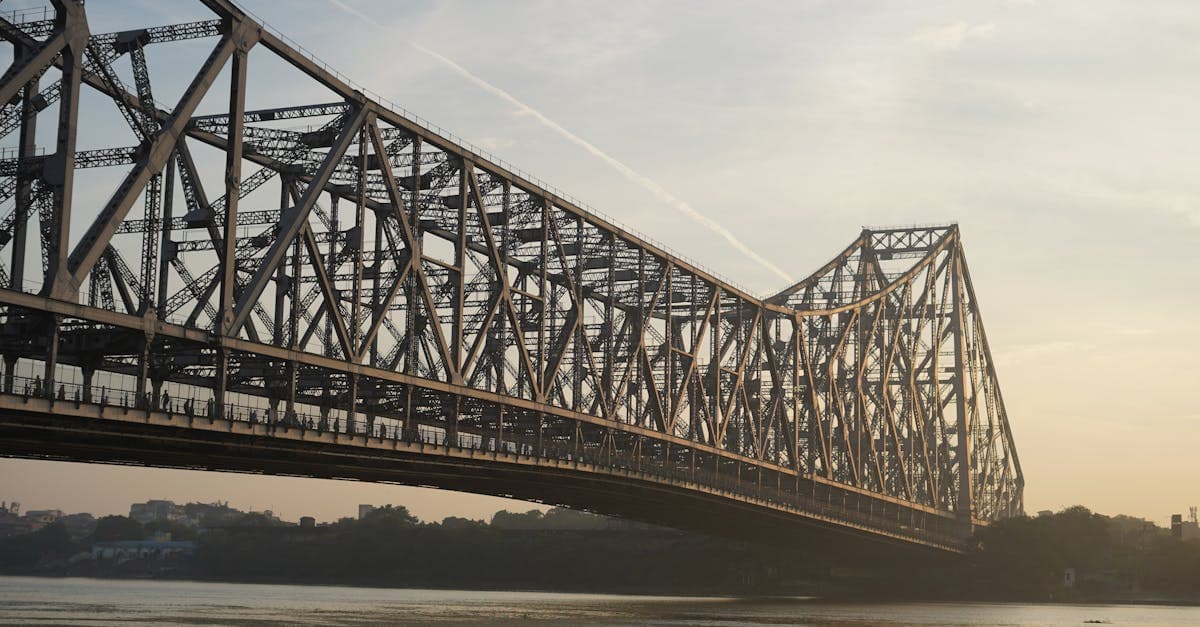
Kolkata at a glance for Delaware LLC founders
- Country: India
- Region: South Asia
- Population: ~14 million metro
Eastern India's commercial hub; finance, IT services, education.
Who in Kolkata forms Delaware LLCs
Kolkata founders include freelance content creators, IT services providers, and small ecommerce sellers.
What is specific to Kolkata
Growing but smaller LLC-forming population than western/southern Indian cities.
Top industries among Kolkata-based Delaware LLC founders
- Delaware LLC for Freelancers and consultants
- Delaware LLC for Digital agencies
- Delaware LLC for Content creators
Formation timeline from Kolkata
The 8-10 day Delaware LLC formation timeline applies uniformly: Day 1 we file the Certificate of Formation with Delaware; Days 2-3 Delaware confirms and we email you the stamped certificate; Days 4-7 we apply for EIN with the IRS; Days 8-10 EIN approval arrives and you receive the full post-formation packet. From Kolkata, your involvement is entirely WhatsApp and email: no need to visit the US, no notarization in India required.
Banking flow from Kolkata
After EIN approval, Kolkata founders typically open one of three US business bank accounts: Mercury (most common for tech and ecommerce founders), Relay Financial (for ecommerce with more refined sub-account features), or Wise Business (for multi-currency operations). All three accept Kolkataresidents as foreign-owner LLC operators after EIN issuance. Detailed banking flow for India including alternatives when primary applications are rejected: India banking deep dive.
Tax treaty status: India-US
For tax-treaty-rate withholding on US-source FDAP income (royalties, certain affiliate income, AdSense), Indiaresidents filing W-8BEN or W-8BEN-E with US payers can capture the treaty rate where a India-US tax treaty applies. Full detail: India tax treaty deep dive.
5472 + pro forma 1120 obligation
Every Kolkata-based founder owning a single-member Delaware LLC is a "foreign-owned disregarded entity" for US tax purposes. Form 5472 plus pro forma Form 1120 must be filed annually by April 15 (or October 15 with extension). Penalty for non-filing: $25,000 per occurrence. CPA fees: $500-1,200 typical. See the Form 5472 pillar for complete walkthrough.
Distribution and repatriation from US LLC to Kolkata
Once US LLC distributions are made to your US bank account, moving funds to Kolkata happens via Wise (typically lowest cost), Mercury international transfer, or direct SWIFT. Specific India considerations for repatriation: India repatriation guide.
BOI report from Kolkata
Under FinCEN's Interim Final Rule of March 26, 2025, LLCs formed in the United States, including a Delaware LLC, are exempt from Beneficial Ownership Information reporting. A Kolkata-based owner of a Delaware LLC has no BOI report to file; the obligations that remain are the $300 Delaware franchise tax and the annual Form 5472. See the BOI report glossary for how the rule changed.
Why Kolkata-specific guidance helps
Most generic Delaware LLC content is written for US-resident founders, then minimally adapted for non-residents. Kolkatafounders face a different operational stack: bank-account applications from India IPs, Stripe approval timelines from India, tax-treaty article numbers specific to India, and remittance patterns specific to Indiabanking infrastructure. Pages tailored to your city skip the generic adaptation step.
Why do founders in Kolkata form a Delaware LLC instead of a local entity?
Kolkata sits as eastern India's commercial hub, with a working economy built on finance, IT services, and education. The founders who reach out from here tend to be freelance content creators, IT services providers, and small ecommerce sellers who already earn in US dollars from clients abroad. For that profile, a Delaware LLC solves a problem a local private limited company cannot. It gives a Kolkata founder a US business identity that American clients, payment processors, and software vendors recognise without hesitation. A US client paying a Salt Lake or Park Street freelancer often prefers to remit to a US entity with a US bank account rather than wire funds to a personal account in India, and a Delaware LLC makes that clean.
The second reason is structural simplicity. A single-member Delaware LLC owned by a non-resident is a pass-through that is treated as a disregarded entity, so there is no separate US corporate income layer on profit that is not connected to a US trade or business. Compared with the compliance load of running an Indian company alongside foreign clients, the Delaware structure is light. The known costs are fixed and public: a $110 Certificate of Formation, a $300 flat annual franchise tax due June 1, and a free EIN obtained by filing Form SS-4. For a Kolkata content creator or agency owner billing overseas, that predictability is the draw, not any promise of avoiding tax that is genuinely owed.
Which US banks realistically approve applicants from Kolkata?
The honest answer for a Kolkata founder is that brick-and-mortar US banks rarely onboard a non-resident who never visits a branch, so the practical route is the fintech platforms that were built for remote founders. Mercury, Wise, Relay, Lili, and Payoneer all accept applications tied to a Delaware LLC and an EIN, and they verify identity using an Indian passport plus proof of address from Kolkata. A founder in Howrah or Salt Lake Sector V can complete the entire application from a laptop, which matters because there is no realistic way to fly to the United States to open a checking account for a small services business.
Approval is never guaranteed, and it helps to know what each platform tends to weigh. A few practical points for applicants from this city:
- Mercury and Relay lean toward founders who can describe a clear US-facing business, which suits a Kolkata agency invoicing American clients.
- Wise and Payoneer double as receiving accounts for client payments, useful when the work is freelance contracts rather than a product.
- Lili targets sole proprietors and single-member LLCs, a fit for the solo content creators common in Kolkata.
- Every platform expects a consistent name, EIN, and formation document, so a mismatch between the passport and the LLC filing is the most common reason an application from India stalls.
Applying to more than one platform is sensible, because a decline at one does not predict a decline at another.
How do Kolkata's top industries map onto a US LLC?
The record for this city lists three industries that dominate the founder base here: freelancers, agencies, and content creators. Each maps onto a Delaware LLC in a slightly different way. A Kolkata freelancer doing development or design work signs US client contracts under the LLC name, which raises their standing with clients who screen vendors for a registered business. An agency that has grown past a single person uses the LLC to hold client retainers, pay subcontractors, and present a US billing address on invoices, which removes the friction of explaining an Indian personal account to a procurement team in another country.
Content creators in Kolkata gain a different benefit. Ad networks, sponsorship platforms, and affiliate programs often pay out faster and with fewer questions to a US entity holding a US bank account. The way each profile uses the structure differs:
- Freelancers: one LLC, one bank account, client contracts signed in the company name.
- Agencies: an LLC that pays contractors and issues invoices with consistent US-facing details.
- Content creators: an LLC that collects platform payouts and ad revenue under a single recognised entity.
None of these models require a US office, US employees, or a US visit, which is precisely why they suit founders working from Kolkata.
How does the Kolkata time zone affect the 8 to 10 day formation timeline?
Kolkata runs on India Standard Time, which is nine and a half to twelve and a half hours ahead of the US business day depending on the season and the state. That gap shapes how the standard timeline feels in practice. State filing of the Certificate of Formation is electronic and not sensitive to your local clock, so the $110 filing itself does not slow down because you are in eastern India. The part that interacts with the time zone is correspondence. When a founder in Kolkata sends a question at 11 in the morning IST, a US-based reviewer may not see it until late evening Kolkata time, which can stretch a same-day clarification into a next-day reply.
The EIN step is where the gap is felt most. The free EIN obtained by filing Form SS-4 typically takes around 8 to 10 business days for a non-resident applicant without a US Social Security number, and that window is counted in US business days. Indian public holidays do not pause the US clock, and US holidays do not pause yours, so a Kolkata founder planning a launch should add buffer rather than assume the fastest path. A workable habit is to send anything that needs a US response in your evening, which lands in the US morning, shaving a full cycle off the back-and-forth.
What currency and remittance friction should a Kolkata founder expect?
Money movement between India and a US LLC is the area where Kolkata founders hit the most real friction, and it is worth being precise about why. India operates exchange controls under the Liberalised Remittance Scheme, which caps how much an individual can send abroad in a financial year and requires the funds to flow through an authorised dealer bank. Sending capital from a Kolkata savings account to seed a US LLC is therefore not a frictionless transfer, and the paperwork at the Indian bank can be slower than a founder expects. Many small services founders sidestep this by funding the LLC with revenue earned abroad rather than money sent from India.
On the inbound side, money the LLC earns sits in the US fintech account, and bringing it home means a conversion from US dollars to rupees with a spread and possible fees. A few realities to plan around:
- Conversion costs add up, so consolidating transfers into fewer, larger remittances usually beats many small ones.
- Indian banks may ask for documentation on the source of foreign income, so keeping invoices and contracts organised saves time later.
- Holding working balances in the US account and only repatriating what you need at home reduces repeated conversion losses.
None of this is unique to Kolkata within India, but a founder here should treat remittance as a planned process rather than an afterthought.
What documents does a founder in Kolkata actually need?
The document set for a Kolkata founder is short, which surprises people who expect a US filing to demand notarised local paperwork. The core requirement is a valid passport, used to verify identity for the formation and for every bank application. You do not need an Indian company, a US address you own, or a US visa to form the LLC. You do need a reliable mailing address and a registered agent in Delaware, which the formation service provides, and you need an EIN, which comes from Form SS-4 at no cost.
Where founders in Kolkata trip is in the supporting details rather than the headline documents. A practical checklist:
- A passport whose name exactly matches the name you put on the LLC filing.
- Proof of your Kolkata residential address, since fintech banks ask for it during onboarding.
- The stamped Certificate of Formation and your EIN confirmation, kept together for bank applications.
- A clear description of your business activity, because banks and the SS-4 both ask what the company does.
Keeping these in one folder means a bank application from Salt Lake or central Kolkata can be completed in a single sitting rather than spread over days of hunting for files.
What is the home-country tax angle for a Kolkata resident?
Forming a Delaware LLC does not remove a Kolkata founder from the Indian tax system, and treating it as if it does is the most expensive mistake available. As an Indian tax resident, you are generally taxed on your worldwide income, which includes profit that flows through your US LLC to you personally. A single-member LLC is a pass-through, so the income is yours, and it belongs on your Indian return regardless of where the bank account sits. The US side and the Indian side are separate obligations that both need attention, and a Kolkata founder should budget for a local chartered accountant who understands foreign income.
The US obligations for a non-resident-owned single-member LLC are specific and must not be skipped. The entity files Form 5472 together with a pro forma Form 1120 each year to report transactions between the foreign owner and the LLC, and the penalty for missing that filing starts at $25,000, which dwarfs the routine costs of running the company. For a Kolkata founder, the safe posture is to assume both countries want a filing every year, to track income in both currencies, and to never let the low day-to-day cost of the LLC create the false impression that the compliance load is also zero.
Are Kolkata founders affected by the BOI reporting rule?
Beneficial ownership reporting caused a lot of worry among non-resident founders, so it is worth stating plainly where a Kolkata owner stands. Under the FinCEN Interim Final Rule of March 26 2025, US-formed entities such as a Delaware LLC are exempt from the beneficial ownership information reporting requirement. That means a Kolkata founder forming a Delaware LLC does not file a BOI report for that domestic entity under the current rule, which removes a step that earlier guidance had implied would apply to everyone.
This does not mean a Kolkata founder can ignore identity rules entirely, because banks still run their own know-your-customer checks during onboarding regardless of the BOI exemption. The practical takeaway is narrow and useful: the federal beneficial ownership filing that dominated 2024 conversations does not sit on top of your Delaware LLC under the March 26 2025 rule, but your fintech bank will still ask who owns and controls the company before opening an account. Treat the BOI exemption as one less government filing, not as a reason to skip the verification your bank performs.
What does the full first-year cost look like from Kolkata?
Founders in Kolkata work in rupees and think in rupees, so seeing the US costs as a fixed list helps before committing. The state charges $110 for the Certificate of Formation, the annual Delaware franchise tax is a $300 flat amount due June 1, and the EIN is free through Form SS-4. A formation service that handles the filing, the registered agent, and the EIN request commonly prices the package at a $297 one-time fee, which covers the parts a non-resident cannot easily do alone from Kolkata.
Translating that into a planning view for a Kolkata founder:
- One-time formation help around $297, which bundles the work of filing and EIN handling.
- The $110 state Certificate of Formation as the underlying government charge.
- A recurring $300 flat franchise tax each June 1, which does not scale with your revenue.
- Currency conversion on top, since these are dollar figures paid from rupee balances.
The figures are stable and public, which is the point. A Kolkata freelancer or agency owner can forecast the cost of the structure for several years without guessing, and the only moving piece is the rupee-to-dollar rate on the day each payment clears.
What mistakes do Kolkata founders make most often?
The recurring errors among founders from this city cluster around a few themes, and most are avoidable. The first is name mismatch. A passport that reads one way and an LLC filing that reads another way will stall a bank application, and this catches Kolkata applicants whose documents use slightly different spellings or initials. The second is treating the Delaware LLC as a way to skip Indian tax, when in reality the income still belongs on the Indian return for a resident owner. The third is ignoring the annual US filing and discovering the Form 5472 penalty of $25,000 far too late.
A short list of the patterns worth avoiding:
- Forgetting the $300 franchise tax due June 1 and letting the entity fall out of good standing.
- Assuming the EIN arrives instantly rather than over roughly 8 to 10 business days.
- Funding the LLC by pushing rupees abroad without checking the Liberalised Remittance Scheme limits first.
- Opening only one bank application and giving up after a single decline.
- Keeping no organised record of invoices, which slows both Indian remittance and US filings.
Kolkata founders who treat the LLC as a real business with real annual obligations, rather than a one-time setup, almost never hit these problems.
Is a Delaware LLC the right fit for a smaller Kolkata founder base?
Kolkata has a growing but smaller LLC-forming population than the larger western and southern Indian cities, and that context matters for a founder deciding whether to follow the same path. A thinner local crowd of US-LLC owners means fewer neighbours to ask, which makes it more important to rely on documented, verifiable steps rather than word of mouth. The upside is that the structure works the same for a Kolkata founder as for anyone else: the filing, the EIN, the fintech banking, and the annual tax are identical regardless of how many people in your city have done it.
For a Kolkata freelancer, agency, or content creator earning in dollars from clients abroad, the decision usually comes down to whether US-facing legitimacy and clean dollar banking are worth a fixed, predictable annual cost. If your income already flows from outside India, the answer is often yes, because the structure removes friction with clients and processors that a personal Indian account introduces. If your work is purely domestic and rupee-based, the LLC adds cost without solving a problem you have. The honest test for a Kolkata founder is simple: form the Delaware LLC when it serves a real US-facing income stream, and skip it when it does not.
Related guides for this city & country
- Delaware LLC from India
- US business banking from India
- India, US tax treaty
- Sending profits home to India
- Delaware LLC from Mumbai
- Delaware LLC from Bangalore
- Delaware LLC from Delhi NCR
- SaaS founder from India forming a Delaware LLC
- Online course creator from India forming a Delaware LLC
- Delaware LLC cost breakdown
- US business banking guide
- Dissolve a Delaware LLC (step by step)
- Delaware LLC from Hyderabad
- Delaware LLC from Chennai
Frequently asked questions
Can a founder based in Kolkata form a Delaware LLC?
Yes. Kolkata (India) founders form a Delaware LLC entirely online, with no US visit, SSN, or US address required. Formation works the same as the rest of India: an 8-10 day timeline for the LLC, EIN, and bank applications, for $297 plus the $110 Delaware state fee.
What banking options work for Delaware LLC founders in Kolkata?
Growing but smaller LLC-forming population than western/southern Indian cities.
Who typically forms a Delaware LLC in Kolkata?
Kolkata founders include freelance content creators, IT services providers, and small ecommerce sellers. The most common sectors are freelancers, agencies, content-creators.
Does living in Kolkata change Delaware LLC taxes versus the rest of India?
No. Delaware LLC formation and US tax treatment are identical across India. What is specific to Kolkata is the local banking and remittance flow described above. See the India tax-treaty guide for how US-source income is treated for India residents.
What is IRS Form 5472 and who must file it?
Form 5472 is required annually from foreign-owned single-member US LLCs treated as disregarded entities. The penalty for not filing is $25,000 per occurrence. Form 5472 must be filed with pro forma Form 1120 by April 15 (extendable to October 15).
What does a Delaware LLC cost?
Delaware LLC year-one costs are $110 state filing fee plus registered agent fees ($50-$179/year depending on provider) plus optional service fees. Delewarellc charges $297 plus the state fee for full formation including registered agent for Year 1, EIN application, Operating Agreement, and bank account applications.
Related resources
Form your Delaware LLC today
$299 + Delaware state fee, one-time. 8-10 days. One-time pricing.