Delaware LLC for Chennai founders (2026): from-Chennai formation, banking, taxes
Local guide for Chennai-based founders forming a Delaware LLC: banking flow from Chennai, India tax-treaty status, formation timeline, and what changes if you live in Chennai specifically.

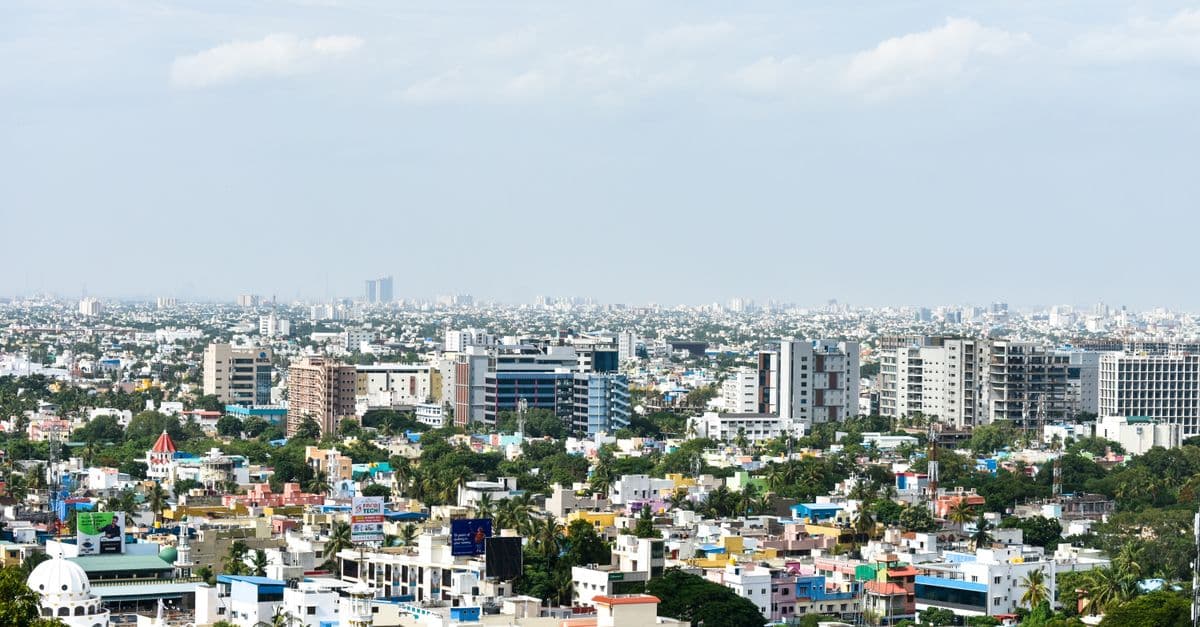
Chennai at a glance for Delaware LLC founders
- Country: India
- Region: South Asia
- Population: ~12 million metro
South India's commercial hub; major automotive manufacturing; IT-services concentration.
Who in Chennai forms Delaware LLCs
Chennai founders include IT services exporters and increasingly D2C ecommerce brands.
What is specific to Chennai
South India's largest LLC-forming population after Bangalore.
Top industries among Chennai-based Delaware LLC founders
- Delaware LLC for SaaS founders
- Delaware LLC for Digital agencies
- Delaware LLC for Shopify store owners
- Delaware LLC for Amazon FBA sellers
Formation timeline from Chennai
The 8-10 day Delaware LLC formation timeline applies uniformly: Day 1 we file the Certificate of Formation with Delaware; Days 2-3 Delaware confirms and we email you the stamped certificate; Days 4-7 we apply for EIN with the IRS; Days 8-10 EIN approval arrives and you receive the full post-formation packet. From Chennai, your involvement is entirely WhatsApp and email: no need to visit the US, no notarization in India required.
Banking flow from Chennai
After EIN approval, Chennai founders typically open one of three US business bank accounts: Mercury (most common for tech and ecommerce founders), Relay Financial (for ecommerce with more refined sub-account features), or Wise Business (for multi-currency operations). All three accept Chennairesidents as foreign-owner LLC operators after EIN issuance. Detailed banking flow for India including alternatives when primary applications are rejected: India banking deep dive.
Tax treaty status: India-US
For tax-treaty-rate withholding on US-source FDAP income (royalties, certain affiliate income, AdSense), Indiaresidents filing W-8BEN or W-8BEN-E with US payers can capture the treaty rate where a India-US tax treaty applies. Full detail: India tax treaty deep dive.
5472 + pro forma 1120 obligation
Every Chennai-based founder owning a single-member Delaware LLC is a "foreign-owned disregarded entity" for US tax purposes. Form 5472 plus pro forma Form 1120 must be filed annually by April 15 (or October 15 with extension). Penalty for non-filing: $25,000 per occurrence. CPA fees: $500-1,200 typical. See the Form 5472 pillar for complete walkthrough.
Distribution and repatriation from US LLC to Chennai
Once US LLC distributions are made to your US bank account, moving funds to Chennai happens via Wise (typically lowest cost), Mercury international transfer, or direct SWIFT. Specific India considerations for repatriation: India repatriation guide.
BOI report from Chennai
Under FinCEN's Interim Final Rule of March 26, 2025, LLCs formed in the United States, including a Delaware LLC, are exempt from Beneficial Ownership Information reporting. A Chennai-based owner of a Delaware LLC has no BOI report to file; the obligations that remain are the $300 Delaware franchise tax and the annual Form 5472. See the BOI report glossary for how the rule changed.
Why Chennai-specific guidance helps
Most generic Delaware LLC content is written for US-resident founders, then minimally adapted for non-residents. Chennaifounders face a different operational stack: bank-account applications from India IPs, Stripe approval timelines from India, tax-treaty article numbers specific to India, and remittance patterns specific to Indiabanking infrastructure. Pages tailored to your city skip the generic adaptation step.
Why do Chennai founders form a Delaware LLC instead of registering at home?
Chennai sits at the center of South India's commercial life, and the founders who build here are rarely serving only the local market. The city's IT services exporters have spent two decades invoicing American clients, and the newer wave of D2C ecommerce brands sells to buyers in the United States and Europe long before they reach scale at home. When your revenue is denominated in dollars and your customers expect a US counterparty, a Delaware LLC gives you a clean legal entity that those customers already recognize. It lets a founder in T. Nagar or Velachery sign contracts, open dollar accounts, and collect payments without asking an American partner to front the relationship.
The structure also separates the business you are building from your personal assets, which matters when a single ecommerce dispute or a services contract can drag a sole proprietor into liability. Delaware in particular is chosen because its formation cost is low and predictable: a Certificate of Formation costs $110, the annual franchise tax is a flat $300 due each June 1, and a single-member LLC is treated as a pass-through so there is no separate US corporate layer to manage from Chennai. For a founder weighing the friction of incorporating abroad, the appeal is that the ongoing obligations are few and the rules do not change unpredictably from year to year.
Which US banks realistically approve applicants from Chennai?
The practical question for a Chennai founder is not whether a Delaware LLC is legal, but whether a US bank will actually open an account for someone who has never set foot in the United States. The traditional branch banks are a poor fit because they expect an in-person visit and a US Social Security Number. The realistic path runs through the digital banking platforms built for remote founders. Mercury, Wise, Relay, Lili, and Payoneer all onboard non-resident LLC owners and verify identity from India using a passport and the LLC's formation documents and EIN. Indian founders are a familiar profile to these platforms, so the approval process is well-trodden rather than experimental.
A few details specific to applicants from Chennai are worth planning around. Each platform fills a slightly different need, so many founders open more than one:
- Mercury and Relay suit SaaS and agency founders who want a US operating account with a routing number for client wires.
- Wise is useful when you need to hold both dollars and rupees and move money back to an Indian account at a transparent mid-market rate.
- Payoneer maps well onto Amazon FBA and marketplace sellers because it integrates directly with payout systems many sellers already use.
- Lili leans toward solo founders who want simple bookkeeping baked into the account.
Approval generally hinges on a consistent identity across documents, a clear description of the business, and a real US address on the LLC. None of these platforms requires you to travel, which is the single biggest reason Chennai founders prefer them over legacy banks.
How do Chennai's IT-services and ecommerce industries map onto a US LLC?
Chennai's economy gives founders a natural fit with a US entity. The record for this city lists SaaS, agencies, Shopify stores, and Amazon FBA as the dominant founder types, and each of these benefits from a Delaware LLC in a concrete way. A SaaS founder billing American companies can put the LLC name on the invoice and the subscription terms, which removes the awkwardness of a foreign sole proprietor charging a US enterprise. An agency exporting design, development, or marketing services gains the same credibility, plus a dollar account that clients can pay into without international-wire hesitation.
For the product-selling side of Chennai's base, the mapping is just as direct. A Shopify store owner needs a US entity to connect payment processors that expect a domestic business, and an Amazon FBA seller often needs a US LLC and EIN to register a professional selling account and to clear marketplace tax interviews cleanly. Concretely, the industries map like this:
- SaaS: recurring dollar revenue, US contracting party, App Store and payment-platform eligibility.
- Agencies: client trust, dollar invoicing, clean contractor relationships with US firms.
- Shopify stores: domestic-looking checkout, processor approval, fewer chargebacks tied to a foreign merchant flag.
- Amazon FBA: professional account eligibility and smoother tax documentation for a non-resident seller.
Because Chennai already has a deep pool of founders running each of these models, the path is familiar and the supporting service ecosystem is comfortable with the structure.
What does the time-zone gap between Chennai and the US mean for your 8 to 10 day timeline?
Chennai runs on India Standard Time, which is nine and a half to thirteen hours ahead of the US business day depending on the state and the season. That gap shapes how a formation actually unfolds. The Delaware state filing for the Certificate of Formation is fast and largely automated, so the entity itself can be approved quickly. The longer item is the EIN, which the IRS issues after processing a faxed or mailed Form SS-4 for a non-resident applicant, and that step typically takes around 8 to 10 business days. The time-zone gap does not slow the IRS, but it does mean any back-and-forth happens on a one-day lag.
The practical lesson for a founder in Chennai is to front-load decisions so that nothing waits on a same-day reply across a half-day offset. A few habits keep the 8 to 10 day window from stretching:
- Decide your LLC name and confirm it is available before you file, so there is no overnight delay correcting it.
- Have your passport and address details finalized so the SS-4 goes out complete the first time.
- Expect that an email sent at the end of your Chennai workday lands at the start of the US one, so plan two-day cycles for any clarification.
Founders who batch their inputs this way usually see the entity and EIN land inside the expected window rather than drifting because of the offset.
How do currency and remittance rules from Chennai affect moving money in and out?
The dollar revenue your Delaware LLC earns will eventually need to reach you in Chennai, and India's remittance framework is the part founders underestimate. Money you move from the US account back to an Indian bank falls under the Liberalised Remittance Scheme and related Reserve Bank of India rules, and inbound foreign earnings are reportable. The friction is rarely about whether you can bring funds home and more about documenting why the money arrived and keeping the LLC's books clean enough to show the income trail. A founder who treats the LLC account as a personal wallet creates a reconciliation problem that surfaces later.
The mechanics are manageable if you separate the layers. Keep the dollar revenue inside the LLC account, pay business expenses from there, and move money to your Chennai account as a deliberate transfer you can label. Wise and Payoneer are popular precisely because they make the rupee conversion transparent and give you a record of each transfer. Watch for these common cost points:
- Conversion spread: a poor exchange rate quietly costs more than any flat fee, so compare against the mid-market rate.
- Documentation: keep invoices matching each inbound transfer so your Indian filings reconcile.
- Timing: batching transfers reduces per-transaction overhead compared with frequent small withdrawals.
None of this is unique to Chennai, but the volume of services and ecommerce founders here means the patterns are well understood locally.
What documents does a Chennai founder need to form and operate the LLC?
The document burden for a non-resident is lighter than most Chennai founders expect, because Delaware does not require you to be a US citizen or resident to own an LLC. The core identity document is your passport, which serves as your primary proof of identity for both the formation agent and the banking platforms. You do not need a US Social Security Number to form the entity or to apply for the EIN, since the SS-4 has a path for responsible parties who lack an SSN or ITIN.
Beyond identity, the documents you will assemble or receive are straightforward. Plan to have the following ready or on file:
- A valid passport for the LLC's owner and responsible party.
- A US registered-agent address in Delaware, which the formation service provides.
- The filed Certificate of Formation, your proof the entity exists.
- The EIN confirmation, needed for every bank application.
- An operating agreement, which banks and processors often ask to see even for a single-member LLC.
- A Chennai residential or proof-of-address document for the banking platform's identity verification.
Keeping digital copies organized in one place saves time, because the same handful of files is requested repeatedly across the bank, the payment processor, and the marketplace account you eventually open.
How does the home-country tax angle work for a Chennai resident owning a US LLC?
Owning a Delaware LLC does not move your tax residence out of India. If you live in Chennai and run the business from there, you remain an Indian tax resident and your worldwide income, including what flows through the LLC, is generally within scope of Indian taxation. The single-member LLC is a pass-through for US purposes, so the entity itself does not pay US income tax on income that is not effectively connected to a US trade or business. The income lands on your side of the structure, which is why the Indian reporting matters more than any US corporate filing.
On the US side, the obligations for a foreign-owned single-member LLC are specific and must not be skipped. The entity files Form 5472 together with a pro forma Form 1120 each year to report reportable transactions between the LLC and its foreign owner, and missing that filing carries a $25,000 penalty. This is an information return rather than a tax bill for a pass-through with no US-source effectively connected income, but the penalty makes it the filing Chennai founders most need to calendar. The sensible approach is to treat the US side as a compliance routine and to handle the actual income tax through proper Indian filing, ideally with a local chartered accountant who understands foreign-entity income. Because India and the US treatment interact, getting professional advice once at the start prevents repeated guesswork.
Are Chennai-owned Delaware LLCs affected by the BOI reporting rules?
Beneficial ownership reporting under the Corporate Transparency Act caused real confusion for non-resident founders, and Chennai owners asked the same questions everyone else did. The position that applies here is clear: under the FinCEN Interim Final Rule of March 26 2025, US-formed entities such as a Delaware LLC are exempt from the beneficial ownership information filing requirement. A founder in Chennai forming a domestic Delaware LLC does not file a BOI report as part of that formation, which removes a step that many expected to be onerous.
It helps to keep this in proportion against the obligations that do remain, so a Chennai founder budgets attention correctly:
- BOI report: not required for the US-formed Delaware LLC under the 2025 interim final rule.
- Franchise tax: the flat $300 is still due every June 1.
- Form 5472 with pro forma 1120: still required annually for a foreign-owned single-member LLC.
- Registered agent: must be maintained in Delaware year-round.
The takeaway is that the recurring work is light and predictable, but the federal information return is the part a Chennai founder cannot treat as optional even though the BOI step has fallen away.
What does the full cost picture look like from Chennai?
Founders in Chennai compare the cost of a US LLC against the alternative of incorporating somewhere closer, so it helps to see the numbers plainly. The state charges $110 for the Certificate of Formation, and the EIN from the IRS is free when you file Form SS-4 yourself, with issuance for a non-resident taking roughly 8 to 10 business days. The recurring state cost is the flat $300 franchise tax each June 1. Delewarellc's own formation service is one-time pricing of $297, which covers the setup work a remote founder would otherwise have to coordinate across time zones.
Read against a Chennai founder's revenue in dollars, the ongoing burden is modest and the costs are known in advance rather than variable. The items to plan for are the one-time formation, the registered agent that keeps the entity in good standing, and the flat annual franchise tax. The larger expense for most founders is not these fees at all but the time spent on the annual Form 5472 filing, which is why many treat that as the line item worth professional help. When you map the total against the dollar income a SaaS or ecommerce business in Chennai generates, the structure pays for itself in payment access and client trust rather than in any single fee being low.
What mistakes do Chennai founders most often make?
The errors that trip up Chennai founders are consistent enough to be worth naming in advance. The most common is mixing personal and business money, treating the US dollar account as a place to park personal funds and then struggling to reconcile transfers back to a Chennai bank under India's remittance rules. The second is forgetting the Form 5472 filing because there is no tax due, which leads founders to assume there is nothing to submit until the $25,000 penalty makes the point. The third is missing the June 1 franchise tax because it is a small flat amount that is easy to let slide when you are focused on the business.
A few more patterns show up specifically among South India's services and ecommerce founders, and each is avoidable:
- Choosing a bank platform that does not fit the model, such as a services-focused account for an Amazon FBA seller who needed a payout-friendly option from the start.
- Filing the SS-4 with inconsistent name or address details that do not match the passport, which delays the EIN across the time-zone gap.
- Assuming the Delaware LLC changes their Indian tax residence, then under-reporting income at home.
- Letting the registered agent lapse, which quietly puts the entity out of good standing.
Founders who set up a simple annual checklist covering the franchise tax, the Form 5472, and the registered-agent renewal avoid almost all of these, and they keep the structure working as cleanly as it did on day one.
Related guides for this city & country
- Delaware LLC from India
- US business banking from India
- India, US tax treaty
- Sending profits home to India
- Delaware LLC from Mumbai
- Delaware LLC from Bangalore
- Delaware LLC from Delhi NCR
- SaaS founder from India forming a Delaware LLC
- Online course creator from India forming a Delaware LLC
- Delaware LLC cost breakdown
- US business banking guide
- Dissolve a Delaware LLC (step by step)
- Delaware LLC from Hyderabad
- Delaware LLC from Pune
Frequently asked questions
Can a founder based in Chennai form a Delaware LLC?
Yes. Chennai (India) founders form a Delaware LLC entirely online, with no US visit, SSN, or US address required. Formation works the same as the rest of India: an 8-10 day timeline for the LLC, EIN, and bank applications, for $297 plus the $110 Delaware state fee.
What banking options work for Delaware LLC founders in Chennai?
South India's largest LLC-forming population after Bangalore.
Who typically forms a Delaware LLC in Chennai?
Chennai founders include IT services exporters and increasingly D2C ecommerce brands. The most common sectors are saas, agencies, shopify-store, amazon-fba.
Does living in Chennai change Delaware LLC taxes versus the rest of India?
No. Delaware LLC formation and US tax treatment are identical across India. What is specific to Chennai is the local banking and remittance flow described above. See the India tax-treaty guide for how US-source income is treated for India residents.
What is IRS Form 5472 and who must file it?
Form 5472 is required annually from foreign-owned single-member US LLCs treated as disregarded entities. The penalty for not filing is $25,000 per occurrence. Form 5472 must be filed with pro forma Form 1120 by April 15 (extendable to October 15).
What does a Delaware LLC cost?
Delaware LLC year-one costs are $110 state filing fee plus registered agent fees ($50-$179/year depending on provider) plus optional service fees. Delewarellc charges $297 plus the state fee for full formation including registered agent for Year 1, EIN application, Operating Agreement, and bank account applications.
Related resources
Form your Delaware LLC today
$299 + Delaware state fee, one-time. 8-10 days. One-time pricing.