Delaware LLC for Lagos founders (2026): from-Lagos formation, banking, taxes
Local guide for Lagos-based founders forming a Delaware LLC: banking flow from Lagos, Nigeria tax-treaty status, formation timeline, and what changes if you live in Lagos specifically.

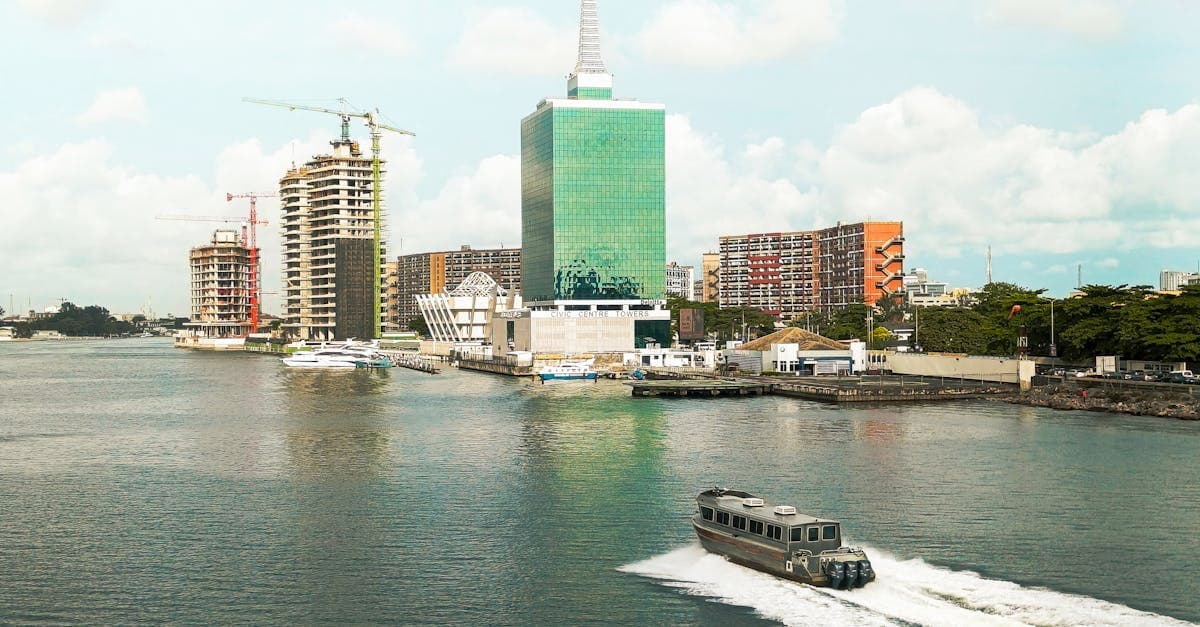
Lagos at a glance for Delaware LLC founders
- Country: Nigeria
- Region: Sub-Saharan Africa
- Population: ~21 million metro
Africa's largest city. Major fintech hub; entertainment industry (Nollywood); growing tech-startup ecosystem.
Who in Lagos forms Delaware LLCs
Lagos is Sub-Saharan Africa's primary LLC-forming founder hub. Fintech founders, agency operators, content creators, and ecommerce sellers form the demographic core.
What is specific to Lagos
Nigeria's CBN (Central Bank) controls forex tightly; LLC distributions back to naira accounts face friction. Many Lagos founders use Mercury and Wise to keep funds in USD.
Stripe expanded Nigeria support in 2024-2025 with improved approval rates.
Top industries among Lagos-based Delaware LLC founders
- Delaware LLC for SaaS founders
- Delaware LLC for Digital agencies
- Delaware LLC for Shopify store owners
- Delaware LLC for Content creators
Formation timeline from Lagos
The 8-10 day Delaware LLC formation timeline applies uniformly: Day 1 we file the Certificate of Formation with Delaware; Days 2-3 Delaware confirms and we email you the stamped certificate; Days 4-7 we apply for EIN with the IRS; Days 8-10 EIN approval arrives and you receive the full post-formation packet. From Lagos, your involvement is entirely WhatsApp and email: no need to visit the US, no notarization in Nigeria required.
Banking flow from Lagos
After EIN approval, Lagos founders typically open one of three US business bank accounts: Mercury (most common for tech and ecommerce founders), Relay Financial (for ecommerce with more refined sub-account features), or Wise Business (for multi-currency operations). All three accept Lagosresidents as foreign-owner LLC operators after EIN issuance. Detailed banking flow for Nigeria including alternatives when primary applications are rejected: Nigeria banking deep dive.
Tax treaty status: Nigeria-US
For tax-treaty-rate withholding on US-source FDAP income (royalties, certain affiliate income, AdSense), Nigeriaresidents filing W-8BEN or W-8BEN-E with US payers can capture the treaty rate where a Nigeria-US tax treaty applies. Full detail: Nigeria tax treaty deep dive.
5472 + pro forma 1120 obligation
Every Lagos-based founder owning a single-member Delaware LLC is a "foreign-owned disregarded entity" for US tax purposes. Form 5472 plus pro forma Form 1120 must be filed annually by April 15 (or October 15 with extension). Penalty for non-filing: $25,000 per occurrence. CPA fees: $500-1,200 typical. See the Form 5472 pillar for complete walkthrough.
Distribution and repatriation from US LLC to Lagos
Once US LLC distributions are made to your US bank account, moving funds to Lagos happens via Wise (typically lowest cost), Mercury international transfer, or direct SWIFT. Specific Nigeria considerations for repatriation: Nigeria repatriation guide.
BOI report from Lagos
Under FinCEN's Interim Final Rule of March 26, 2025, LLCs formed in the United States, including a Delaware LLC, are exempt from Beneficial Ownership Information reporting. A Lagos-based owner of a Delaware LLC has no BOI report to file; the obligations that remain are the $300 Delaware franchise tax and the annual Form 5472. See the BOI report glossary for how the rule changed.
Why Lagos-specific guidance helps
Most generic Delaware LLC content is written for US-resident founders, then minimally adapted for non-residents. Lagosfounders face a different operational stack: bank-account applications from Nigeria IPs, Stripe approval timelines from Nigeria, tax-treaty article numbers specific to Nigeria, and remittance patterns specific to Nigeriabanking infrastructure. Pages tailored to your city skip the generic adaptation step.
Why do Lagos founders form a Delaware LLC instead of a Nigerian company?
Lagos sits at the center of Sub-Saharan Africa's startup economy, and the founders working out of Yaba, Ikeja, Lekki, and Victoria Island face a recurring problem: the customers and platforms they want to sell to are paying in dollars, while the entity they can register at home settles in naira. A Delaware LLC closes that gap. It gives a Lagos fintech founder, agency operator, or Shopify seller a US legal home that Stripe, PayPal, and US-based clients already recognize. The structure is deliberately simple. You file a Certificate of Formation with the Delaware Division of Corporations for a $110 state fee, you receive your federal Employer Identification Number from the IRS at no cost using Form SS-4, and you owe a flat $300 Delaware franchise tax each year that is due on June 1. There is no requirement to live in the United States, no requirement to visit, and no minimum capital to deposit.
For a founder in Lagos the appeal is less about Delaware itself and more about what a US entity unlocks. A registered Nigerian business can be slow to open dollar accounts and is exposed to the Central Bank of Nigeria's tight grip on foreign exchange. A Delaware LLC, paired with a US fintech account, lets you invoice American clients in dollars, hold those dollars, and decide when and how to convert. It also signals permanence to overseas partners who may not understand Nigerian corporate filings but who deal with Delaware entities every day. The combination of a low fixed annual cost, a recognized legal wrapper, and access to dollar banking is what makes this the default path for the agency owners and creators who form the core of the Lagos founder demographic.
Which US banks realistically approve applicants from Lagos?
This is the question that decides whether the whole plan works, because a Delaware LLC without a usable dollar account is just a tax filing. Lagos founders generally have the strongest results with the US fintech platforms rather than traditional brick-and-mortar banks, which still expect an in-person branch visit and a US address that most Nigerian applicants cannot provide. The realistic options for someone applying from Lagos are:
- Mercury and Relay, which serve startups and agencies and tend to work well for SaaS and service businesses run remotely from Nigeria.
- Wise (Business), which Lagos founders favor for holding multiple currencies and moving money internationally with transparent conversion.
- Payoneer, which is widely used by Lagos freelancers and ecommerce sellers and integrates with marketplaces.
- Lili, aimed at solo operators and one-person agencies.
Approval is never guaranteed, and the local context matters. The Central Bank of Nigeria controls forex tightly, so many Lagos founders deliberately keep funds in USD inside Mercury or Wise rather than routing everything back to a naira account. When you apply, expect to provide your EIN confirmation, your stamped Certificate of Formation, and proof of identity such as an international passport. Some platforms ask for a short description of the business and where your customers are located, so a clear answer like "a design agency serving US and UK clients" helps. Apply only after your EIN has been issued, because every one of these accounts will ask for it. If one platform declines, the others use different underwriting, so a Lagos founder rejected by one fintech is frequently approved by another within days.
How do Lagos's top industries map onto a US LLC?
The record for Lagos lists SaaS, agencies, Shopify stores, and content creators as the dominant industries, and each of these maps cleanly onto a Delaware LLC because each one earns from outside Nigeria. A Lagos SaaS founder selling a subscription product needs a Stripe account that does not stall on naira settlement, and a US LLC gives that. An agency operator running paid ads, development, or design for American and European clients needs to send invoices that those clients can pay without friction, and a Delaware entity with a US bank account makes the agency look like any other vendor on the client's books. The fit is structural, not cosmetic.
- SaaS: recurring dollar revenue through Stripe, which expanded Nigeria support across 2024 and 2025 with better approval rates, paired with a US account to hold the proceeds.
- Agencies: clean dollar invoicing to overseas clients and a single entity to receive retainers.
- Shopify stores: a US payment stack that buyers trust and that connects to fulfilment and ad platforms.
- Content creators: a business entity to collect sponsorship, platform, and ad-network payouts in dollars rather than waiting on cross-border consumer transfers.
The practical lesson for a Lagos founder is to pick the structure to match where the money comes from. If your customers and platforms pay in dollars, a Delaware LLC and a US fintech account remove the single biggest source of delay, which is the conversion and settlement friction between dollar platforms and the naira banking system. Nollywood and entertainment work that pays from abroad fits the same model. The entity does not change what you do, it changes how cleanly you get paid for it.
How does the Lagos time zone affect the 8 to 10 day formation timeline?
Lagos runs on West Africa Time, which is one hour ahead of London and several hours ahead of the US East Coast where most of the relevant offices sit. That gap actually works in a Lagos founder's favor for the formation timeline. When you submit your details in the Lagos evening, the Delaware Division of Corporations and the IRS are starting their working day, so filings you send before bed are frequently being processed while you sleep. The Certificate of Formation itself can be filed quickly, and the longer wait is the EIN, which typically takes about 8 to 10 business days when the IRS processes the SS-4 for a foreign owner who has no US Social Security Number.
The time difference becomes a problem only in two situations, and both are avoidable. The first is when a bank or platform asks a follow-up question during US hours, because by the time a Lagos founder wakes to the email, a full day may have passed. Checking your inbox first thing in the morning Lagos time keeps these exchanges moving. The second is verification calls, which some platforms schedule in US business hours that fall in the late Lagos afternoon or evening. Plan for those rather than missing them. Beyond that, the formation work does not require you to be awake at any particular hour. The 8 to 10 business day window for the EIN is driven by IRS processing volume and not by where you live, so a founder in Lagos and a founder in New York wait roughly the same time once the SS-4 is submitted correctly.
What currency and remittance friction should a Lagos founder expect?
This is where Lagos differs sharply from founders in many other cities, and it is the reason the structure matters so much. The Central Bank of Nigeria controls foreign exchange tightly, which means moving money between dollars and naira is rarely as simple as a single transfer. LLC distributions sent back to a naira account can face conversion friction, rate spreads, and delays that erode the value of the dollars you earned. The standard response among Lagos founders is to keep earnings in USD inside a platform like Mercury or Wise and convert only what they actually need to spend locally, when the rate is acceptable, rather than sweeping every payment home automatically.
Practical habits help a Lagos founder manage this:
- Hold a dollar balance and treat naira conversion as a deliberate decision, not an automatic one.
- Use Wise or a similar multi-currency tool when you do need to convert, so you can see the rate before committing.
- Keep business spending in dollars where possible, paying tools and contractors from the US account directly.
- Document every conversion, because clean records make the home-country reporting far easier at year end.
None of this is a reason to avoid forming the LLC. It is the opposite. The whole point of the US entity is to give a Lagos founder a place to hold dollars outside the naira system until conversion makes sense. Founders who plan around CBN forex rules from day one keep more of what they earn than those who route everything back to naira on arrival.
What documents does a founder in Lagos actually need?
The paperwork to form a Delaware LLC from Lagos is lighter than most first-time founders expect, because Delaware does not require Nigerian founders to provide local corporate documents or notarized translations. What you genuinely need is a valid government photo identity document, almost always an international passport, a working email address you check daily, and a reliable address for correspondence. You do not need a US address of your own, because a registered agent in Delaware receives official mail on your behalf as part of forming the company. You do not need to be physically present at any stage of the filing.
The sequence that follows formation produces the documents you will rely on later:
- The stamped Certificate of Formation from Delaware, which proves the LLC exists.
- The EIN confirmation from the IRS, issued after the SS-4 is processed in roughly 8 to 10 business days.
- An operating agreement, which banks and platforms often ask to see, especially for single-member companies.
- Your passport and, where requested, a short written description of the business and its customers.
Keep digital copies of all of these in one place, because a Lagos founder will be asked for them repeatedly: once when opening each bank or fintech account, again when a payment processor reviews the business, and sometimes when a US client runs vendor onboarding. Having the Certificate, the EIN letter, and the operating agreement ready as clean PDF files turns each of those requests into a five-minute task rather than a multi-day scramble across the Lagos and US working day gap.
What are the US tax filings, and is BOI reporting required?
A single-member Delaware LLC owned by a Lagos founder is treated by the IRS as a disregarded entity by default, but a foreign-owned one carries a specific reporting duty that catches people out. Each year you must file Form 5472 together with a pro forma Form 1120 to report transactions between you and the company, such as money you put in or take out. This is an information return, not necessarily a tax bill, but the penalty for skipping it is severe at $25,000, so a Lagos founder should treat it as non-negotiable. Keeping clean records of every transfer between your naira accounts, your US fintech account, and yourself makes this filing straightforward rather than stressful.
On the Delaware side the annual obligation is the flat $300 franchise tax due on June 1, which is the same whether the LLC earned nothing or a great deal. There is welcome news on a separate front: Beneficial Ownership Information reporting, which once worried many foreign founders, no longer applies to LLCs formed in the United States. Under the FinCEN Interim Final Rule issued on March 26, 2025, US-formed entities are exempt from BOI reporting, so a Lagos founder forming a Delaware LLC does not need to file that report. What remains is the predictable set: the federal Form 5472 plus pro forma 1120 each year, the $300 Delaware franchise tax on June 1, and any income tax that depends on whether your activity is treated as connected to a US trade or business, which for most remote Lagos operators selling services and software to clients is a question worth confirming with a cross-border tax professional.
How does forming a US LLC interact with Nigerian tax?
Forming a Delaware LLC does not remove a Lagos founder from the Nigerian tax system. If you are tax resident in Nigeria, your worldwide income generally remains within scope of the Federal Inland Revenue Service and Lagos State Internal Revenue Service depending on how you are taxed, and the income that flows through your US LLC does not become invisible simply because the entity sits in Delaware. The US structure solves a banking and credibility problem. It does not erase a home-country obligation. Treating the LLC as a way to disappear from Nigerian tax is a mistake that creates risk rather than removing it.
The cleaner way for a Lagos founder to think about this is in two layers. The US layer is the LLC: its $110 formation, its $300 franchise tax, its annual Form 5472, and whatever US income tax position applies to its activity. The Nigerian layer is your personal position as a resident, which is where the money you actually draw from the business eventually has to be reckoned with. Because the Central Bank of Nigeria watches forex closely and conversions are documented, keeping organized records of what you earned in dollars and what you brought into naira is not optional housekeeping but the foundation of staying compliant at home. A local tax adviser in Lagos who understands cross-border income is worth consulting before your first full year closes, so that the US filings and the Nigerian filings tell a consistent story.
What mistakes do Lagos founders make most often?
The errors that hurt Lagos founders tend to cluster around banking and reporting rather than the formation itself, which is usually the easy part. The most damaging mistakes are predictable and avoidable:
- Applying for a US bank account before the EIN has been issued, which leads to a guaranteed rejection.
- Routing every dollar payment straight back to a naira account and losing value to conversion spreads instead of holding USD until needed.
- Forgetting the annual Form 5472, which carries a $25,000 penalty for a filing many founders did not know existed.
- Missing the $300 Delaware franchise tax due on June 1 and letting the company fall out of good standing.
- Assuming the US LLC cancels any Nigerian tax duty, then having no records when questions arise.
A second category of mistake is treating the bank account as the goal and stopping once it opens. The account is the starting line. A Lagos founder who keeps the operating agreement, the Certificate of Formation, and the EIN letter organized, who diarizes the June 1 franchise tax and the annual Form 5472, and who plans naira conversions deliberately around CBN forex realities, runs a US company that holds up under scrutiny from clients, platforms, and tax authorities on both sides. The founders who struggle are almost always the ones who treated formation as a one-time event rather than the first step in maintaining a compliant cross-border business.
What does it cost a Lagos founder to start and keep a Delaware LLC?
Cost certainty is one of the reasons the Delaware LLC suits Lagos founders, because the numbers are fixed and visible rather than buried in conversion fees. The mandatory state cost to create the company is the $110 Certificate of Formation fee paid to Delaware. The federal EIN that the IRS issues using Form SS-4 is free, so any service charging you for the EIN itself is charging for convenience, not for the number. Our own one-time formation price is $297, which covers preparing and filing the company so a founder in Lagos does not have to navigate the Delaware and IRS systems alone across the time-zone gap.
After the first year the running cost is the part Lagos founders should plan for, and it is modest and predictable:
- The flat $300 Delaware franchise tax, due every June 1 regardless of revenue.
- A registered agent in Delaware to receive official mail, since you are based in Lagos and not in the state.
- The annual Form 5472 filing, which is an information return but must be done to avoid the $25,000 penalty.
Set against those fixed costs is the value a Lagos founder gets back: dollar banking that sidesteps the worst of the naira settlement friction, a legal wrapper that overseas clients and platforms accept without explanation, and a clean structure for invoicing the SaaS, agency, ecommerce, and creator income that drives the Lagos founder economy. The arithmetic is straightforward. A fixed annual cost in the low hundreds of dollars buys reliable access to the dollar payment rails that Lagos businesses serving foreign customers need most.
Related guides for this city & country
- Delaware LLC from Nigeria
- US business banking from Nigeria
- Nigeria, US tax treaty
- Sending profits home to Nigeria
- Delaware LLC from Abuja
- Dropshipping founder from Nigeria forming a Delaware LLC
- Delaware LLC cost breakdown
- US business banking guide
- Dissolve a Delaware LLC (step by step)
- Delaware LLC from Nairobi
- Delaware LLC from Accra
- Delaware LLC from Johannesburg
- Delaware LLC from Cape Town
- Delaware LLC from Cairo
Frequently asked questions
Can a founder based in Lagos form a Delaware LLC?
Yes. Lagos (Nigeria) founders form a Delaware LLC entirely online, with no US visit, SSN, or US address required. Formation works the same as the rest of Nigeria: an 8-10 day timeline for the LLC, EIN, and bank applications, for $297 plus the $110 Delaware state fee.
What banking options work for Delaware LLC founders in Lagos?
Nigeria's CBN (Central Bank) controls forex tightly; LLC distributions back to naira accounts face friction. Many Lagos founders use Mercury and Wise to keep funds in USD. Stripe expanded Nigeria support in 2024-2025 with improved approval rates.
Who typically forms a Delaware LLC in Lagos?
Lagos is Sub-Saharan Africa's primary LLC-forming founder hub. Fintech founders, agency operators, content creators, and ecommerce sellers form the demographic core. The most common sectors are saas, agencies, shopify-store, content-creators.
Does living in Lagos change Delaware LLC taxes versus the rest of Nigeria?
No. Delaware LLC formation and US tax treatment are identical across Nigeria. What is specific to Lagos is the local banking and remittance flow described above. See the Nigeria tax-treaty guide for how US-source income is treated for Nigeria residents.
What is IRS Form 5472 and who must file it?
Form 5472 is required annually from foreign-owned single-member US LLCs treated as disregarded entities. The penalty for not filing is $25,000 per occurrence. Form 5472 must be filed with pro forma Form 1120 by April 15 (extendable to October 15).
What does a Delaware LLC cost?
Delaware LLC year-one costs are $110 state filing fee plus registered agent fees ($50-$179/year depending on provider) plus optional service fees. Delewarellc charges $297 plus the state fee for full formation including registered agent for Year 1, EIN application, Operating Agreement, and bank account applications.
Related resources
Form your Delaware LLC today
$299 + Delaware state fee, one-time. 8-10 days. One-time pricing.